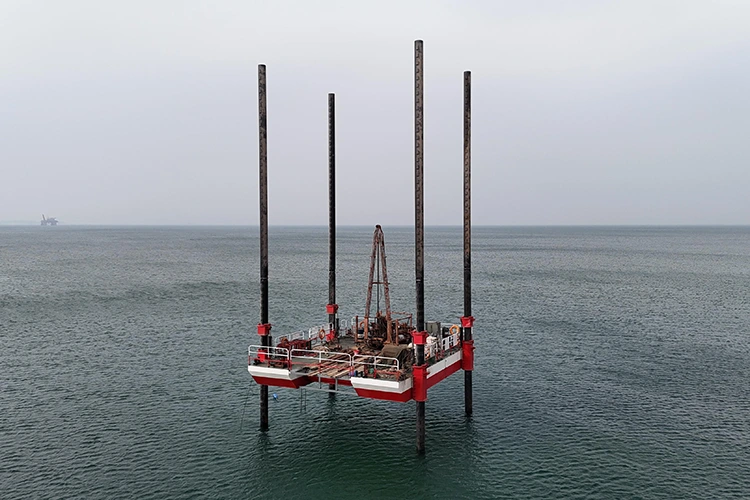
Maintenance Self-elevating Platform
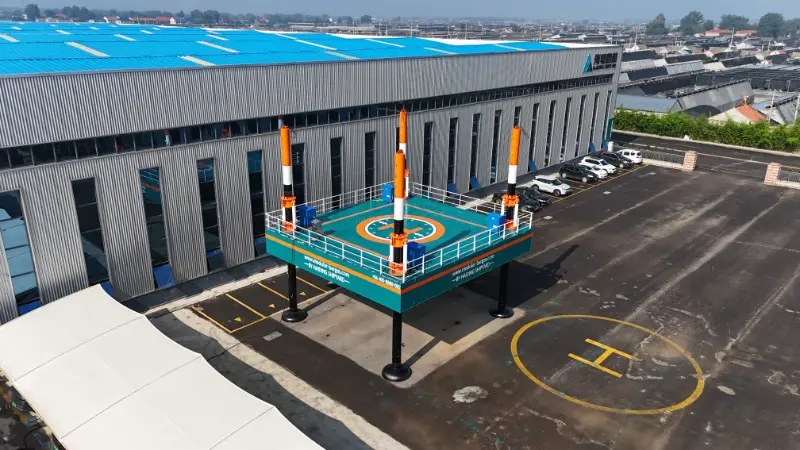
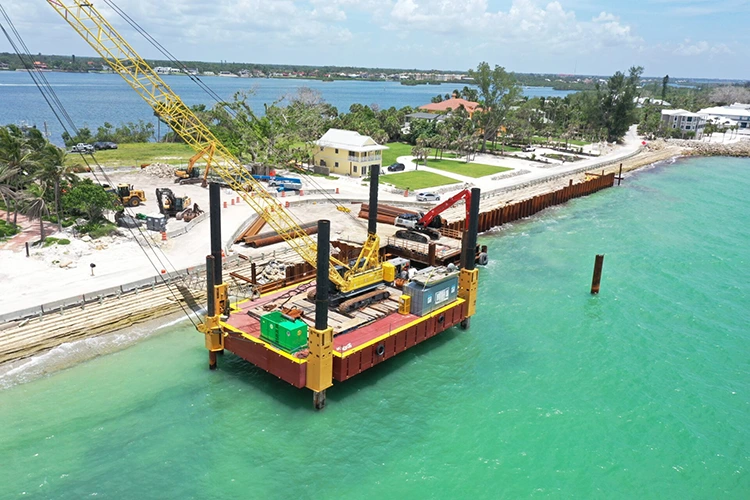
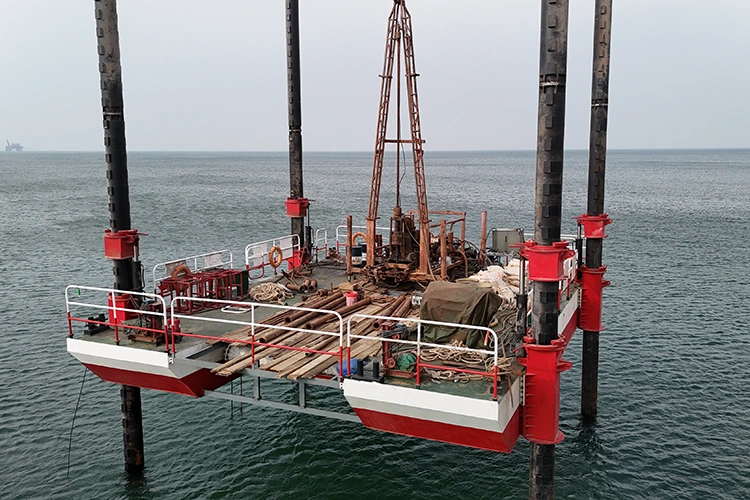
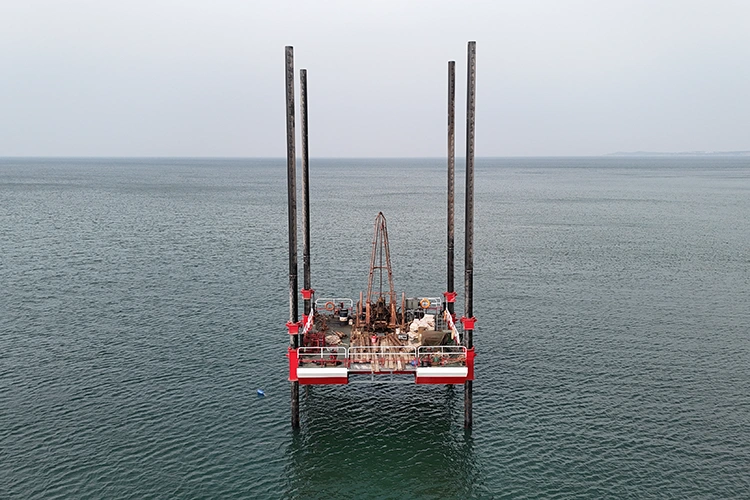
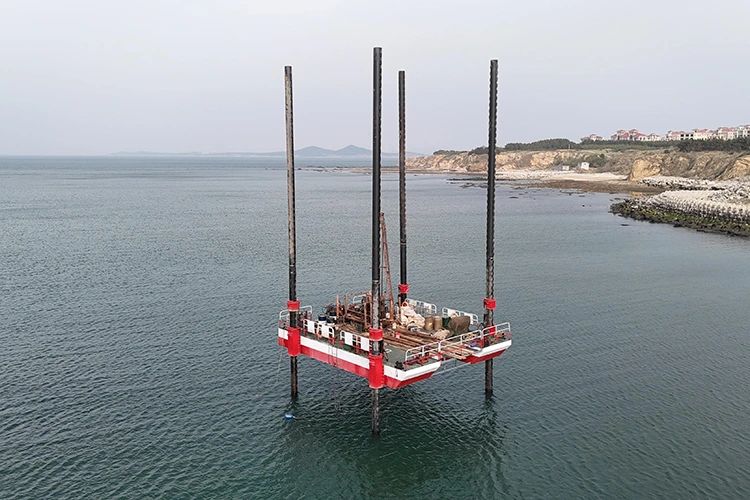
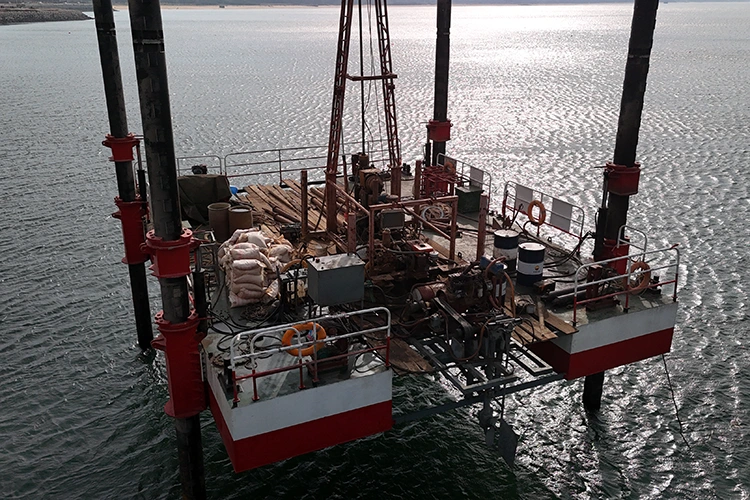
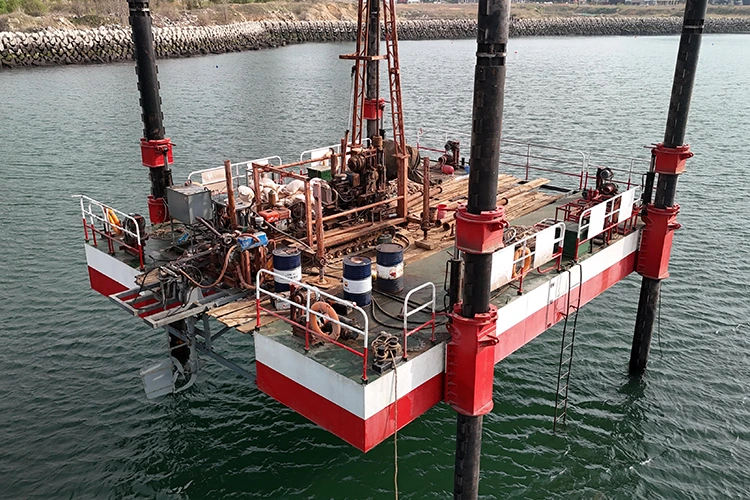
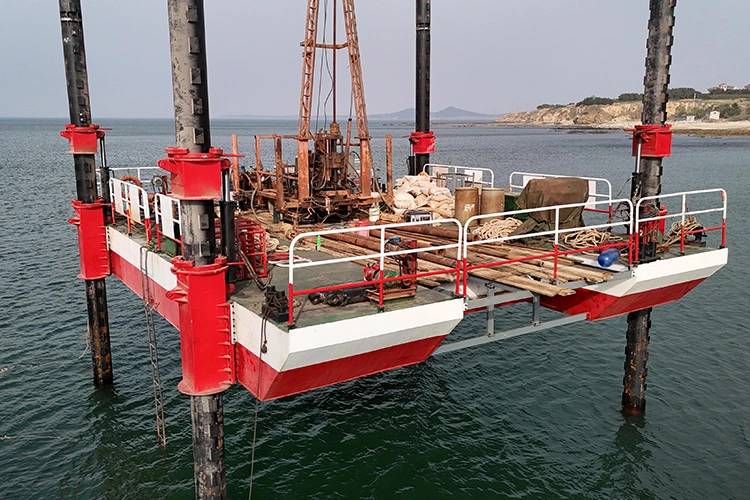
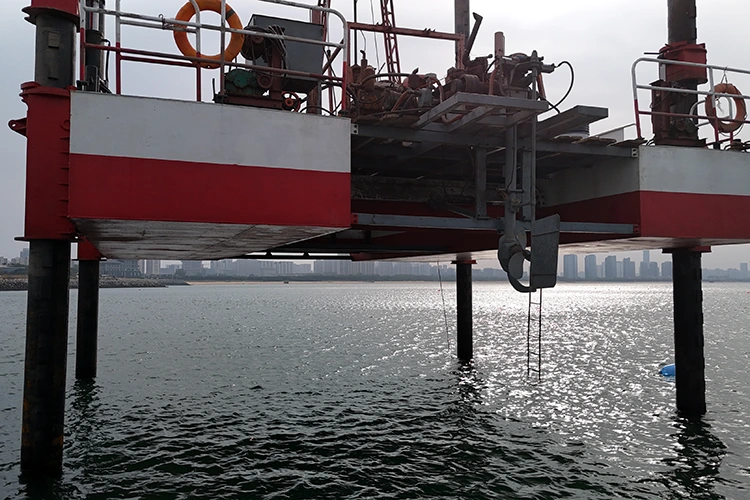
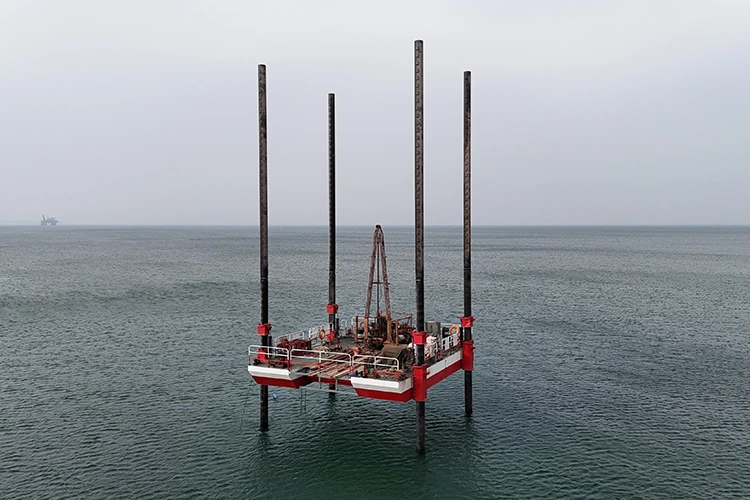
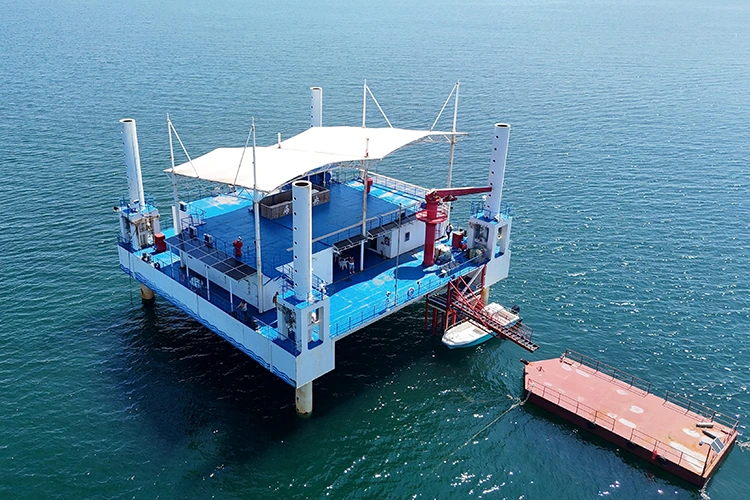
As a specialized manufacturer and supplier of offshore engineering equipment in China, HAIDING SHIPYARD offers a Maintenance Self-elevating Platform designed for operations across the full water-depth range (3–100 meters). Equipped with high-precision leveling and modular O&M systems, the platform withstands Beaufort scale 11 winds, significantly shortens offshore maintenance cycles, and is highly adaptable to various offshore engineering maintenance scenarios.
The Maintenance Self-elevating Platform is specialized offshore equipment independently developed by HAIDING SHIPYARD to address key pain points in offshore engineering maintenance. It effectively resolves industry challenges such as the instability of traditional floating vessels, poor equipment adaptability, susceptibility to complex sea conditions, and low maintenance efficiency.
Equipment Composition and Features
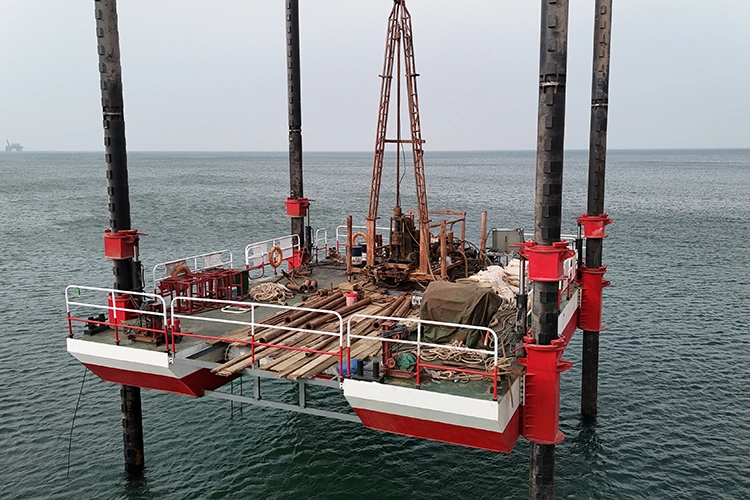
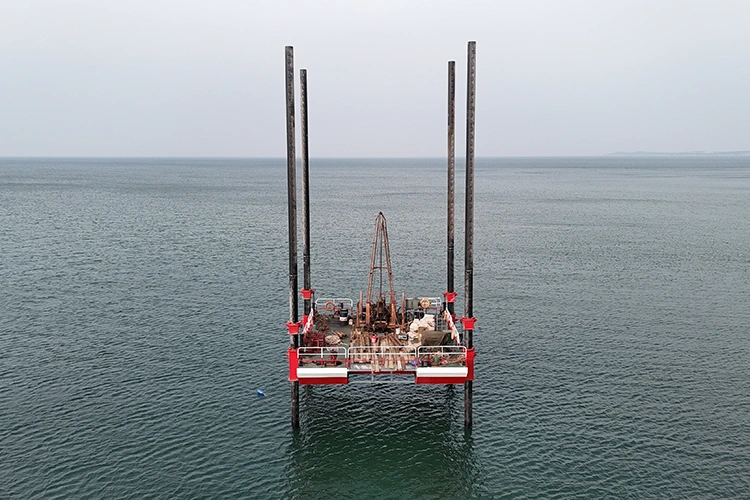
The platform integrates three core modules—a maintenance workstation, a diving operation chamber, and an equipment storage compartment. Leveraging high-precision automatic leveling technology, modular design, and a wind- and wave-resistant structure, it enables stable maintenance operations across the entire marine spectrum, from shallow to deep waters.
Compared to traditional floating vessels, the overall maintenance cycle is reduced by 50%. With its superior stability, adaptability, and efficiency, it serves as core equipment for the O&M of offshore oil and gas platforms, wind power facilities, and subsea pipelines. The platform supports full parameter customization, assistance with certification and licensing, and comprehensive after-sales support, making it a preferred choice for global offshore engineering maintenance projects.
Detailed Technical Parameters
|
ParameterCategory |
SpecificItem |
SpecificationRange |
Remarks |
|
Basic Dimensions |
Total Platform Length (m) |
40-60 |
5-7 sections, single section length ≤15m |
|
|
Total Platform Width (m) |
20-25 |
Effective deck operation area ≥75% (including maintenance modules) |
|
|
Platform Depth (m) |
5.0-6.0 |
Ensures large-load buoyancy and maintenance cabin space |
|
Lifting Performance |
Number/Type of Spud Legs |
3/truss-type |
Spud leg diameter 2.5-3.0m |
|
|
Spud Leg Length (m) |
20-100 |
Adapted to 3-100m water depth, customizable |
|
|
Lifting Speed (m/min) |
0.3-0.5 |
Full-load lifting speed ≥0.3m/min |
|
|
Seabed Insertion Depth (m) |
≥8 |
Expandable spud can optional for soft soil (contact area ≥70㎡) |
|
Load & Maintenance Performance |
Total Platform Load (t) |
3000 |
Including maintenance equipment, diving cabin, personnel and materials |
|
|
Deck Uniform Load (kN/㎡) |
60-70 |
Maintenance workstation area load ≥100kN/㎡ |
|
|
Maintenance Equipment Load (t) |
≤150 |
Including hydraulic wrenches, welding robots and testing equipment |
|
|
Diving Operation Parameters |
Diving cabin capacity 3 persons/unit, underwater robot operation depth ≤100m |
Robot positioning accuracy ±0.3m |
|
|
Maintenance Accuracy |
Bolt tightening error ≤±2%, welding verticality deviation ≤0.5mm |
Operation accuracy after leveling |
|
Structure & Material |
Platform Material |
Main structure: Q460 high-strength steel; Deck: NM500 wear-resistant steel |
Main load-bearing beam thickness ≥40mm |
|
|
Anti-corrosion Treatment |
Deep-sea heavy anti-corrosion coating + cathodic protection |
Underwater anti-corrosion life ≥15 years |
|
|
Leveling Accuracy |
±0.1° |
Full-automatic hydraulic leveling system |
|
Safety Configuration |
Wind Resistance Grade |
Grade 11 |
Platform in raised state, maintenance equipment windproof locking |
|
|
Emergency System |
Emergency generator (250kW), manual lifting device, diving cabin emergency oxygen supply |
Manual lifting for emergency spud leg recovery |
|
|
Monitoring System |
Level, maintenance equipment status, wind speed, water depth monitoring |
Data uploaded to shore-based command center in real time |
|
Certification Standard |
Product Certification |
ABS/CCS/DNV marine platform certification |
Complies withRules for Classification of Mobile Offshore Units &Diving System Safety Regulations |
Core Advantages
1. Highly Integrated O&M Equipment
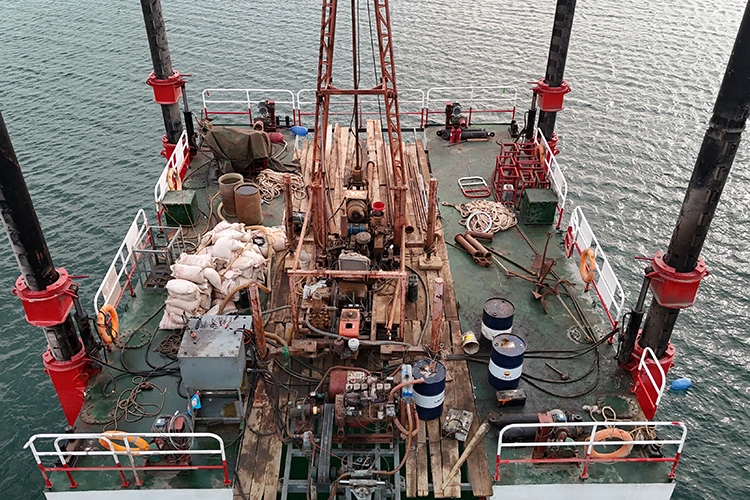
The platform features a 60–80 m² enclosed maintenance workstation integrated with a full suite of O&M tools—including high-torque hydraulic wrenches, underwater welding robots, and non-destructive testing (NDT) equipment—enabling the independent execution of end-to-end maintenance tasks such as bolt tightening, component welding, and equipment flaw detection.
Utilizing a rail-based rapid-switching structure, the platform boosts single-operation efficiency by 60% compared to traditional on-site maintenance, eliminating the need for multi-vessel coordination. It is equipped with two atmospheric diving chambers capable of accommodating three divers on standby; paired with 100-meter-class underwater robots, this enables collaborative operations between divers and equipment, completely eliminating reliance on external diving support vessels and significantly reducing construction costs.
2. High-Precision Stability Control
Equipped with dual-axis inclinometers and a dual-mode (BeiDou + GPS) positioning system, the Maintenance Self-elevating Platform achieves sensor precision of ±0.05°. It automatically levels itself prior to operation, strictly controlling the horizontal error to within ±0.1°. During operations, the system provides real-time compensation for platform tilting caused by wind and waves, effectively ensuring the operational precision of high-precision equipment—such as welding robots, hydraulic wrenches, and ultrasonic flaw detectors—and eliminating errors that exceed operational tolerances.
The work area is equipped with extendable support legs offering a maximum support force of 500 kN; rigidly connected to the main platform, they create an independent, stable working surface that isolates operations from equipment vibration, making the platform suitable for various high-precision inspection and repair tasks.
3. Full Water Depth Adaptability
It utilizes a three-section truss-style leg structure with a diameter of 2.5–3.0 m and a customizable length of 20–100 m, precisely accommodating water depths ranging from 3 m to 100 m. Short legs (20–40 m) suit shallow waters (3–20 m), medium-long legs (40–70 m) suit intermediate depths (20–50 m), and long legs (70–100 m) suit deep-water areas (50–100 m).
The spud cans feature an anti-slip design with a surface area of ≥70 m², effectively preventing slippage on silty seabeds. The entire unit is designed to withstand Beaufort scale 11 winds, 5-meter wave heights, and current speeds of 2 knots. The maintenance workstation is equipped with an IP65-rated dustproof and waterproof sealing system as well as a constant temperature and humidity control system, ensuring stable operation in harsh environments such as the South China Sea during monsoon seasons or the Bohai Bay during cold winters.
4. Modular Assembly and Deployment
The platform is dismantled into 5–7 independent sections, with a maximum single-section weight of ≤100 tonnes, enabling global deployment via ocean-going barges or semi-submersible vessels. On-site assembly utilizes a flange and high-strength bolt connection method combined with offshore floating cranes; full assembly takes just 8–12 days, reducing the deployment cycle by 40% compared to traditional maintenance vessels.
Core maintenance equipment features a modular design, allowing for the removal and replacement of entire units in the event of a failure, with a single equipment repair taking only 8 hours. The leg rack gears are made of NM500 wear-resistant steel (hardness ≥500 HB), offering a service life of up to 20 years in deep-sea environments; this eliminates the need for frequent part replacements and lowers long-term maintenance costs.
Key Application Scenarios
1. Offshore Oil & Gas Platform Equipment Maintenance
Capable of dismantling and replacing heavy equipment, such as 30–50 ton pump bodies, compressors, and heat exchangers—on platforms in the Bohai and South China Seas. A stable working platform ensures high installation precision, reducing maintenance cycles by 50% compared to traditional floating vessel methods.
Enables ultrasonic flaw detection on the pile legs and main girders of aging platforms to precisely locate structural cracks. Reinforcement and repairs are executed by welding robots, allowing for maintenance without shutting down the Maintenance Self-elevating Platform, thereby avoiding disruptions to oil and gas production schedules.
2. Subsea Pipeline Inspection and Repair
Addresses leakage issues in subsea oil and gas pipelines in the East China and Yellow Seas. Underwater robots precisely locate leak points, while divers using welding equipment perform patch welding; a workstation monitors welding temperature and bead quality in real-time to ensure the repaired pipeline meets pressure-bearing standards.
Facilitates routine inspections of subsea 3PE anti-corrosion coatings. After clearing marine growth from pipelines, underwater spraying robots renew the anti-corrosion layer. The platform supports 72 hours of continuous, stable operation, achieving an average daily maintenance length of 500 meters.
3. Offshore Wind Power Platform O&M
Adapted for large-scale 16MW offshore wind projects off the coasts of Jiangsu and Fujian. Capable of dismantling and replacing 80–100 ton wind turbine gearboxes, with material transfer handled by 100-ton class auxiliary lifting equipment. An automatic leveling system compensates for wind- and wave-induced tilting in real-time, ensuring gearbox-to-main-shaft coaxiality deviation remains ≤0.1mm.
Performs magnetic particle inspection on the submerged sections of turbine pile foundations (down to 50 meters) to precisely identify corrosion risks. Anti-corrosion reinforcement is achieved through underwater zinc-aluminum alloy spraying, ensuring the long-term, stable operation of wind power equipment.
4. Marine Engineering Emergency Repair
Features flexible equipment deployment with a total assembly time of ≤10 days, enabling rapid response to sudden failures such as platform compartment leaks or pipeline ruptures. With the ability to withstand Beaufort scale 11 winds, the system performs emergency leak-sealing operations in complex sea conditions, securing a critical window for subsequent precision maintenance. It serves as a temporary operational base for shipwreck salvage and maritime incident response, providing salvage teams with equipment storage, diving support, and machinery maintenance services to ensure the continuity of emergency operations.
Customization Options
1. Operational Parameter Customization
Leg lengths can be customized based on water depth, sea conditions, and operational requirements, with options for ultra-long legs up to 100 meters. Ancillary equipment—such as underwater cutting robots, specialized pipeline repair modules, and high-precision inspection modules—can be upgraded upon request.
For polar regions, ice-breaking devices for the legs and hull insulation systems can be installed. For tropical regions with high salinity and humidity, stainless steel components and enhanced anti-corrosion coatings can be specified, ensuring suitability for extreme marine environments worldwide.
2. Value-Added Support Services
We can assist clients in obtaining certifications from international classification societies (such as ABS, CCS, and DNV) and offshore maintenance qualifications, streamlining the project implementation process. Tailored maintenance and construction plans can be developed to optimize equipment assembly/disassembly and underwater operational techniques, thereby boosting efficiency.
We can coordinate with professional offshore maintenance teams to provide an integrated service package—covering equipment leasing, on-site O&M, and quality inspection—to ensure efficient project execution.
FAQ
1. What are the core advantages of this self-elevating maintenance platform compared to traditional floating maintenance vessels?
Traditional floating vessels are susceptible to wind, waves, and currents, resulting in significant platform movement that hinders high-precision welding and flaw detection; they also suffer from long maintenance cycles and low efficiency. This self-elevating platform anchors to the seabed via its legs, ensuring operational stability with a leveling precision of ±0.1° and increasing maintenance efficiency by over 50%. It integrates comprehensive O&M, diving, and storage capabilities, eliminating the need for multi-vessel coordination, significantly reducing construction costs, and enabling continuous operation in harsh sea conditions.
2. What are the maximum water depth and extreme sea condition parameters for this equipment? The standard equipment is designed for water depths of 3–100 meters, with customizable legs available for specialized deep-sea conditions. During operation, it withstands Beaufort scale 11 winds, 5-meter wave heights, and current speeds of 2 knots. Its onboard equipment features an IP65 protection rating, ensuring stable long-term operation in challenging environments—such as those with low temperatures, high salinity/fog, and monsoon winds—making it suitable for offshore engineering projects in China’s Bohai, East China, and South China Seas, as well as most global waters.
3. What is the timeframe for equipment transport and on-site assembly?
The equipment utilizes a modular sectional design, with each section weighing 100 tons or less, allowing for global transport via standard ocean-going barges or semi-submersible vessels without special restrictions. Upon arrival at the site, full assembly and commissioning take just 8–12 days using offshore floating cranes; the overall deployment cycle is 40% shorter than that of traditional large-scale maintenance vessels, enabling rapid project commencement.
4. Does the equipment's operational precision meet the standards for high-end large-scale wind power and oil & gas projects?
Yes, it fully meets these standards. The fully automatic leveling error is ≤0.1°, bolt tightening error is ≤±2%, welding verticality deviation is ≤0.5mm, and wind turbine gearbox installation coaxiality deviation is ≤0.1mm. All precision parameters comply with international offshore engineering construction standards, satisfying the requirements for high-precision maintenance projects such as 16MW large-scale offshore wind turbines and deep-sea oil & gas platforms. The equipment also holds authoritative certifications from ABS, CCS, and DNV.
5. What is included in the equipment warranty and after-sales support?
A long-term anti-corrosion warranty is provided for the Maintenance Self-elevating Platform's main steel structure, while core maintenance equipment and jacking systems come with a 3-year warranty covering free repairs and replacement of faulty parts. The company maintains a global service network offering 24/7 technical consultation and a 48-hour on-site response time for key maritime regions. Services also include annual scheduled inspections and quarterly remote checks, with personalized upgrade and modification plans available based on usage to ensure stable operation throughout the equipment's entire lifecycle.
Send Inquiry
Contact Info
-
Address
No. 8888, Wanhong Avenue, Huanglou Sub-district, Qingzhou City, Weifang City, Shandong Province, China
-
Tel
-
Email
Looking to buy a dredger, tugboat or custom engineering vessel? Send your requirements to HAIDING SHIPYARD for product details, technical consultation and a competitive shipbuilding quotation.
Related Products
News Recommendations