China Quality Harbor Tugboat Manufacturer
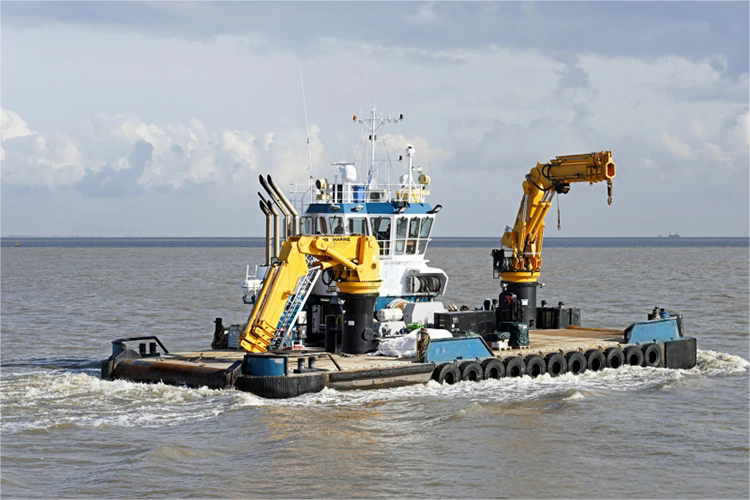
Shandong Haiding Shipbuilding Co., Ltd. is a professional manufacturer of engineering vessels, providing customized solutions for port operations, marine transportation, and offshore applications. The company develops and manufactures different types of tugboats according to various working environments and operational requirements.
As an important supporting vessel for modern ports, Harbor Tugboat is mainly used for ship assistance, towing, maneuvering, and emergency operations within harbor areas. Compared with ocean-going tugboats, this type of vessel focuses more on precise control, high maneuverability, and frequent short-distance operations in confined waters.
HAIDING SHIPYARD provides multiple propulsion configurations, including controllable pitch propeller systems, Fixed Pitch Propeller Tug, Z-drive propulsion, and vertical thruster solutions. These configurations allow the vessels to adapt to different port layouts, ship sizes, and operational conditions. The fixed pitch propulsion design features a simple structure and reliable performance, making it suitable for regular harbor towing operations that require stable operation and convenient maintenance.
What is a Harbor Tugboat?
A Harbor Tugboat is a specialized vessel designed to assist ships during port operations. It provides pushing and pulling forces to help large vessels complete movements such as berthing, unberthing, turning, and repositioning.
Because large commercial ships have limited maneuverability in restricted waters, tugboats provide additional control and support. They are commonly used in container terminals, bulk cargo ports, shipyards, and offshore facilities.
The main functions include:
-Assisting vessels during arrival and departure.
-Providing towing support within port areas.
-Helping ships adjust direction in narrow waterways.
-Supporting emergency response operations.
Compared with conventional towing vessels, harbor tugboats usually require stronger low-speed thrust capability and more flexible maneuvering performance.
Working Principle and Operation
The working principle of a harbor tug is based on the combination of propulsion systems, hull design, and towing equipment.
During operation, the main engine provides power to the propulsion system, generating thrust that allows the tugboat to push or tow other vessels. Different propulsion methods provide different handling characteristics.
Z-drive Propulsion
The Z-drive Tug uses azimuth propulsion units that can rotate 360 degrees, allowing thrust direction adjustment without changing vessel position. This configuration provides excellent maneuverability and precise control, making it suitable for complex port operations such as large vessel berthing, unberthing, and positioning.
Controllable Pitch Propeller System
The controllable pitch propeller adjusts blade angles according to operating conditions, helping optimize propulsion efficiency during continuous towing operations.
Fixed Pitch Propeller System
Fixed pitch propeller systems feature a simple structure and reliable performance, making them suitable for standard port towing applications.
Key Features
High Maneuverability
Port environments often involve limited space and frequent vessel movements. The vessel design focuses on precise steering response and flexible operation in narrow waterways.
Strong Towing Capability
The Controllable Pitch Propeller Tug is equipped with a controllable pitch propulsion system that allows the propeller blade angle to be adjusted according to different operating conditions. This design helps optimize propulsion efficiency during towing, maneuvering, and continuous harbor operations, providing flexible power control for various port tasks.
Durable Hull Structure
The hull uses high-strength marine steel and protective coating systems to improve resistance against corrosion caused by seawater and salt spray environments.
Multiple Functional Configurations
According to project requirements, additional systems such as firefighting equipment, pollution control modules, and rescue equipment can be integrated.
Applications
Harbor tugboats are widely used in different port and marine operation scenarios.
Port Vessel Assistance
They provide support for large vessels during docking and departure, especially for ships with limited maneuverability.
Ship Towing Operations
They are used for short-distance towing tasks, including vessel relocation, shipyard movement, and harbor transportation.
Emergency Rescue
Equipped with additional rescue or firefighting systems, they can assist in emergency situations such as vessel breakdowns or marine accidents.
Offshore and Terminal Support
They can support offshore facilities, terminals, and marine engineering projects requiring reliable towing and positioning capabilities.
Selection Guide
Selecting a suitable tugboat requires consideration of several operational factors.
Port Environment
Different ports have different requirements based on water depth, channel width, traffic density, and weather conditions.
Bollard Pull Requirement
The required towing force depends on the size and type of assisted vessels. Larger vessels generally require higher bollard pull capacity.
Propulsion System Selection
Z-drive systems are suitable for operations requiring high maneuverability.
Controllable pitch propellers are suitable for continuous and adjustable operations.
Fixed pitch propellers are suitable for reliable and economical towing tasks.
Additional Functional Requirements
Customers can select additional modules according to application needs, including firefighting, pollution control, and rescue systems.
Harbor Tugboat vs Other Tug Types
Different tugboat categories are designed for different working environments.
|
Type |
Main Application |
Main Characteristics |
|
Harbor Tugboat |
Port operations |
High maneuverability and precise control |
|
Ocean Tugboat |
Long-distance towing |
Strong endurance and offshore capability |
|
Salvage Tugboat |
Emergency rescue |
Equipped with specialized rescue systems |
|
Workboat |
Marine maintenance |
Multi-purpose operation capability |
A harbor tug focuses on frequent operations in restricted waters, while ocean-going tugboats are designed for long-distance towing and offshore environments.
FAQ
What is a Harbor Tugboat used for?
It is mainly used for assisting ships during berthing, unberthing, towing, maneuvering, and emergency operations in port areas.
What propulsion systems are available for harbor tugboats?
Common propulsion options include Z-drive, controllable pitch propeller, fixed pitch propeller, and vertical thruster systems.
How do I choose the right tugboat for my port?
The selection depends on vessel size, required towing force, port environment, operation frequency, and additional functional requirements.
Can tugboats be customized for specific applications?
Yes. Tugboats can be customized with different power systems and additional equipment according to operational requirements.
What maintenance support is available after delivery?
Technical support, spare parts supply, and maintenance guidance can be provided throughout the vessel service life.
- View as
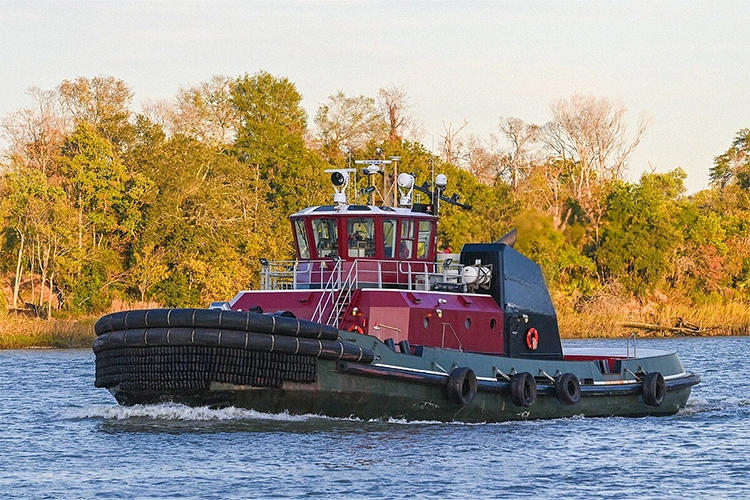
Fixed Pitch Propeller Tug
The HAIDING SHIPYARD fixed pitch propeller tug is a conventional shaft-line tug designed for routine towing, barge handling, and port service. With a mechanically simple FPP propulsion system, it offers lower initial cost, straightforward maintenance, and reliable operation. Power is available from 500–8000 HP, with bollard pull of 30–120 tf. The configuration can be customized for inland, coastal, or offshore duties, with CCS certification available per vessel.
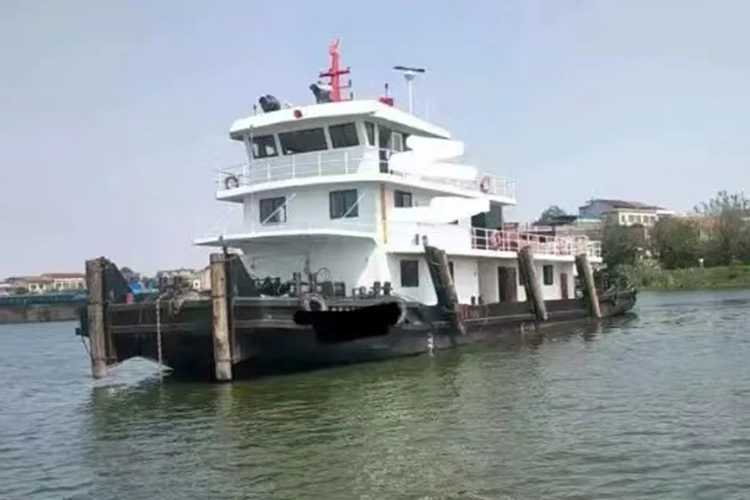
Vertical Stern Propeller Tug
HAIDING SHIPYARD, a trusted manufacturer and supplier, offers vertical stern propeller tugs with cycloidal thrusters for 360° thrust control. Our factory
built vessels deliver 500–8000 HP and 30–120 tf bollard pull, perfect for shallow waterways and icy harbours. Optional DP, fire
fighting, and oil recovery. Superior manoeuvrability for docking, but less efficient for open
water tows; not for long hauls. CCS approved, 15
year service life. Contact us for custom engineering.
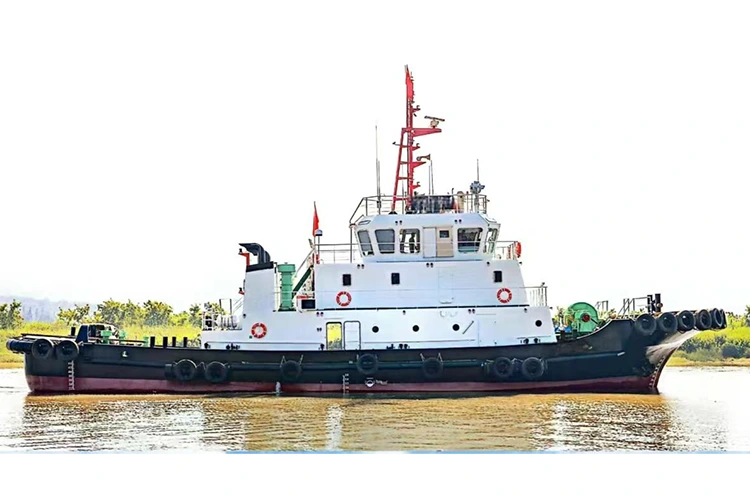
Controllable Pitch Propeller Tug
HAIDING SHIPYARD Controllable Pitch Propeller Tug is designed for port assistance, offshore towing and multi-purpose marine operations where precise control, strong thrust and operational flexibility are required. With optimized propulsion performance, reinforced hull structure and customizable configurations, the CPP Tug provides reliable support for ports, offshore engineering projects and marine transportation operations. We can provide you with not only the newest products designed in fashionable style but also a price list and quotation.
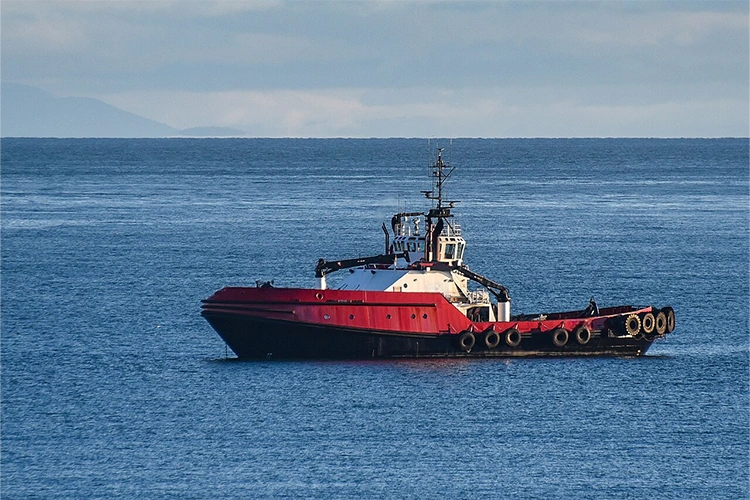
Z-drive Tug
As a professional manufacturer and supplier in China, HAIDING SHIPYARD Z-drive Tug is designed for operations where maneuverability and vessel control are essential. Equipped with azimuth stern drive propulsion, the tug can rotate its propulsion units independently to direct thrust according to actual working requirements.
HAIDING SHIPYARD is a famous Harbor Tugboat manufacturer and supplier in China. If you want to buy high-quality and the newest products, please contact us immediately.
News Recommendations