China Modular Pontoons Manufacturer and Supplier
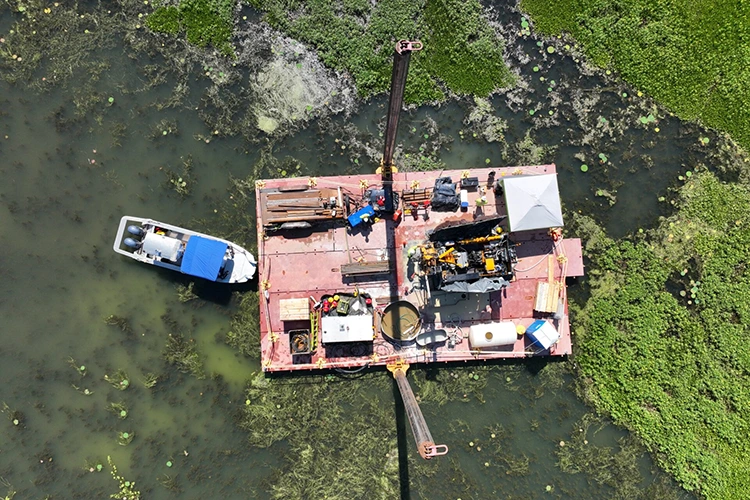
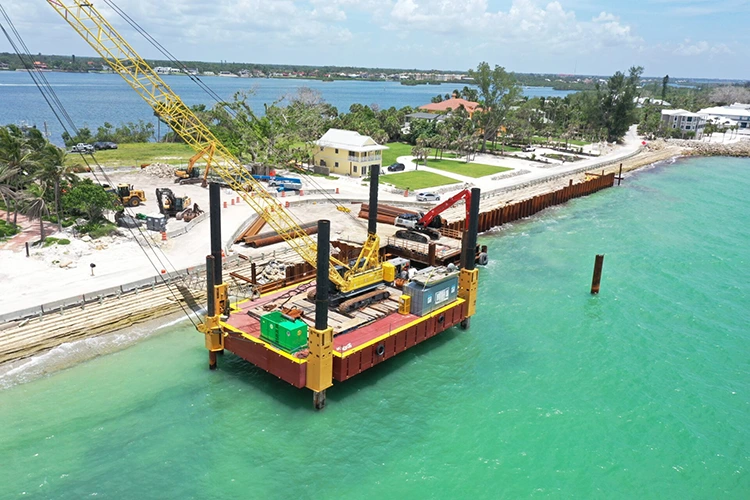
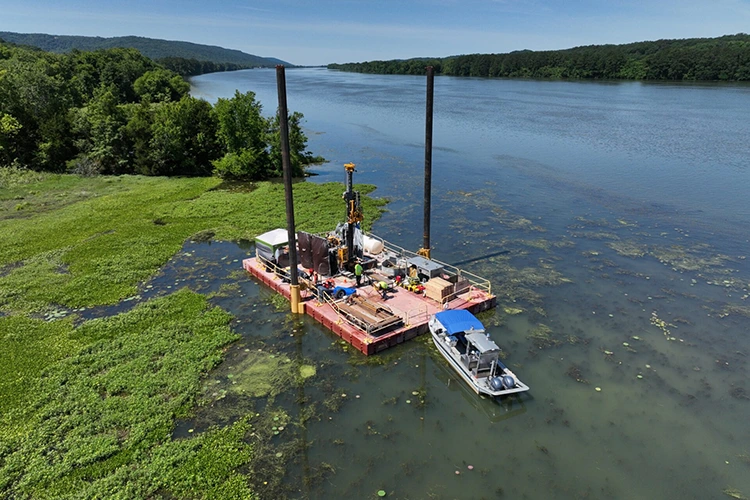
Modular pontoons produced by HAIDING SHIPYARD are standardized floating modules designed for temporary and semi-permanent marine and inland waterway works. The system is based on a repeatable steel pontoon unit that can be connected in different arrangements to form work platforms, transfer decks, floating docks, and support structures for construction equipment.
This product category is intended for contractors, port operators, and engineering teams that need a transportable floating foundation without committing to a permanently built barge or platform. The key design requirement is repeatable assembly under field conditions using basic lifting and hand tools.
Design Basis and Structural Configuration
Each pontoon module is fabricated from A-36 or HSLA high-strength steel. The deck surface is formed with a slip-resistant profile. Connection points are reinforced with double webs, and the corner transitions are shaped to reduce stress concentration. The structural design uses a safety factor of 1.8 or higher against yield under the specified deck load.
Wind and wave design conditions are established for each project. The standard module is suitable for light to moderate wave exposure, not for open-ocean towing without additional structural review. For installations in tidal or exposed locations, the shipyard performs a site-specific mooring and connection analysis.
Connection and Assembly
The modules use a mechanical locking system that does not require welding on site. Connections can be made side-to-side, end-to-end, or in stepped patterns. A team of two to four workers can connect one module in approximately 1.5 hours under normal site conditions. This time may increase if crane access is limited or if the modules are assembled in moving water.
Disassembly follows the reverse sequence. The locking system is designed for repeated use, but inspection and replacement of consumable locking components are recommended after a defined number of assembly cycles.
Corrosion Protection
The coating system consists of a heavy-metal-free primer and a marine-grade composite topcoat. Underwater surfaces receive zinc-aluminum anode protection. In freshwater environments, the design basis for underwater component corrosion protection is 20 years. In seawater, the corresponding design life is 15 years. Actual performance depends on water chemistry, coating damage, and maintenance practice.
Transport and Deployment
Module dimensions follow standard road transport limits. A conventional flatbed truck can carry two to four modules without oversize permits in most regions. This is a practical advantage over one-piece floating structures, which often require waterborne delivery or special permits. The modules can also be shipped in standard containers when fully knocked down, subject to weight limits.
Technical Parameters
|
Item |
Standard Range |
Notes |
|
Module series |
HD-H50, HD-S50, HD-S70 |
Light, medium, heavy-duty deck load classes |
|
Deck load capacity |
5–20 t/m² depending on series |
Uniformly distributed load, confirmed per project |
|
Main material |
A-36 or HSLA steel |
Grade selected by structural requirement |
|
Deck surface |
Slip-resistant formed plate |
Open or closed deck option |
|
Connection type |
Mechanical locking, no site welding |
Side and end connection compatible |
|
Design safety factor |
≥1.8 |
Against yield under specified load |
|
Wind design condition |
Beaufort Force 8 |
Higher ratings require additional anchoring |
|
Corrosion protection |
Zinc-aluminum anode + marine coating |
15 years seawater, 20 years freshwater design basis |
|
Assembly time per module |
Approximately 1.5 hours |
With 2–4 workers and crane access |
|
Road transport |
2–4 modules per truck |
Based on standard flatbed trailer limits |
Application Scope
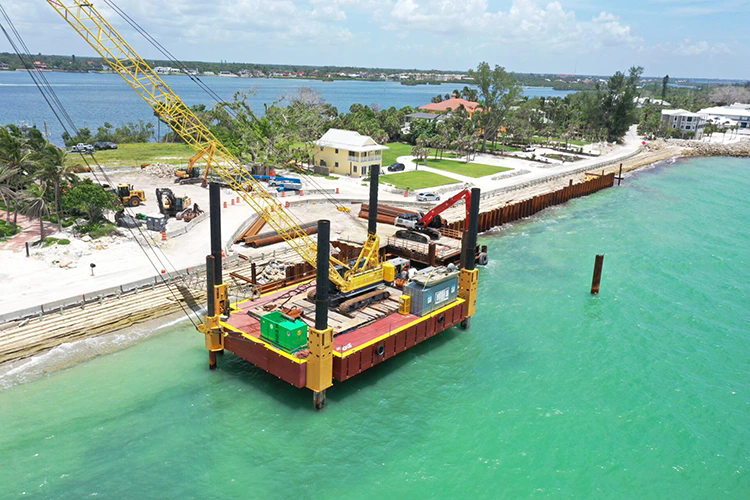
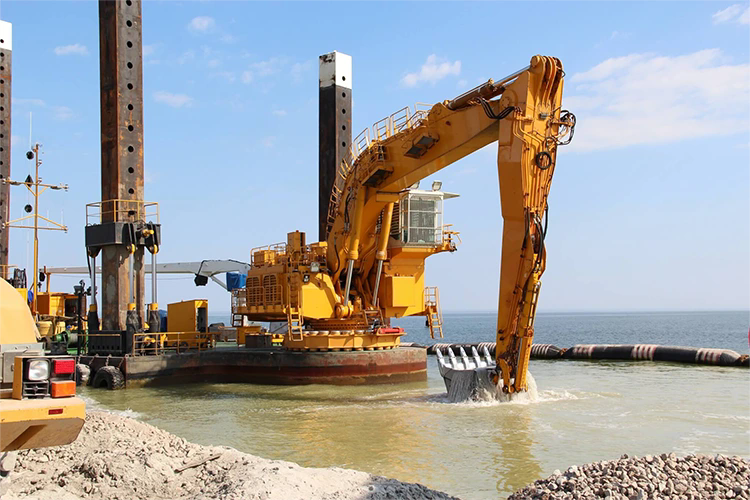
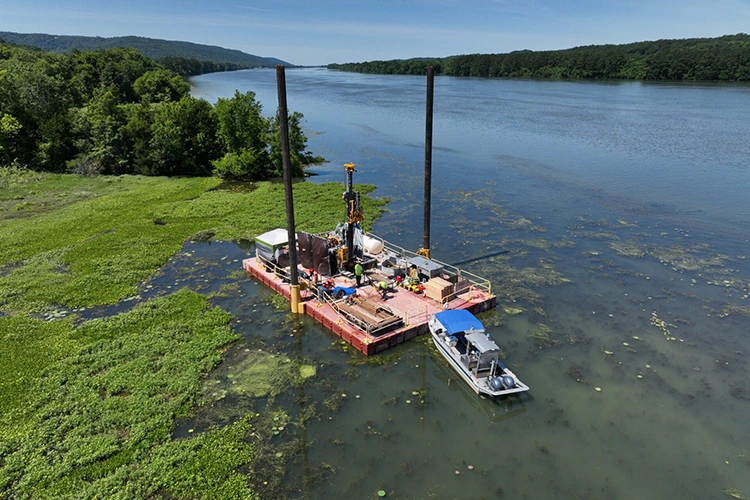
Modular pontoons are commonly used for construction access platforms, temporary docks, equipment transfer decks, dredging support platforms, and floating work areas for repair or inspection. They are also used as floating foundations for small cranes, generators, and pumps when load distribution and stability are checked.
For projects that require a self-propelled working platform or a more permanent floating structure, HAIDING also builds Sectional Barges and Sectional Dredgers. These product lines use a similar modular philosophy but are designed for different operational loads and regulatory requirements.
Limitations and Design Review
Modular pontoons are not a substitute for a classed barge when the assembly must carry heavy tracked equipment, work in strong currents, or remain on station for extended periods without inspection. The connection system is designed for static and slowly varying loads; dynamic loads from wave action, crane slewing, or vessel impact require a project-specific calculation.
Before order confirmation, the shipyard requests the intended deck load, water depth, wave exposure, mooring arrangement, and duration of deployment. This information is used to confirm the module series, number of anodes, and whether additional stiffening is needed.
Certification and Quality System
HAIDING SHIPYARD operates under ISO 9001:2015 quality management procedures. Material traceability, weld inspection, and dimensional checks are recorded for each production batch. The company has delivered modular floating equipment to projects in multiple countries and can provide references upon request.
When required, the modules can be supplied with third-party inspection reports, material certificates, and load test documentation. Classification society involvement is project-specific and is normally limited to the completed assembly if it is to be registered as a floating structure.
Frequently Asked Questions
What is the difference between HD-H50, HD-S50, and HD-S70?
The series refers to deck load capacity and structural scantlings. HD-H50 is the light-duty series, HD-S50 is medium-duty, and HD-S70 is heavy-duty. The correct series depends on the equipment load and wheel or track pressure, not only the total weight.
Can the modules be used in seawater?
Yes. The coating and anode system is designed for seawater exposure. However, the corrosion protection life is shorter in seawater than in freshwater, and maintenance intervals should reflect the actual water chemistry.
Do I need a crane to assemble the modules?
A crane or excavator with sufficient reach is normally used to lift modules from the transport truck and position them for connection. The locking operation itself can be done by workers without heavy equipment.
Can the pontoons be towed as a floating platform?
Towing is possible only after a structural and stability assessment. The connection system must be checked for the expected towing loads, and a proper bridle arrangement is required. Unapproved towing can damage the locks and create a safety risk.
How long does delivery take?
Delivery time depends on the quantity, series, and current production schedule. The shipyard provides a schedule after the technical requirements and module count are confirmed.
- View as
Modular Pontoons
Made in-house at HAIDING SHIPYARD's factory in China, we are a recognized Modular pontoons manufacturer and supplier, meticulously monitoring every step of production to ensure quality and clear pricing, providing our customers with cost-effective solutions.
HAIDING SHIPYARD is a famous Modular Pontoons manufacturer and supplier in China. If you want to buy high-quality and the newest products, please contact us immediately.
News Recommendations