China Sectional Water Intake Floating Ship Supplier
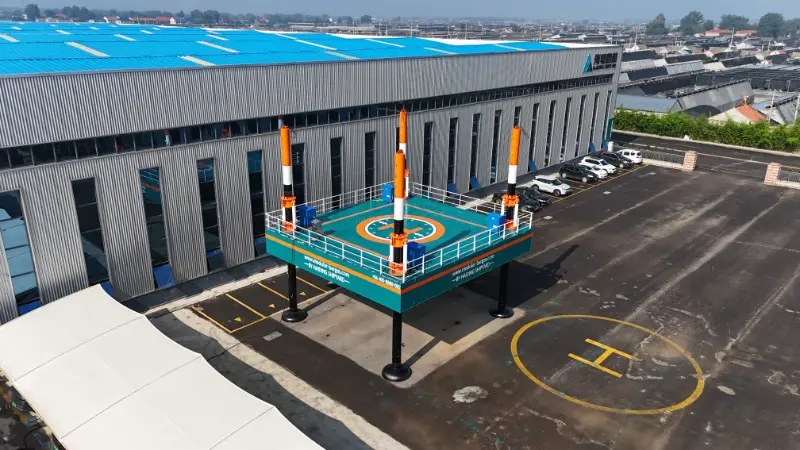
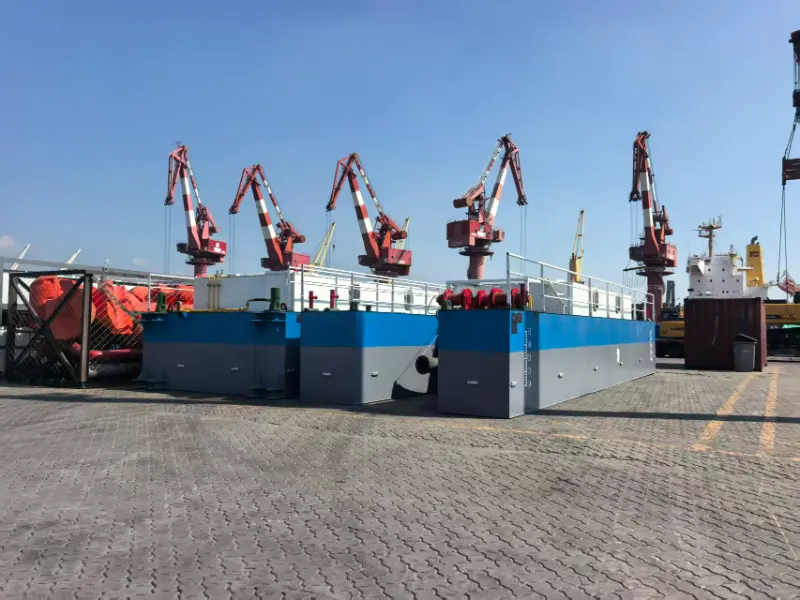
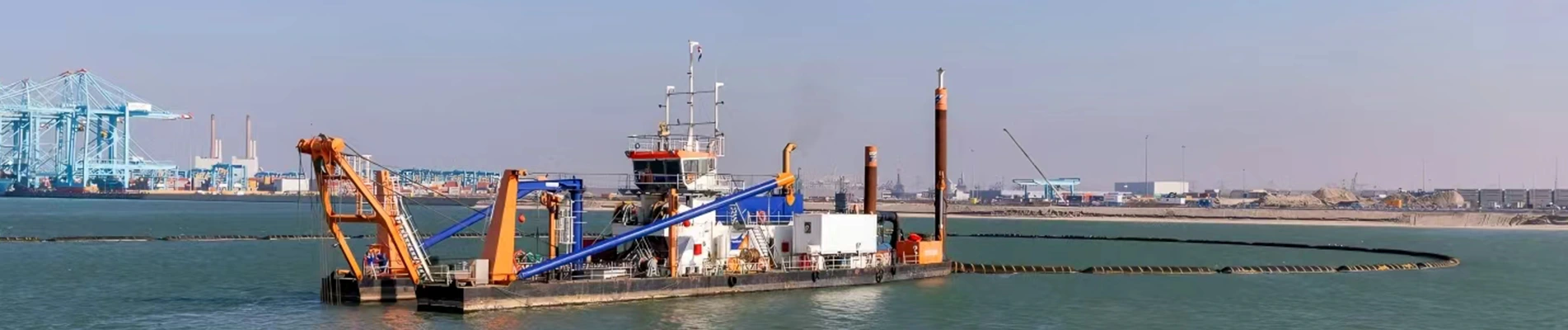
As a leading China Sectional Water Intake Floating Ship factory, HAIDING SHIPYARD delivers modular water pumping solutions globally.
What Engineering Principles Ensure Hydrodynamic Stability and Flow Efficiency?
Floating intake structures must maintain precise hydrodynamic balance across changing water level contours, sediment loads, and dynamic water flow currents. Conventional fixed pumping stations often suffer from costly civil infrastructure demands, rigid site limitations, and operational risks during severe water level drawdown.
Our Sectional Water Intake Floating Ship engineering utilizes high‑tenacity, anti‑corrosion marine steel hulls specifically designed to absorb dynamic wave motion while protecting internal pumping machinery. Each modular pontoon features internal ballast compartmentalization and reinforced structural bulkheads, providing exceptional buoyancy stability under high‑flow intake operations. Automated intake screen cleaning systems prevent debris accumulation, maintaining continuous flow velocity without manual intervention.
How Does Advanced Hydraulic Design Optimize Energy Consumption and Pump Longevity?
Energy efficiency and mechanical wear are critical operational metrics for long‑term pumping installations. Traditional floating platforms often struggle with vortex formation and turbulent intake flow, which lead to cavitation and premature pump impeller degradation.
Our engineering team integrates computational fluid dynamics (CFD) modeling to refine the underwater intake geometry. By streamlining the submerged hull contours and optimizing bellmouth suction spacing, a smooth, uniform flow velocity is achieved before water enters the suction piping. This fluid stabilization reduces turbulence‑induced energy loss by up to 15%, minimizes vibration across the deck, and extends the operational lifecycle of internal mechanical seals and bearings.
How Do Modular Architectures Solve Transportation and Scenario Adaptation Challenges?
Traditional heavy engineering vessels require deep‑draft waterways or specialized marine transit, limiting their access to remote, landlocked construction sites. Our road‑transportable modular designs overcome these geographic barriers through split‑hull assembly systems.
To meet diverse industrial and municipal demands worldwide, our engineering covers targeted secondary configurations:
• High‑Capacity Industrial Operations: The heavy‑duty Industrial Water Intake Floating Ship integrates chemical‑resistant internal linings and pre‑filtration intake manifolds, securing continuous, high‑volume water supply for petrochemical complexes and steel processing plants.
• Agricultural & Municipal Infrastructure: Models like the Agricultural Water Intake Floating Ship focus on low‑maintenance operational cycles for seasonal irrigation networks. Meanwhile, the Water Conservancy Project and Municipal Water Supply Water Intake Floating Ship delivers smart water‑level tracking, seamlessly adjusting intake depths during reservoir fluctuations to protect local aquatic ecosystems.
• Rapid Deployment & Environmental Scenarios: For emergency post‑disaster scenarios, the modular Emergency Water Intake Floating Ship can be transported by standard flatbed trucks and fully commissioned on‑site within days. Furthermore, specialized lines—including the Environmental Treatment Water Intake Floating Ship and the Special Environment Water Intake Floating Ship—incorporate anti‑pollution bio‑barriers, extreme freeze‑resistant hull insulation, and high‑elevation pump configurations for remote or severe climate installations.
What Manufacturing Strengths and Full‑Lifecycle Services Support Global Projects?
Founded in 1993, Shandong Haiding Shipbuilding Co., Ltd. operates a 59,400‑square‑meter shipyard equipped with coastal and riverside assembly berths, 15 specialized production lines, and advanced quality testing systems. Serving clients across more than 132 countries, our elite R&D and engineering team manages the complete lifecycle in‑house—from initial hydrodynamic modeling to final sea trials.
Certified under ISO 9001 and verified by major classification societies including China Classification Society (CCS) and Bureau Veritas (BV), our manufacturing process ensures complete structural and operational compliance. Beyond vessel construction, we provide end‑to‑end service support—including pre‑sales site diagnostics, supervised field assembly, 3D digital twin modeling, and 24/7 global spare parts dispatching.
How Do Intelligent Control Systems Enable Autonomous Remote Operation?
Modern water intake management increasingly relies on digital monitoring to reduce manual labor overhead and prevent system outages in remote or hazardous locations.
Every Sectional Water Intake Floating Ship can be fitted with integrated SCADA control modules and IoT sensor arrays that track hull tilt, ballast water levels, vibration metrics, and pump discharge pressure in real time. Automated alert protocols immediately notify operators of screen blockages or sudden flow changes, while remote telemetry allows off‑site engineers to adjust intake depths or cycle pumps automatically based on real‑time reservoir data.
Frequently Asked Questions
How does a split‑hull modular structure handle overland transport to landlocked project sites?
The complete hull is engineered as standardized, containerized modules that comply with highway and rail transport dimensions. Once delivered to the destination via standard trucks, local installation crews assemble the modules using high‑strength locking pins and watertight gasket seals, eliminating the need for navigable access waterways.
What mechanism automatically accommodates severe seasonal water level fluctuations?
The floating intake platform is anchored using flexible spud poles or articulated mooring arms connected to shore anchors. As water levels rise or fall, the self‑adjusting mooring assembly allows the platform to move vertically while keeping the intake bellmouth at a constant, optimal depth below the surface.
How are internal pumping systems protected against corrosive or heavily silted water?
Intake platforms operating in aggressive environments feature high‑grade stainless steel or polymer‑coated piping, paired with multi‑stage mechanical bar screens and automatic back‑flushing filters. These systems prevent silt accumulation, block coarse debris, and protect pump impellers from premature abrasion。
- View as
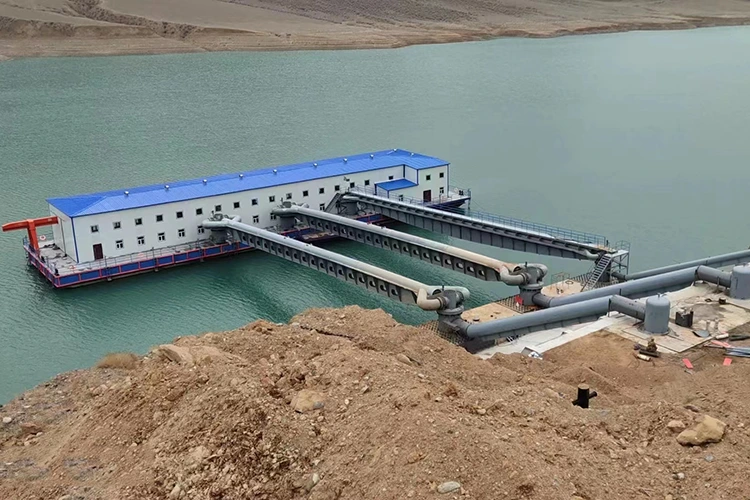
Waters with Complex Terrain Pumping Station
HAIDING SHIPYARD, a professional China supplier, presents its specialized Waters with Complex Terrain Pumping Station, engineered for water extraction in environments where conventional equipment fails. Designed for mountainous rivers, coastal mudflats, and areas with extreme water level fluctuations, our modular pumping stations provide a reliable and adaptable solution. This product integrates our proven sectional construction technology, enabling deployment in logistically challenging locations.
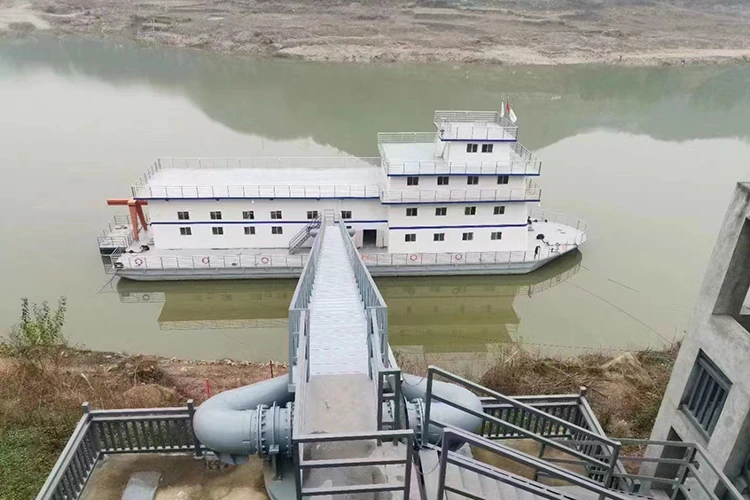
Waters with Large Water Level Fluctuations Pumping Station
As a premier China manufacturer, HAIDING SHIPYARD introduces its specialized Waters with Large Water Level Fluctuations Pumping Station — a self-adjusting floating solution engineered for reservoirs, tidal rivers, and lakes where water levels can change dramatically. This innovative station maintains a consistent submerged intake, effectively eliminating pump cavitation, sediment ingestion, and operational interruptions.
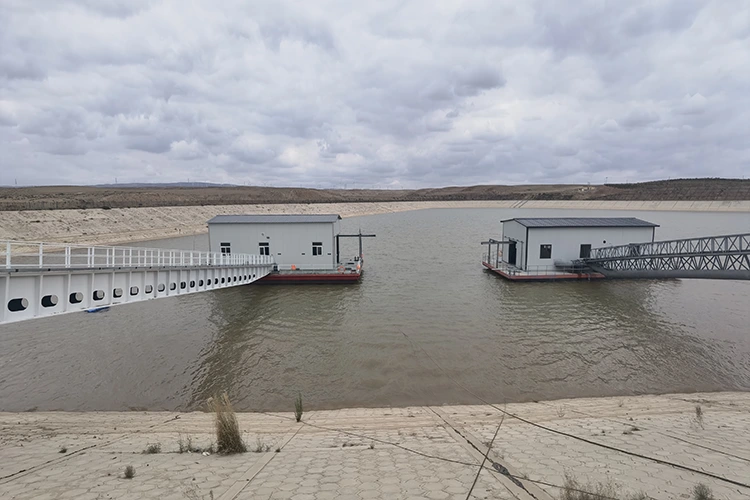
Severe Cold Areas Pumping Station
This China Severe Cold Areas Pumping Station is a modular floating water intake equipment specially designed by HAIDING SHIPYARD, a manufacturer based on years of experience in marine engineering equipment research and development, for high-latitude and low-temperature snowy conditions. It addresses common industry problems such as water body freezing, equipment cracking, pipeline blockage, and complete machine shutdown during the extremely cold northern winters.
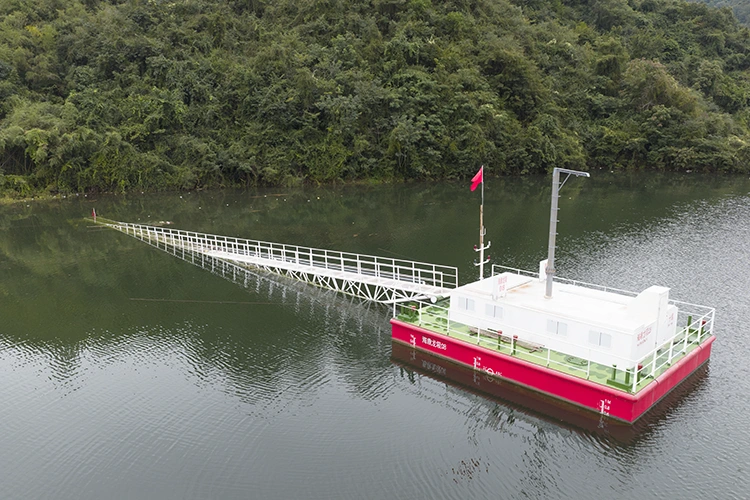
Polluted Water Treatment Pumping Station
The Polluted Water Treatment Pumping Station is a modular water pumping equipment developed by HAIDING SHIPYARD for industrial and mining environmental protection scenarios. It is specifically designed to handle water bodies with complex medium compositions and dynamic water levels, such as tailings ponds and industrial wastewater pools.
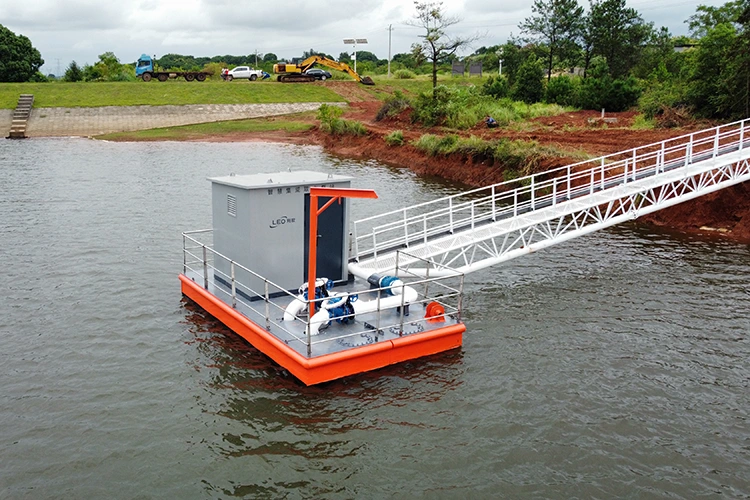
Sewage Treatment Pumping Station
The Sewage Treatment Pumping Station provided by HAIDING SHIPYARD Factory is an aquatic pumping equipment developed based on the experience of ship floating structure engineering. It is specifically designed for complex water bodies such as various sewage ponds, tailings dams, and storage ponds. It breaks away from the traditional logic of constructing concrete pump rooms, integrating the pump unit, filtration system, and operation platform onto a modular floating structure.
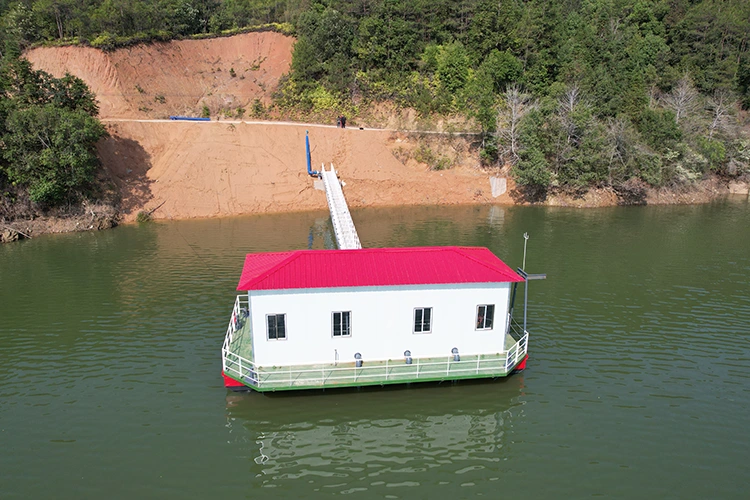
Water Purification Pumping Station
Water Purification Pumping Station is a modular water treatment pumping station developed by HAIDING SHIPYARD a professional manufacturer in China for lake, reservoir, and municipal water supply projects. The floating design can adapt to changes in water levels, while the intelligent monitoring and remote control system enables real-time monitoring of key data such as flow rate, pressure, and turbidity. Welcome to contact us and get a quote now!
HAIDING SHIPYARD is a famous Sectional Water Intake Floating Ship manufacturer and supplier in China. If you want to buy high-quality and the newest products, please contact us immediately.
News Recommendations