Hoisting Self-elevating Platform
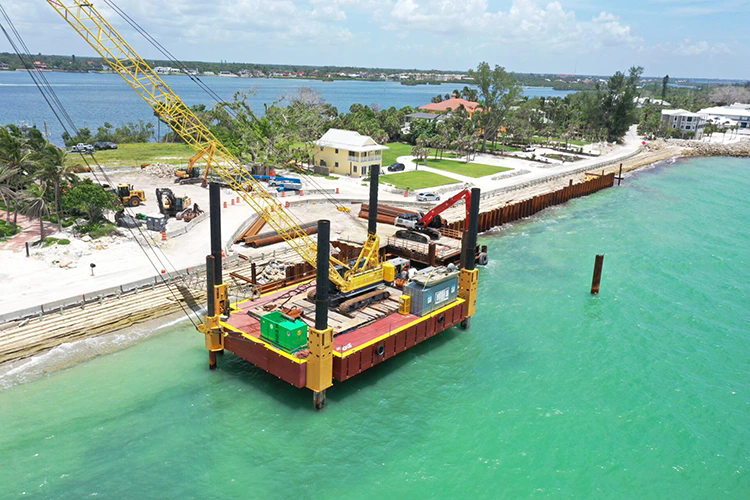
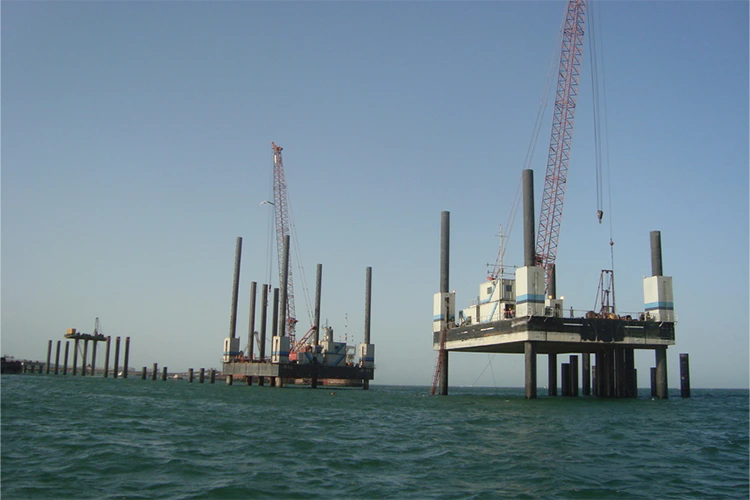
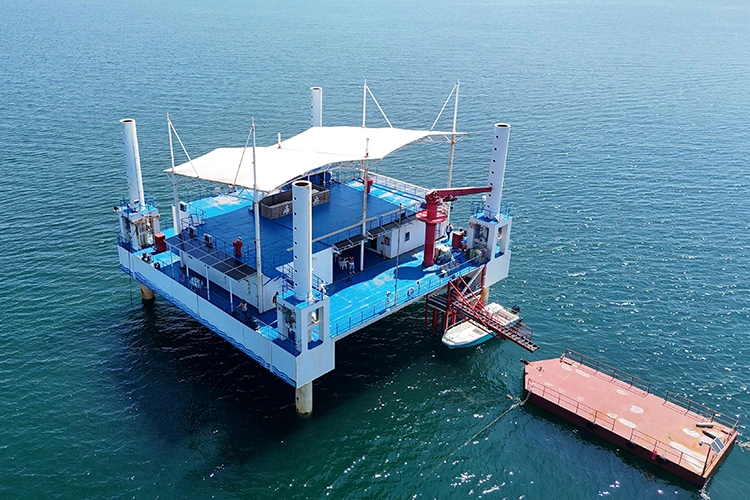
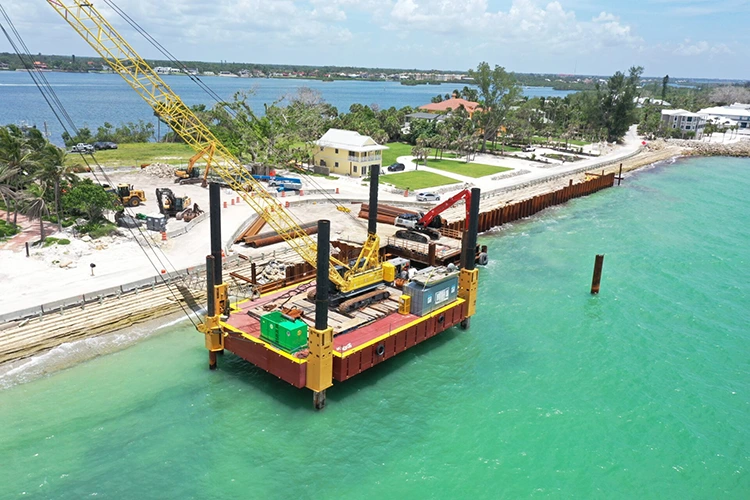
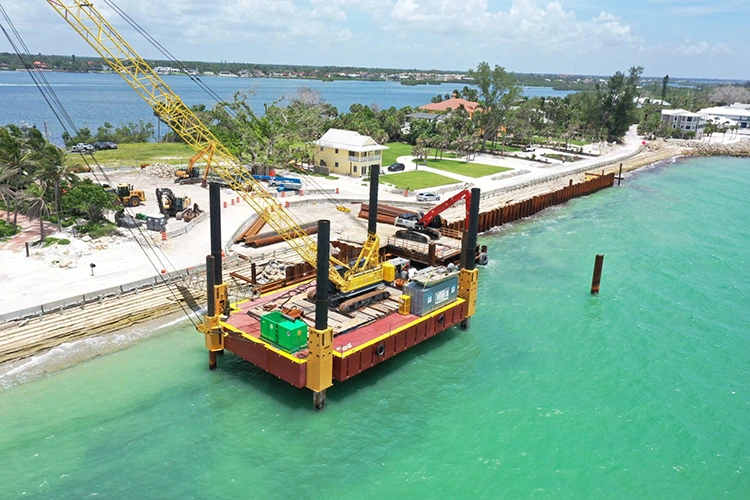
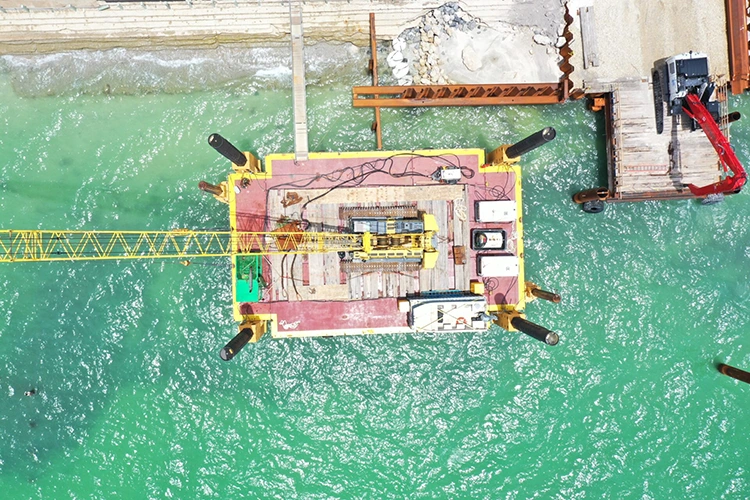
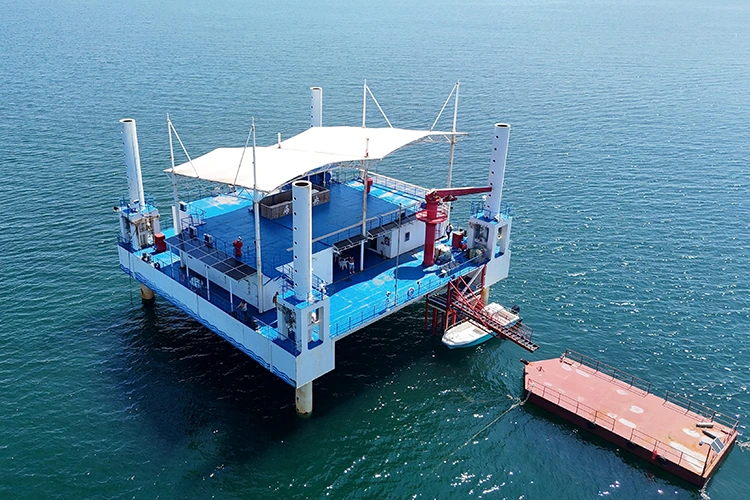
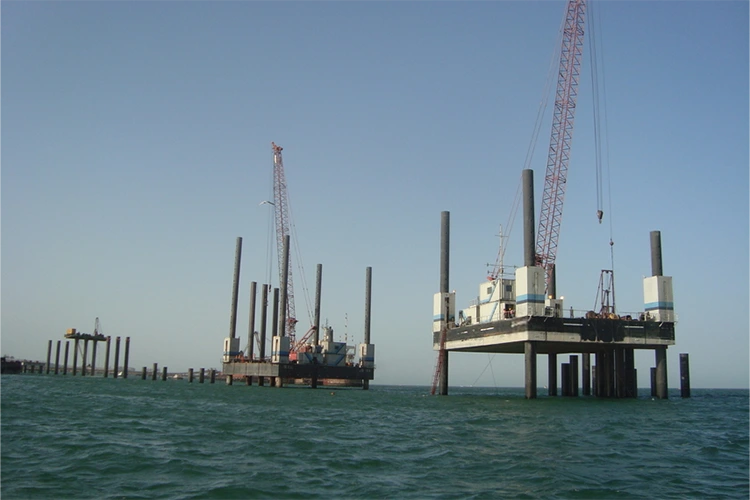
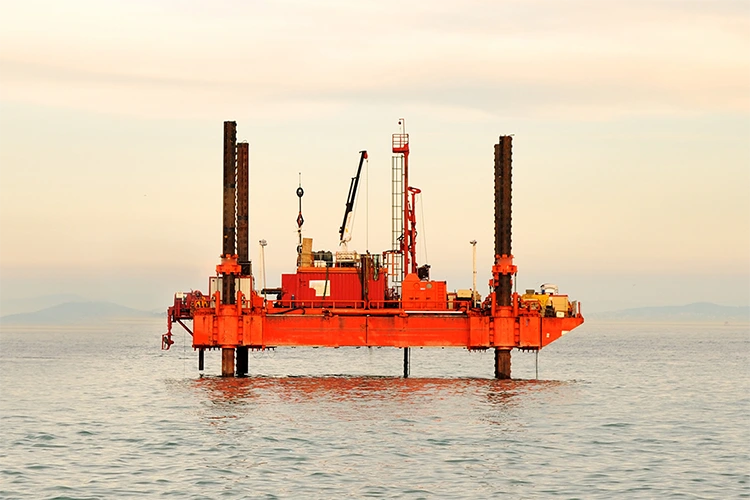
Looking for a manufacturer of Hoisting Self-elevating Platforms? Choose HAIDING SHIPYARD. We are a specialized Chinese manufacturer offering platforms suitable for waters ranging from shallow to deep (3–100m). Equipped with an 800-ton class slewing crane, these platforms feature Grade 12 wind resistance and high-precision positioning, delivering 40% higher lifting efficiency than traditional floating cranes.
Our Hoisting Self-elevating Platforms address common industry challenges associated with traditional floating cranes, such as insufficient load capacity, significant positioning errors, poor resilience against sea conditions, low operational safety, and inefficient construction. Standard equipment includes an 800-ton class, 360° fully hydraulic slewing crane.
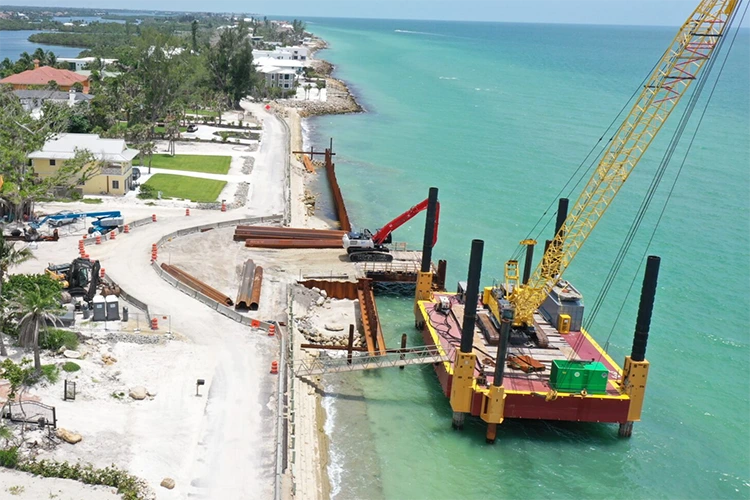
Supported by an automatic hydraulic synchronous leveling system, BeiDou/GPS high-precision positioning technology, and a structure capable of withstanding Grade 12 winds and waves, the platform enables stable, heavy-load lifting across the entire maritime spectrum—from shallow to deep waters.
Lifting efficiency per cycle is 40% higher than that of traditional floating cranes. The platform precisely executes critical operations such as offshore platform module lifting, wind turbine nacelle installation, shipwreck salvage, and the transport of large-scale maritime equipment, making it an essential asset for modern deep-sea heavy industry and offshore renewable energy infrastructure.
Key Product Features
High-Tonnage Heavy-Load Lifting
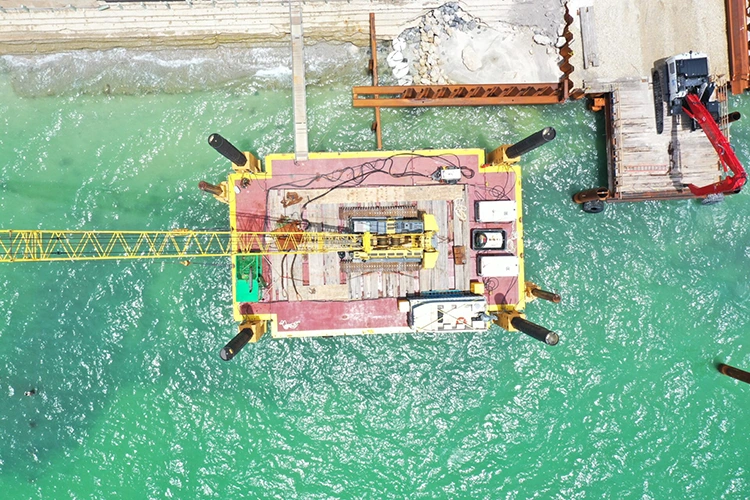
Equipped with an 800-ton class, fully hydraulic 360° slewing crane featuring a maximum operating radius of 45m and a main hook lifting height of ≥80m. Dual-winch synchronous control and lifting speeds of 0.5–2m/min enable the handling of heavy components, such as 16MW wind turbine nacelles and platform modules weighing 300–500 tons. The main load-bearing beams utilize Q550 high-strength steel (≥50mm thick), supporting a local distributed load of ≥120kN/m² and a structural safety factor of ≥1.8, capable of withstanding instantaneous impact loads during lifting.
High-Precision Dynamic Control
Features dual-axis inclinometers with ±0.05° precision and a BeiDou/GPS dual-mode positioning system, ensuring automatic leveling prior to operation with a horizontal error of ≤0.1°. Real-time dynamic compensation for platform tilt during wind and wave conditions keeps component positioning errors within ±0.5m, effectively preventing collisions and misalignment during mating operations. Equipped with high-precision load sensors and moment limiters, the system features automatic overload alarms and forced shutdown capabilities, eliminating safety accidents at the source.
Adaptable to the full range of water depths
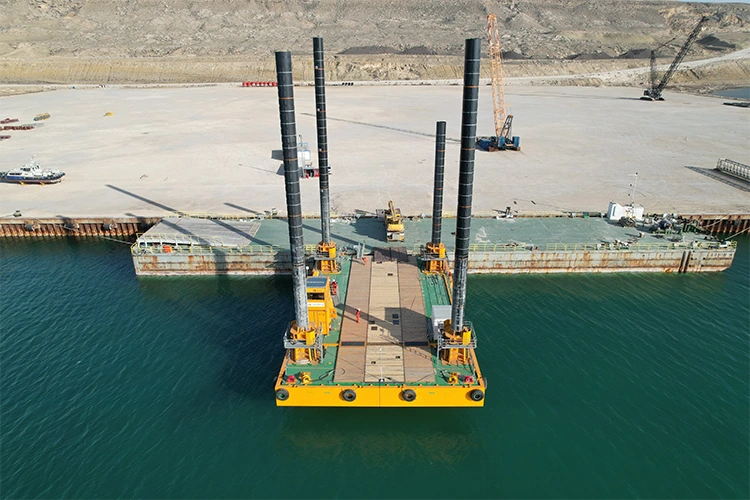
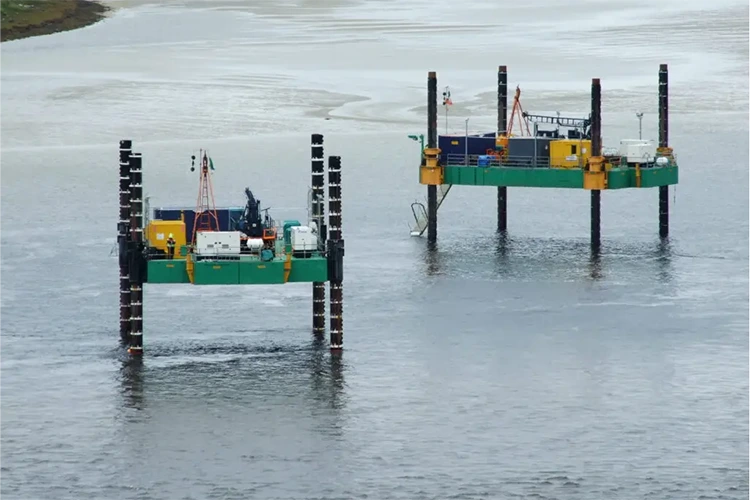
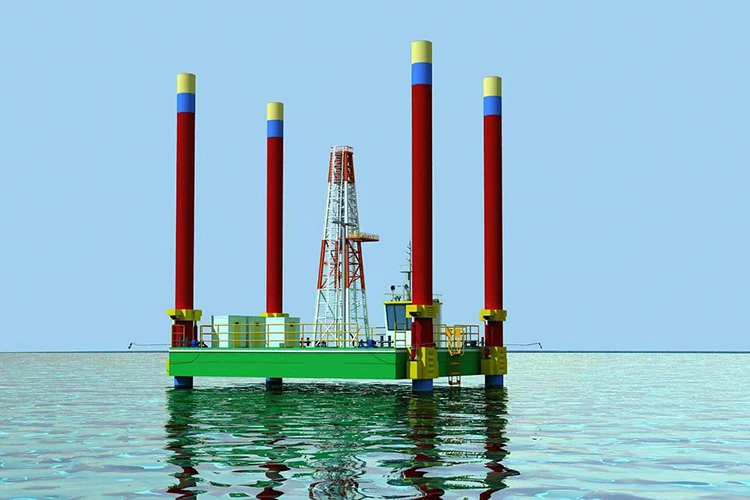
It utilizes four sectional truss-style jack-up legs (diameters of 2.8–3.5m; customizable lengths of 20–120m), covering operational water depths from 3m to 100m. The expandable spud cans offer a maximum contact area of ≥80m², preventing settlement or slippage on soft seabeds. The unit withstands Beaufort scale 12 winds, 6m wave heights, and 2.5-knot currents; its lifting equipment features IP65 dust and water protection, enabling continuous operation in South China Sea monsoon conditions and the ice-prone waters of Bohai Bay during winter.
Modular, separable design
The equipment is divided into 6–8 independent modules, with a maximum single-section weight of ≤120 tons, making Hoisting Self-elevating Platform compatible with global transport via ocean-going barges or semi-submersible vessels. On-site assembly uses flange and high-strength bolt connections, allowing for completion of assembly and commissioning within 7–10 days—a deployment cycle 50% shorter than that of traditional integrated platforms. The lifting winches and luffing mechanisms feature modular structures, allowing for the removal and replacement of entire units in the event of a fault, with maintenance taking only 12 hours; the jack-up legs are constructed from NM500 wear-resistant steel, ensuring a service life of ≥25 years in deep-sea conditions.
Detailed Technical Parameters
|
ParameterCategory |
SpecificItem |
SpecificationRange |
Remarks |
|
Basic Dimensions |
Total Platform Length (m) |
60-80 |
6-8 sections, single section length ≤15m |
|
|
Total Platform Width (m) |
25-30 |
Effective deck operation area ≥70% (including crane base) |
|
|
Platform Depth (m) |
6.0-7.0 |
Ensures large-load buoyancy and equipment cabin space |
|
Lifting Performance |
Number/Type of Spud Legs |
4/truss-type |
Spud leg diameter 2.8-3.5m |
|
|
Spud Leg Length (m) |
20-120 |
Adapted to 3-100m water depth, customizable |
|
|
Lifting Speed (m/min) |
0.2-0.4 |
Full-load lifting speed ≥0.2m/min |
|
|
Seabed Insertion Depth (m) |
≥10 |
Expandable spud can optional for soft soil (contact area ≥80㎡) |
|
Load & Hoisting Performance |
Total Platform Load (t) |
3000 |
Including crane, components, personnel and materials |
|
|
Deck Uniform Load (kN/㎡) |
70-80 |
Crane base area load ≥120kN/㎡ |
|
|
Crane Rated Lifting Capacity (t) |
≤800 |
360° slewing, maximum working radius 45m |
|
|
Crane Lifting Height (m) |
≥80 |
Main hook lifting height, meeting wind turbine main engine hoisting |
|
|
Hoisting Positioning Accuracy (m) |
≤±0.5 |
GPS+Beidou dual positioning + leveling compensation |
|
Structure & Material |
Platform Material |
Main structure: Q550 high-strength steel; Deck: NM500 wear-resistant steel |
Main load-bearing beam thickness ≥50mm |
|
|
Anti-corrosion Treatment |
Deep-sea heavy anti-corrosion coating + cathodic protection |
Underwater anti-corrosion life ≥15 years |
|
|
Leveling Accuracy |
±0.1° |
Full-automatic hydraulic leveling system |
|
Safety Configuration |
Wind Resistance Grade |
Grade 12 |
Platform in raised state, crane windproof anchoring |
|
|
Emergency System |
Emergency generator (300kW), manual lifting device, crane windproof brake |
Manual lifting for emergency spud leg recovery |
|
|
Monitoring System |
Level, load, wind speed, positioning monitoring |
Data uploaded to shore-based command center in real time |
|
Certification Standard |
Product Certification |
ABS/CCS/DNV marine platform certification |
Complies withRules for Classification of Mobile Offshore Units &Crane Safety Regulations |
Why choose this lifting platform?
Superior heavy-load capacity
Unlike traditional offshore lifting equipment, which is often limited by tonnage and unable to handle ultra-large components, this unit offers a stable lifting capacity of 800 tons. This fully meets the heavy-duty construction requirements for mainstream offshore wind power and deep-sea platforms. It enables the one-time lifting of large modules, eliminating the need for sectional splicing—thereby significantly reducing construction errors and schedule-related costs.
Industry-leading wind resistance
While conventional floating cranes are restricted to calm sea conditions, this unit’s Beaufort scale 12 wind resistance allows it to operate in extreme marine environments. It enables construction during monsoon seasons, high-wave conditions, and winter in cold waters, effectively extending the annual operational window and solving the critical challenges of short operational windows and unpredictable schedules in marine engineering.
Precise and Controllable Alignment
Leveraging an automatic leveling and dynamic load monitoring system, the system ensures strict control over lifting alignment accuracy and component coaxiality. It meets the ultra-high installation standards required for wind turbine nacelles and precision deep-sea platform equipment, preventing mating errors and collision damage, while complying with major domestic and international acceptance standards for maritime engineering.
Flexible Deployment and Low Cost
Featuring a modular, lightweight, and separable structure, the system faces no special transport restrictions and can be rapidly deployed to maritime regions worldwide. Equipment transfer and berthing operations can be completed without relying on specialized heavy-duty terminals, significantly reducing costs associated with port leasing, equipment scheduling, and vessel support, while catering to both short-term emergency salvage and long-term infrastructure project needs.
Intelligent Safety Protection
Equipped with multiple protection mechanisms, including real-time load monitoring, moment limiting, automatic alarms, and forced shutdown, the system monitors the lifting status throughout the operation. Hoisting Self-elevating Platform eliminates risks associated with overloading, unbalanced loading, and tilting, drastically reducing safety hazards in high-risk offshore lifting operations and offering safety levels far superior to traditional lifting equipment.
Key Application Scenarios
1. Offshore Oil & Gas Platform Construction and Retrofitting
Suitable for construction in deep-sea oil and gas fields such as the Bohai Bay and South China Sea, the system can perform single-lift operations for platform deck modules and equipment compartments weighing 300–500 tons. It achieves a positioning accuracy of ±0.5m and can complete the lifting of 4–5 module sets per day, boosting construction efficiency by 40% compared to traditional floating cranes.
It is capable of handling reinforcement and retrofitting projects for aging platforms, precisely lifting 200–300 ton support beams and anti-collision reinforcement components. By utilizing a stable working platform to isolate the effects of wind and waves, it ensures both safety and precision during retrofitting operations.
2. Offshore Wind Power Equipment Installation and O&M
Suitable for construction at large-scale 16MW offshore wind farms off the coasts of Jiangsu and Fujian, the system can lift 800-ton class wind turbine generators and 300-ton class tower sections. Its 80-meter lifting height accommodates operations in waters up to 100 meters deep. The automatic leveling system compensates for tilting caused by wind and waves in real-time, ensuring the coaxiality deviation between the generator and tower section remains ≤1mm. Capable of lifting equipment for offshore wind foundation maintenance, such as that required for underwater cutting and grouting, in the 100–200 ton range; the Hoisting Self-elevating Platform’s stable anchoring system supports up to 72 hours of continuous maintenance operations.
3. Shipwreck Salvage and Channel Obstruction Clearance
Suitable for emergency shipwreck salvage in waters such as the East China Sea and Yellow Sea; capable of lifting wreckage from 300–800 ton cargo ships and engineering vessels, with multi-point synchronous lifting to effectively prevent hull deformation or damage.
Designed to withstand 6-meter waves, enabling continuous salvage operations in complex sea conditions. Capable of precision lifting and removal of heavy obstructions such as abandoned channel piles and large subsea debris to rapidly clear navigation hazards and ensure maritime safety.
4. Transport of Large-Scale Maritime Equipment
Capable of ship-to-platform lifting for high-end equipment in the 500–800 ton range, including deep-sea exploration gear, submersible mother-ship modules, and subsea observation stations; high-precision positioning eliminates the risk of collision damage. Can undertake the transport of port machinery such as 300–500 ton quay cranes and portal cranes; capable of docking at simple piers without the need for specialized heavy-lift terminals, significantly reducing port construction costs.
Hoisting Self-elevating Platform vs. Conventional Floating Cranes
|
Comparison Item |
Hoisting Self-elevating Platform |
Conventional Floating Cranes |
|
Operational Principle |
Spud legs anchor to seabed, creating a rigid, stable lifting platform |
Floating vessel operation, subject to wind, waves, and currents |
|
Rated Lifting Capacity |
≤800 tons (upgradable to 1,000 tons) |
200–500 tons (larger units require massive hulls) |
|
Maximum Operating Radius |
45m |
20–35m |
|
Lifting Height (main hook) |
≥80m |
40–60m |
|
Hoisting Positioning Accuracy |
≤±0.5m (GPS+Beidou + leveling compensation) |
±1.5–3.0m (affected by vessel roll/pitch/heave) |
|
Operational Sea State |
Beaufort Scale ≤12 (significant wave height ≤6m) |
Beaufort Scale ≤6 (significant wave height ≤1.5–2.0m) |
|
Annual Available Working Days |
340–355 days/year |
270–300 days/year |
|
Leveling/Stability Control |
Full-automatic hydraulic leveling, horizontal error ≤±0.1° |
Relies on ballast water adjustment; crane boom motion amplifies vessel instability |
|
Single-Lift Capability |
300–500 ton modules in one lift |
100–300 ton modules; large components require split lifts |
|
Wind Resistance (operational) |
Grade 12 (sustained) |
Grade 6 (limited operations above this) |
|
Safety Systems |
Real-time load monitoring, moment limiter, overload alarm, forced shutdown, dual-winch synchronous control |
Basic load indicators; limited anti-heel/anti-trim compensation |
|
Deployment Cycle |
7–10 days (modular assembly, 6–8 sections) |
30–60 days (integrated hull refit and commissioning) |
|
Transport Flexibility |
≤120 tons/section, standard ocean barges, no special terminal required |
≤500–1,000 ton single-piece hull, requires heavy-lift terminals and special permits |
|
Draft (unladen) |
2.0–3.0m (shallow-draft design) |
4.5–8.0m (deep-draft heavy hull) |
|
Structural Material |
Q550 high-strength steel (≥50mm), safety factor ≥1.8 |
Standard marine steel, safety factor 1.3–1.5 |
|
Emergency Systems |
300kW emergency generator, manual leg lifting, crane windproof brake, emergency oxygen supply |
Limited emergency systems; reliant on tugboat assistance in emergencies |
|
Construction Continuity |
Supports 72-hour continuous lifting operations |
Frequent weather holds; cannot operate in rough seas |
|
Support Vessel Requirement |
None (self-contained lifting platform) |
Requires 2–4 support vessels (tugboats, supply vessels, anchor handlers) |
Customized Service System
Customization of Operational Parameters and Functions
Leg specifications (ranging from 20m to 120m) can be customized based on water depth, sea conditions, and engineering load requirements; supports upgrades to 1,000-ton class ultra-heavy-duty cranes. Options include ice-breaking devices for legs and platform thermal insulation systems for polar regions, as well as stainless steel crane components and enhanced anti-corrosion coatings for high-salinity tropical waters, ensuring suitability for extreme global operating environments.
Comprehensive Value-Added Support Services
Assists clients in obtaining certifications from international classification societies (e.g., ABS, CCS, DNV) and offshore lifting operation qualifications, streamlining project implementation. Provides specialized lifting solution designs, including professional technical plans covering component stress analysis, lifting path planning, and optimization for specific sea conditions. We can coordinate with marine engineering teams to provide an integrated service package—covering platform leasing, heavy-lift installation, and post-installation O&M—to ensure efficient project execution.
FAQ
1. In which specific construction scenarios can the Hoisting Self-elevating Platform operate under Beaufort Scale 12 wind conditions?
The platform’s Beaufort Scale 12 rating refers to its stability during active operations. It enables normal construction in environments such as offshore high-wind conditions, the South China Sea monsoon season, and the Bohai Bay during winter cold fronts and rough seas. Unlike traditional floating cranes—which are limited to calm weather—this platform offers greater operational flexibility and significantly extends the annual construction window.
2. Does the 800-ton lifting precision meet the requirements for installing high-end wind power equipment?
Yes, it is fully compatible. With a static leveling error of ≤0.1°, a lifting positioning deviation of ≤0.5m, and a coaxiality deviation of ≤1mm during the mating of wind turbine towers and nacelles, the platform meets precision installation standards for 16MW (and larger) offshore wind turbines and complies with domestic and international acceptance specifications for new energy projects.
3. Does the modular structure compromise the structural stability of the unit under heavy loads?
No. The self-elevating platform utilizes a high-strength flange and pre-stressed bolt connection method, with structural reinforcement at the connection points. The overall structure boasts a safety factor of ≥1.8, matching monolithic platforms in terms of load-bearing capacity, deformation resistance, and stability against wind and waves, thereby fully meeting the demands of long-term, heavy-lift operations in deep-sea environments.
4. Is there a risk of platform settlement or slippage when operating on soft soil or silty seabeds?
No. The equipment is equipped with large, expandable spud cans offering a maximum contact area of ≥80m². This design effectively distributes the platform's self-weight and operational loads, making it suitable for silty, soft, and sandy seabeds while preventing safety issues such as settlement, slippage, or tilting during operations.
5. Can ultra-high-tonnage equipment be customized based on project load requirements?
Yes. We can upgrade the system to a 1,000-ton class ultra-high-tonnage lifting capacity based on specific project needs. Additionally, we can optimize structural load-bearing capabilities, hydraulic systems, and safety modules to accommodate the lifting of massive offshore components and specialized deep-sea heavy engineering requirements.
Send Inquiry
Contact Info
-
Address
No. 8888, Wanhong Avenue, Huanglou Sub-district, Qingzhou City, Weifang City, Shandong Province, China
-
Tel
-
Email
Looking to buy a dredger, tugboat or custom engineering vessel? Send your requirements to HAIDING SHIPYARD for product details, technical consultation and a competitive shipbuilding quotation.
News Recommendations