• Modular Shipbuilding

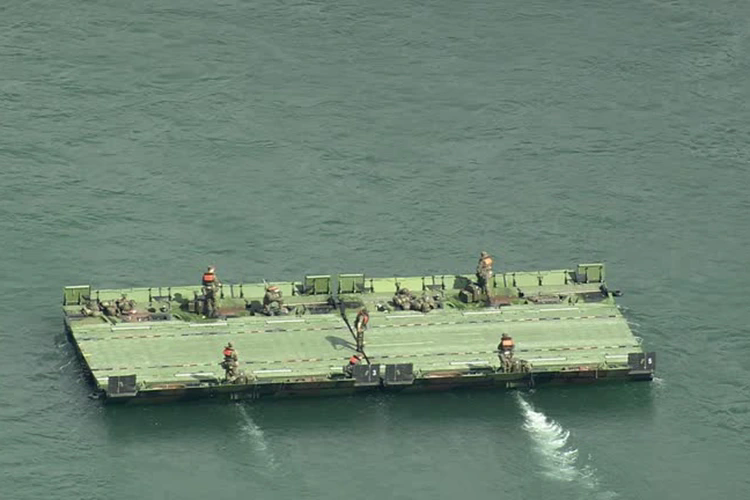
    Our unique modular technology enables land transport and rapid on-site assembly of large vessels, ensuring flexible deployment worldwide.

  • End-to-End Service

    We provide end-to-end service from design to lifelong maintenance, delivering continuous value and operational excellence.

  • Global Engineering Solutions

    With vessels exported to 132 countries, we offer a wide range of engineering ships for dredging, energy, transport, and construction.

  • Certified Heavy-Capacity

    Our coastal and riverside berths support construction of vessels up to 35,000 tons, backed by international standards and robust quality assurance.

Product Category

  • Sectional Dredger
    Sectional Dredger

    As a manufacturer, HAIDING SHIPYARD provides high-quality sectional dredger. All vessels adopt reinforced CCSB marine steel structure and multi-layer heavy-duty anti-corrosion treatment, equipped with Weichai, Cummins and other international brand core components. Certified by CCS, DNV and ISO, our dredgers stably adapt to -20℃~45℃ extreme temperature environments and resist Beaufort Level 8 wind and waves, delivering high stability and strong environmental adaptability.


    Leveraging a modern 59,400-square-meter production base, 28 core technology patents, and over 30 years of shipbuilding experience serving 132 countries, we have developed a comprehensive product portfolio of dredgers. Our four main model series cover a wide range of operating environments—including ultra-shallow waters, inland rivers, reservoirs, coastal ports, and deep-sea areas—fully meeting the diverse needs of global dredging and mining projects.


    Full Series & Core Advantages

    1. Trailing Suction Hopper Dredger

    Integrates self-propulsion, dredging, mud transportation and mud discharge into one autonomous system. With a 3000-nautical-mile super endurance range, this model is specially customized for open-sea channel widening, island reef expansion and large-scale offshore reclamation, supporting long-distance continuous navigation and high-efficiency unmanned dredging operation.


    Sectional Dredger

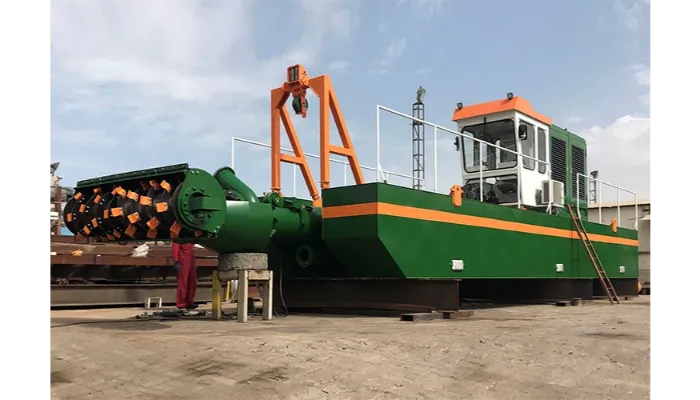
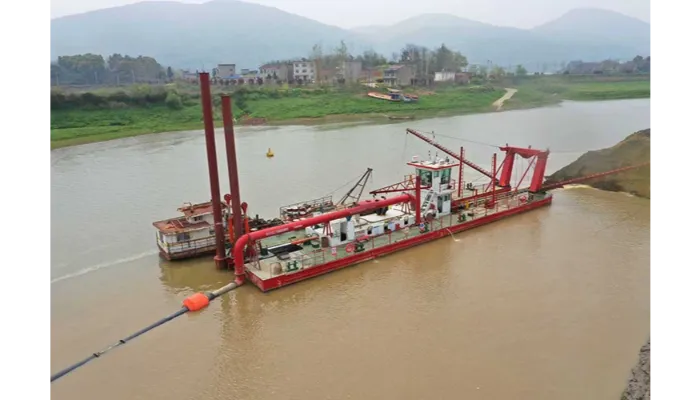
    2. Cutter Suction Dredger

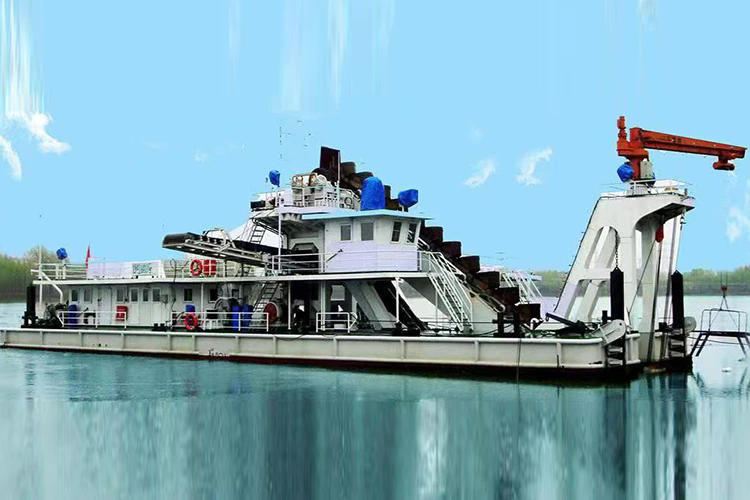
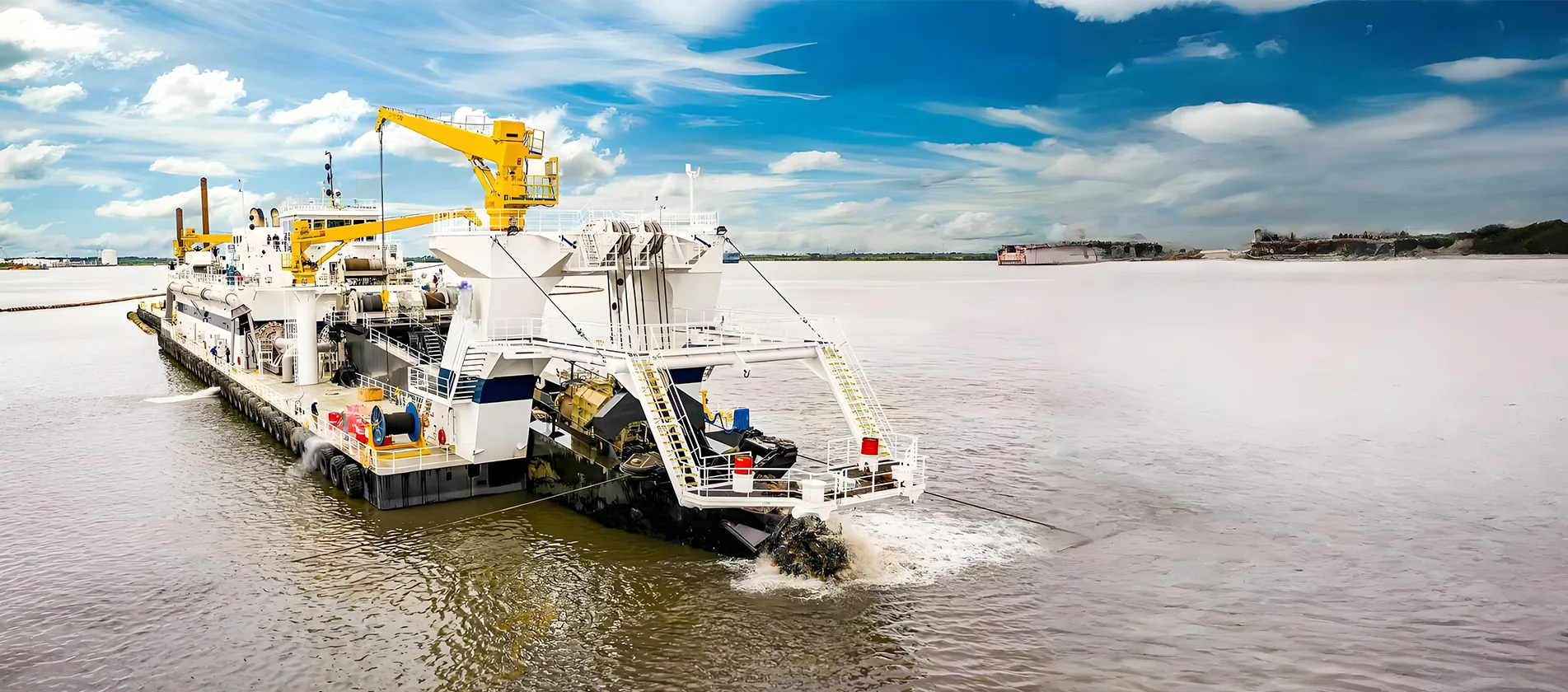
    Configured with intelligent modular cutterhead and dual hydraulic & mechanical power modes, it achieves an ultra-long 3000-meter mud conveying distance. Adaptable to complex geology such as silt, sand and weathered rock, it is widely applied in river dredging, reservoir desilting, port deepening and waterway renovation projects.


    Sectional Dredger


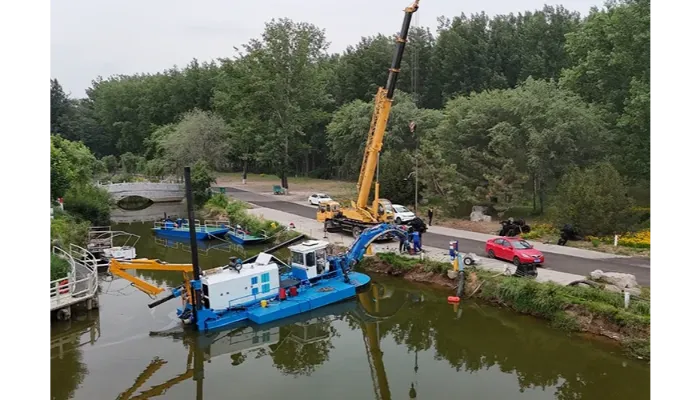
    3. Amphibious Multifunctional Dredger

    Adopts exclusive crawler + floating body dual-drive system to realize integrated land-water operation. Capable of working in ultra-shallow water as low as 0.5m and traveling freely on muddy shoals and swamps, it is the ideal equipment for tidal flat development, inland river emergency flood drainage and post-typhoon sediment cleaning.


    Sectional Dredger


    4. Bucket Chain Dredger

    Optimized with high-density anti-leakage bucket structure to reduce sediment loss during operation. The equipment supports rapid functional upgrading and can be converted into professional mining units, realizing integrated dredging and mineral separation for river sand, gold ore and iron ore extraction projects.


    Sectional Dredger


    Modular Customization & Extreme Condition Adaptation

    We provide full-lifecycle personalized customization for all sectional dredger models. According to project water depth (0.5m–52m), geological conditions and construction scale, we flexibly adjust equipment size, power configuration and functional modules.

    Targeted upgrades are available for extreme working scenarios, including low-temperature anti-freezing systems for polar regions and enhanced heat dissipation systems for high-temperature tropical areas, ensuring stable operation in global complex environments.

    Our Factory & Company Strengths

    1. Large-Scale Standard Production Base

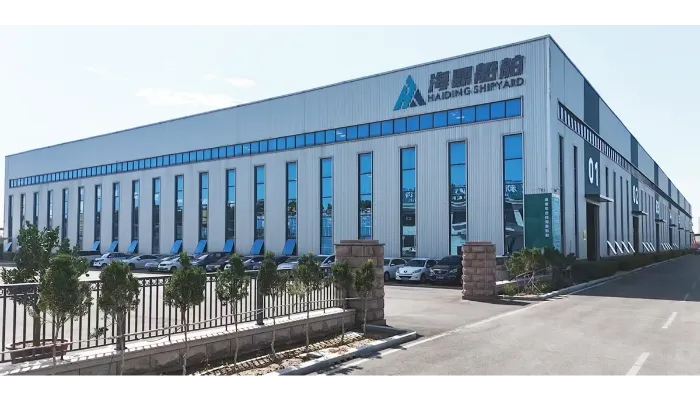
    Our 59,400㎡ standardized manufacturing base is equipped with 15 professional production lines and exclusive coastal & riverside assembly berths. It supports assembly and launching of 35,000-ton hulls, realizing mass production and large-scale customized marine engineering equipment delivery.

    2. Independent R&D & Modular Core Technology

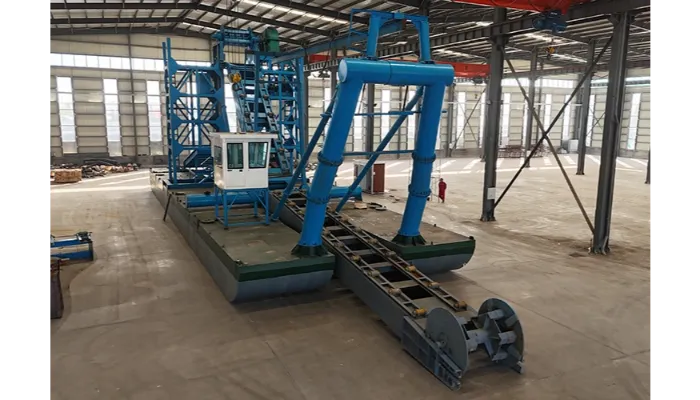
    Owning 28 core technical patents and a professional senior marine engineering team, we master mature segmented modular splitting technology. Hundred-meter-level dredgers can be disassembled for road and rail transportation, breaking waterway transportation restrictions and supporting rapid on-site assembly in remote inland areas.

    3. Strict Quality Control & Authoritative Certification

    All products adopt high-grade CCSB marine steel and multi-layer anti-corrosion treatment, with core power components imported from international famous brands. All vessels pass CCS, DNV, ISO and other authoritative certifications, adapting to -20℃~45℃ temperature range and Level 8 wind-wave working conditions.

    4. Rich Global Project Experience

    With 30+ years of shipbuilding manufacturing experience, our dredging equipment has been exported to 132+ countries, covering waterway dredging, land reclamation, port construction, mineral mining and emergency rescue fields, accumulating a large number of successful global engineering cases.

    5. One-Stop Service

    We provide integrated pre-sales scheme customization, in-production full-process quality supervision and global logistics arrangement. After sales, we offer 24/7 remote technical diagnosis, 48-hour on-site support in key regions, 2-year warranty for core components and fast global supply of original spare parts.

    Sectional Dredger

    Authoritative Certification & Qualification Certificates

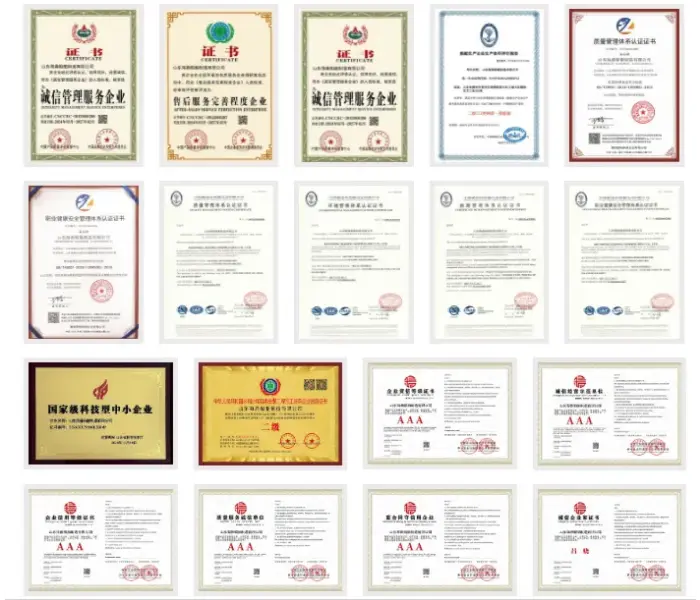
    HAIDING SHIPYARD holds complete enterprise qualification certificates and product marine certification credentials. Our dredgers have obtained multiple authoritative approvals including CCS, DNV, BV and ISO 9001 quality management system certification. For certificate scans, inspection reports and tender qualification documents, welcome to contact our professional sales team to obtain full supporting materials.


    Product Comparison: HAIDING VS Traditional Integrated Dredger

    Comparison Item

    HAIDING SHIPYARD Sectional Modular Dredger

    Traditional Integrated Dredger

    Structural Design

    Detachable segmented modular structure, flexible disassembly and assembly

    Integral welded rigid structure, non-detachable, fixed overall size

    Transportation Mode

    Support road/rail/sea multi-mode transportation, adapt to landlocked remote sites, no waterway restriction

    Only support water towing transportation, unable to enter inland waterless areas, strong geographical limitation

    Deployment Efficiency

    Fast on-site assembly, short project startup cycle, rapid project launch

    Complicated mobilization and deployment, long preparation cycle, slow project progress

    Working Condition Adaptability

    Full coverage of 0.5m ultra-shallow shoal, inland river, reservoir, coastal and deep-sea working conditions, adaptable to -20℃~45℃ extreme environments

    Single applicable scenario, only suitable for conventional coastal and open water areas, poor extreme environment resistance

    Function Customization

    Free adjustment of hull size, power and functional modules, support mining upgrade and extreme environment modification

    Fixed function and parameters, difficult to modify and upgrade, poor project matching

    Operation & Maintenance

    Modular independent components, local replacement for faults, low maintenance cost and short downtime

    Overall linkage structure, partial failure affects whole machine operation, high maintenance difficulty and cost

    Project Cost

    Low logistics and deployment cost, flexible configuration avoids resource waste, high cost performance

    High freight and mobilization cost, fixed configuration leads to low utilization rate of partial projects

    Quality & Certification

    CCB/DNV/BV/ISO full certification, CCSB marine steel + multi-layer anti-corrosion, 8-level wind and wave resistance

    Single certification configuration, ordinary steel structure, poor corrosion resistance and environmental stability


    Main Application Scenarios

    ·  Inland river dredging, reservoir sediment removal and waterway renovation

    ·  Coastal port construction, channel deepening and land reclamation projects

    ·  Tidal flat governance, shallow water maintenance and post-disaster emergency desilting

    ·  Underwater river sand, gold ore and iron ore mining & mineral separation

    ·  Global offshore and inland water emergency dredging engineering


    FAQ

    Q1: Are you a real manufacturer or trading company?

    A: We are a professional source manufacturer with independent factories, 15 production lines and professional foreign trade teams, providing pure factory direct sales and customized OEM services.


    Q2: What is the delivery cycle of sectional dredgers?

    A: Standard models support fast delivery. Customized equipment delivery time is determined by project design scheme and production schedule, with controllable and transparent progress.


    Q3: Can the sectional dredger be customized for special working conditions?

    A: Yes. We support full-scenario personalized customization, adjusting hull structure, power configuration, dredging depth and functional modules according to actual water depth, geology and extreme temperature environments.


    Q4: What certifications can be provided for international projects?

    A: We can provide factory qualification certificates, third-party test reports, and authoritative certifications such as CCS, DNV, BV and ISO to meet international bidding and customs clearance standards.


    Q5: Do you provide overseas on-site installation guidance?

    A: Yes. We have 12 global professional engineering teams, arranging 1–3 engineers to provide on-site assembly, commissioning and technical training according to project scale.


    Q6: What is your after-sales warranty policy?

    A: Core components enjoy a 2-year warranty, and the hull structure comes with long-term quality assurance. We provide lifelong technical support and equipment optimization services.


    Q7: Can customers purchase original spare parts separately?

    A: Yes. We supply original factory spare parts for all our dredging equipment with favorable factory prices and fast global delivery.


    Q8: What are your MOQ and payment terms?

    A: MOQ is 1 unit. We support flexible and negotiable payment terms to adapt to different international project cooperation modes.


    Sectional Dredger


    Contact Us

    Welcome to contact Shandong Haiding Shipbuilding Co., Ltd. We can provide high-performance products and fast delivery.

    Service offered: Custom design, factory direct sales, global installation guidance and after-sales service


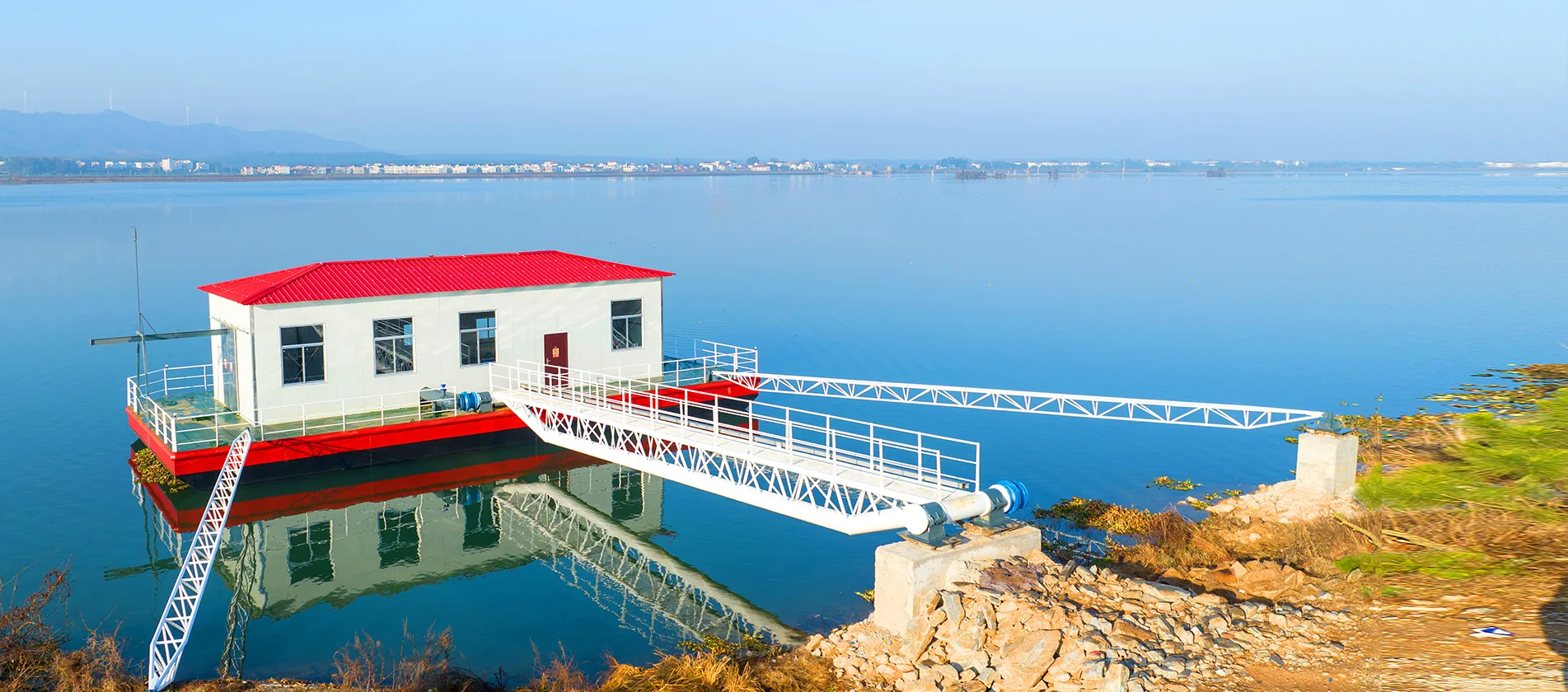
  • Sectional Water Intake Floating Ship
    Sectional Water Intake Floating Ship

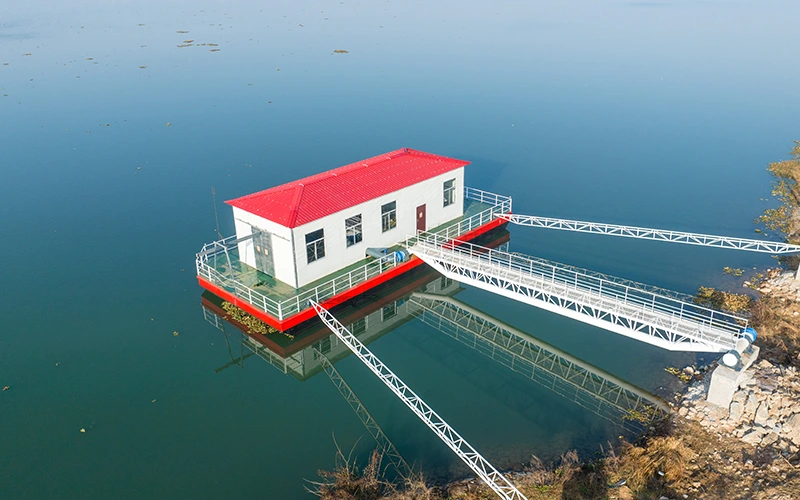
    As a leading China Sectional Water Intake Floating Ship factory, HAIDING SHIPYARD delivers modular water pumping solutions globally.


    What Engineering Principles Ensure Hydrodynamic Stability and Flow Efficiency?

    Floating intake structures must maintain precise hydrodynamic balance across changing water level contours, sediment loads, and dynamic water flow currents. Conventional fixed pumping stations often suffer from costly civil infrastructure demands, rigid site limitations, and operational risks during severe water level drawdown.

    Our Sectional Water Intake Floating Ship engineering utilizes high‑tenacity, anti‑corrosion marine steel hulls specifically designed to absorb dynamic wave motion while protecting internal pumping machinery. Each modular pontoon features internal ballast compartmentalization and reinforced structural bulkheads, providing exceptional buoyancy stability under high‑flow intake operations. Automated intake screen cleaning systems prevent debris accumulation, maintaining continuous flow velocity without manual intervention.


    How Does Advanced Hydraulic Design Optimize Energy Consumption and Pump Longevity?

    Energy efficiency and mechanical wear are critical operational metrics for long‑term pumping installations. Traditional floating platforms often struggle with vortex formation and turbulent intake flow, which lead to cavitation and premature pump impeller degradation.

    Our engineering team integrates computational fluid dynamics (CFD) modeling to refine the underwater intake geometry. By streamlining the submerged hull contours and optimizing bellmouth suction spacing, a smooth, uniform flow velocity is achieved before water enters the suction piping. This fluid stabilization reduces turbulence‑induced energy loss by up to 15%, minimizes vibration across the deck, and extends the operational lifecycle of internal mechanical seals and bearings.


    How Do Modular Architectures Solve Transportation and Scenario Adaptation Challenges?

    Traditional heavy engineering vessels require deep‑draft waterways or specialized marine transit, limiting their access to remote, landlocked construction sites. Our road‑transportable modular designs overcome these geographic barriers through split‑hull assembly systems.

    To meet diverse industrial and municipal demands worldwide, our engineering covers targeted secondary configurations:

    • High‑Capacity Industrial Operations: The heavy‑duty Industrial Water Intake Floating Ship integrates chemical‑resistant internal linings and pre‑filtration intake manifolds, securing continuous, high‑volume water supply for petrochemical complexes and steel processing plants.

    • Agricultural & Municipal Infrastructure: Models like the Agricultural Water Intake Floating Ship focus on low‑maintenance operational cycles for seasonal irrigation networks. Meanwhile, the Water Conservancy Project and Municipal Water Supply Water Intake Floating Ship delivers smart water‑level tracking, seamlessly adjusting intake depths during reservoir fluctuations to protect local aquatic ecosystems.

    • Rapid Deployment & Environmental Scenarios: For emergency post‑disaster scenarios, the modular Emergency Water Intake Floating Ship can be transported by standard flatbed trucks and fully commissioned on‑site within days. Furthermore, specialized lines—including the Environmental Treatment Water Intake Floating Ship and the Special Environment Water Intake Floating Ship—incorporate anti‑pollution bio‑barriers, extreme freeze‑resistant hull insulation, and high‑elevation pump configurations for remote or severe climate installations.


    What Manufacturing Strengths and Full‑Lifecycle Services Support Global Projects?

    Founded in 1993, Shandong Haiding Shipbuilding Co., Ltd. operates a 59,400‑square‑meter shipyard equipped with coastal and riverside assembly berths, 15 specialized production lines, and advanced quality testing systems. Serving clients across more than 132 countries, our elite R&D and engineering team manages the complete lifecycle in‑house—from initial hydrodynamic modeling to final sea trials.

    Certified under ISO 9001 and verified by major classification societies including China Classification Society (CCS) and Bureau Veritas (BV), our manufacturing process ensures complete structural and operational compliance. Beyond vessel construction, we provide end‑to‑end service support—including pre‑sales site diagnostics, supervised field assembly, 3D digital twin modeling, and 24/7 global spare parts dispatching.


    How Do Intelligent Control Systems Enable Autonomous Remote Operation?

    Modern water intake management increasingly relies on digital monitoring to reduce manual labor overhead and prevent system outages in remote or hazardous locations.

    Every Sectional Water Intake Floating Ship can be fitted with integrated SCADA control modules and IoT sensor arrays that track hull tilt, ballast water levels, vibration metrics, and pump discharge pressure in real time. Automated alert protocols immediately notify operators of screen blockages or sudden flow changes, while remote telemetry allows off‑site engineers to adjust intake depths or cycle pumps automatically based on real‑time reservoir data.


    Frequently Asked Questions


    How does a split‑hull modular structure handle overland transport to landlocked project sites?

    The complete hull is engineered as standardized, containerized modules that comply with highway and rail transport dimensions. Once delivered to the destination via standard trucks, local installation crews assemble the modules using high‑strength locking pins and watertight gasket seals, eliminating the need for navigable access waterways.

    What mechanism automatically accommodates severe seasonal water level fluctuations?

    The floating intake platform is anchored using flexible spud poles or articulated mooring arms connected to shore anchors. As water levels rise or fall, the self‑adjusting mooring assembly allows the platform to move vertically while keeping the intake bellmouth at a constant, optimal depth below the surface.

    How are internal pumping systems protected against corrosive or heavily silted water?

    Intake platforms operating in aggressive environments feature high‑grade stainless steel or polymer‑coated piping, paired with multi‑stage mechanical bar screens and automatic back‑flushing filters. These systems prevent silt accumulation, block coarse debris, and protect pump impellers from premature abrasion。

  • Tugboat
    Tugboat

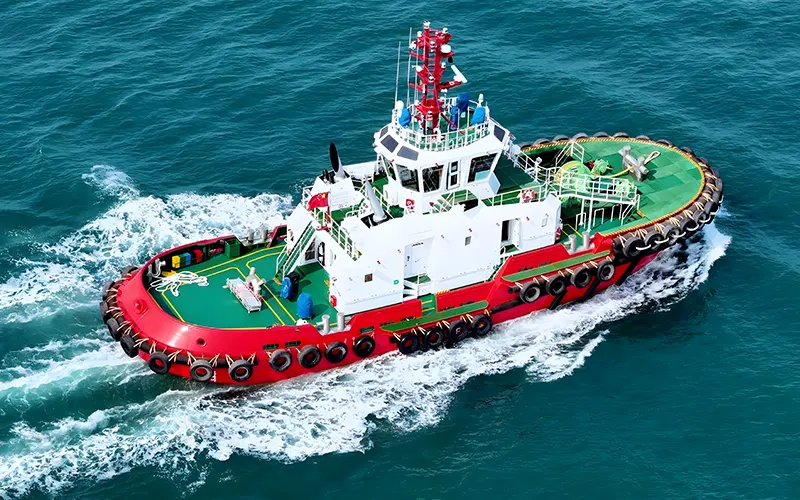
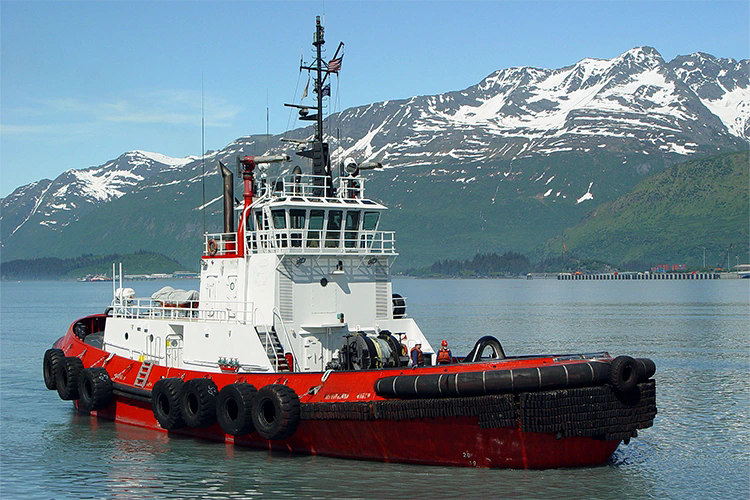
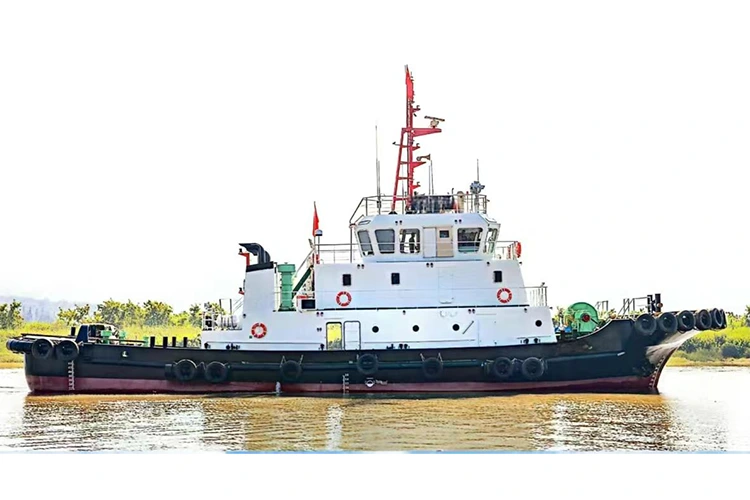
    Haiding Shipyard is a specialized manufacturer and global supplier of tugboats based in China. Holding ISO quality system certifications and approvals from multiple international classification societies, our product range covers all operational scenarios from deep-ocean and harbor operations to inland waterways and is engineered to withstand extreme sea conditions and complex navigation channels. With exports to 132 countries, we serve as a premier source for high-quality tugboats for global maritime projects.


    Tugboats are the core product line at Haiding Shipyard. Leveraging decades of R&D and global project implementation experience, we have created a comprehensive, scenario-specific product matrix. This addresses key industry pain points, such as limited operational versatility, insufficient power in extreme conditions, and poor maneuverability enabling seamless operations across all water environments, from shallow inland waterways to deep-ocean and polar regions.

    Our entire product range holds certifications from authoritative international bodies such as CCS, ABS, DNV, and BV, and complies with ISO quality standards. Widely used in deep-sea towing, port operations, inland shipping, polar scientific research, and maritime emergency rescue, our tugboats are essential equipment for global maritime engineering, shipping logistics, and port operations.


    Why are Haiding tugboats suitable for operations across all water environments?

    Scenario-specific design: Moving beyond the limitations of "one-size-fits-all" designs, we optimize vessels for three core scenarios: deep-ocean operations, confined harbor waters, and complex, shallow inland waterways. Each vessel type features tailored configurations for propulsion, draft, maneuverability, and hull protection to precisely meet specific operational needs.


    All-environment adaptability: Our vessels feature high-strength specialty steel hulls, deep-sea grade anti-corrosion coatings, and modular core components. Integrated with PLC control systems, they offer superior wear and corrosion resistance, as well as the ability to withstand wind, waves, low temperatures, and grounding risks, ensuring reliability in both standard and extreme maritime conditions.


    Proven technical expertise: Our designs integrate years of practical experience in deep-ocean and polar operations, high-frequency port scheduling, and inland waterway maintenance. By combining IMO industry standards with insights from key "Belt and Road" projects, we ensure our equipment delivers proven stability and adaptability across a vast array of global projects.


    What advantages do deep-ocean tugboats offer for extreme deep-sea operations?

    Powerful Propulsion and Heavy-Duty Towing: Equipped with a modular twin-engine propulsion system (5,000–16,000 HP) featuring globally renowned main engines (e.g., Weichai, Cummins, Niigata), these vessels deliver a bollard pull of 65–280 tons. They effortlessly handle transoceanic towing tasks for heavy assets such as FPSO platforms, deep-sea drilling rigs, and ultra-large cargo ships.


    Extended Range, No Range Anxiety: Designed with high-capacity fuel tanks and fuel-efficiency optimization technology, the vessels boast a full-load range exceeding 3,500 nautical miles. This capability covers deep-ocean routes such as those across the Atlantic and Indian Oceans—without the need for mid-voyage refueling, making them ideal for long-distance transoceanic operations.


    Extreme Environment Resilience: Built with a torsion-resistant, reinforced double-hull and double-bottom structure, and protected by fluorocarbon anti-corrosion coatings combined with deep-sea cathodic protection systems. They withstand Beaufort Force 12 winds and waves, extreme temperature fluctuations (-20°C to 35°C), high-salinity corrosion, and abrasion from floating ice. Select models meet Ice Class 1B or higher certification, suitable for seasonal operations in polar ice zones.


    High-Precision Deep-Sea Positioning and Control: Comes standard with DP2/DP3 dynamic positioning systems (positioning accuracy ≤0.3m). Integrated with azimuth thrusters and PLC-based hydraulic control systems, the vessels offer a response time of ≤0.5 seconds, enabling precise positioning of deep-sea platforms amidst strong winds and currents, as well as agile navigation through narrow polar ice channels.


    How do harbor tugs ensure high-frequency, precision port operations?

    Agile 360° Operations: Equipped with Z-drive azimuth propulsion systems, these tugs deliver thrust in any direction without blind spots. They can execute pushing, towing, and turning maneuvers without adjusting the hull's orientation, making them perfectly suited for maneuvering in the confined waters of a port.


    Millimeter-Level Precision Positioning: Featuring DP2/DP3 dynamic positioning systems, they achieve operational positioning accuracy of ±0.3 meters. This effectively mitigates the risks of drift and collision during the berthing and unberthing of large vessels, ensuring precision operations for ultra-large container ships, oil tankers, and bulk carriers.


    High Stability for Intensive Operations: The structure is specifically reinforced and optimized to handle the high-intensity, continuous scheduling operations typical of ports. It features a low failure rate and ease of maintenance, supporting round-the-clock vessel turnaround, berth scheduling, and emergency escort duties.


    What complex inland waterway conditions are these tugs suited for?

    Ultra-shallow Draft & Anti-grounding Design: Optimized hull lines and a draft of ≤1.2 meters allow for smooth navigation into shallow tributaries (such as those of the Yangtze River) and the Beijing-Hangzhou Grand Canal, overcoming the limitations traditional tugs face when operating near-shore or in shallow waters.


    Reinforced Wear-resistant Structure: The hull bottom and sides are strengthened to enhance resilience against grounding, friction, and riverbed collisions, making the vessel suitable for long-term operation in complex inland terrains and silt-heavy waterways.


    Low Maintenance & High Adaptability: A simplified structural design with modular integration of core components ensures easy routine maintenance and low operating costs. It is primarily used for routine tasks such as towing inland barge convoys, emergency waterway rescue, and waterborne cargo transfer.


    What customization and value-added services are available?

    Application-specific Customization: Supports powertrain upgrades and hull lengthening/capacity expansion. Specialized equipment—such as FiFi-3 firefighting systems, oil spill recovery units, and ROV underwater deployment modules—can be installed. For polar regions, upgrades include ice-breaking structures, cold-start devices, and freeze-resistant hydraulic systems; fuel and fresh-water tank capacities can be expanded for long-range missions.


    International Certification Assistance: We assist clients in obtaining certifications from major classification societies (ABS, CCS, DNV, BV, etc.) and towing operation qualifications, ensuring compliance with maritime regulations across different countries and regions.


    Full-lifecycle After-sales Support: Core power, propulsion, and positioning systems come with a one-year warranty. Backed by a global network of over 20 local service centers, we provide OEM parts and technical support within 48 hours in key maritime regions, alongside complimentary equipment commissioning, operator training, and lifelong maintenance guidance.


    Core Competitive Advantages

    In-house Manufacturing Capabilities: We operate our own standardized shipbuilding facilities and complete production lines, maintaining full control over the entire process—from hull welding and equipment integration to final system commissioning. By eliminating middlemen, we offer superior advantages in delivery timelines, product quality, and factory-direct pricing.


    Extensive Global Track Record: Our products are exported to 132 countries and regions, covering major maritime markets such as Russia, the USA, and Malaysia. We have successfully executed diverse projects—ranging from polar scientific expeditions and deep-sea platform towing to port upgrades and inland waterway shipping—demonstrating rich practical experience.


    Comprehensive Authoritative Certifications: Our entire product line holds ISO9001 quality system certification, IMO (International Maritime Organization) recognition, and qualifications for key "Belt and Road Initiative" projects. We possess certifications from multiple international classification societies, ensuring suitability for international tenders and overseas regulatory compliance.


    Scenario-Specific R&D Capabilities: With years of deep expertise in maritime equipment, we precisely understand the operational challenges associated with different waters and working conditions. We can rapidly optimize equipment configurations based on specific project scenarios, delivering tailored, one-on-one tugboat solutions.
     

  • Sectional Barge
    Sectional Barge

    HAIDING SHIPYARD develops a complete range of sectional barge solutions for transportation, marine construction, temporary facilities and bulk material handling. Instead of using one barge type for different jobs, the product range is divided according to actual operating requirements, allowing buyers to select a suitable structure, deck configuration and loading method for their project.

    The product line covers Ferry Boat, Pontoon Barge, Deck Barge and Split Hopper Barge, providing practical options for inland rivers, coastal waters, ports, construction sites and shallow-water operations.


    Passenger and Vehicle Transport

    For regular short-distance transportation, the Ferry Boat is designed for passenger, vehicle and mixed transportation. Its dual-engine configuration provides additional propulsion redundancy, while the modular cabin layout allows the vessel to be configured according to passenger capacity and vehicle loading requirements. It is suitable for cross-river commuting, island transportation, scenic-area connections and industrial park logistics.


    Temporary Waterborne Operations

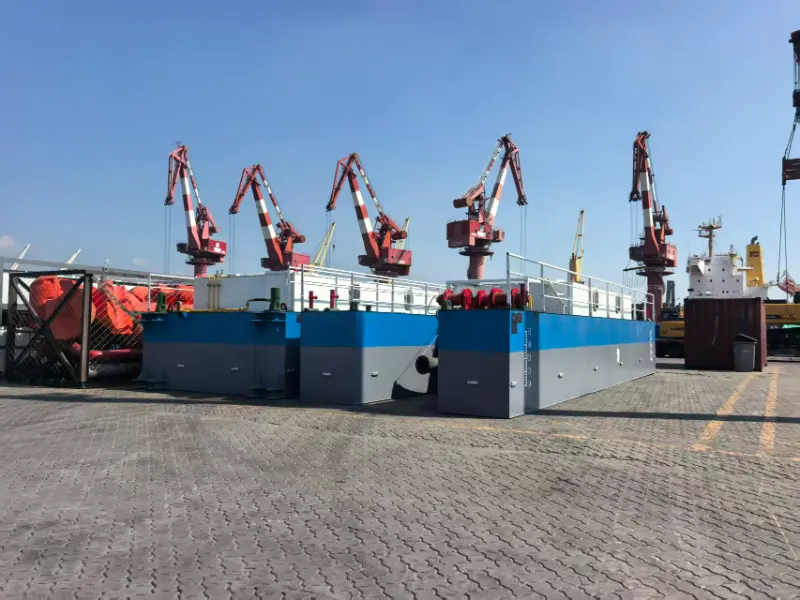
    The Pontoon Barge is intended for projects that require a stable working surface rather than a conventional transport vessel. It can be configured as a temporary dock, maintenance platform, material storage area or floating office. Its modular structure simplifies transportation and on-site assembly, making it practical for construction projects where operating locations may change.


    Heavy and Oversized Cargo

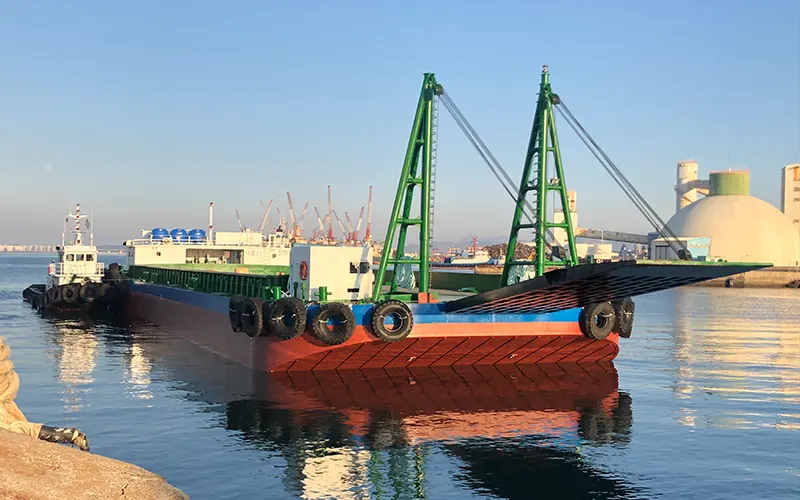
    The Deck Barge provides a large unobstructed working deck for cargo that is difficult to accommodate in enclosed vessels. Its high-strength steel structure and substantial deck loading capacity make it suitable for transporting steel structures, construction machinery, containers, offshore equipment and other oversized loads. The open layout also facilitates crane lifting and direct loading operations at project sites.


    Bulk Material Handling

    The Split Hopper Barge is developed for projects involving dredged materials and loose bulk cargo. Its split-hull unloading structure allows the cargo hold to open directly above the designated discharge area, reducing the need for additional unloading equipment. It is particularly suitable for transporting and discharging dredged sediment, sand, gravel and other marine construction materials.


    Why Choose the Right Configuration?

    Different marine projects place very different demands on vessel structure, loading capacity and operating conditions. HAIDING SHIPYARD therefore uses Q345/Q460 high-strength steel, multi-layer anti-corrosion protection and shallow-draft configurations across suitable models to improve durability and waterway adaptability. Depending on the model, draft can be configured from approximately 0.8 to 3.5 m, supporting operations in inland rivers, coastal waters and shallow construction areas.

    With GB/T19001-2016/ISO9001:2015, GB/T23331-2020/ISO50001:2018, RB/T119-2015 and GB/T45001-2020/ISO45001:2018 management system certifications, HAIDING SHIPYARD can provide customized sectional barge configurations according to cargo type, water depth, deck load, transportation distance and project conditions. This allows international buyers to select a vessel configuration based on actual operating requirements rather than purchasing an unnecessarily complex platform.


    FAQs


    What type of project is suitable for a sectional barge?

    A sectional barge is suitable for projects requiring flexible waterborne transportation or working platforms, including inland cargo transport, marine construction, temporary docks, dredging, equipment transportation and island logistics. HAIDING SHIPYARD can recommend the appropriate configuration according to water depth, cargo type and operating conditions.

    Can the structure be customized for different cargo requirements?

    Yes. Deck dimensions, loading capacity, hull configuration, cabin arrangement and functional equipment can be adjusted according to the project. For oversized equipment, the deck can be designed with an open layout, while bulk cargo projects can use a dedicated unloading configuration.

    Is it suitable for shallow-water operations?

    Yes. Selected models can use a shallow-draft design of approximately 0.8–3.5 m, making them suitable for many inland rivers, coastal areas, ports and shallow construction zones. The final draft is determined according to the required load and operating water depth.

    How is transportation and assembly handled?

    The sectional structure allows the barge to be divided into manageable modules for transportation to the project location. After arrival, the sections can be assembled and connected on site, reducing transportation limitations for projects where complete-vessel delivery is difficult.

    What materials are used for the hull structure?

    HAIDING SHIPYARD mainly uses Q345/Q460 high-strength steel for suitable models, combined with multi-layer anti-corrosion treatment to improve structural durability in freshwater and marine environments.

    Can HAIDING SHIPYARD provide complete customization?

    Yes. The manufacturer can customize dimensions, deck load, draft, compartment layout, propulsion or auxiliary equipment, anti-corrosion treatment and other configurations according to the buyer's operating environment and project requirements.

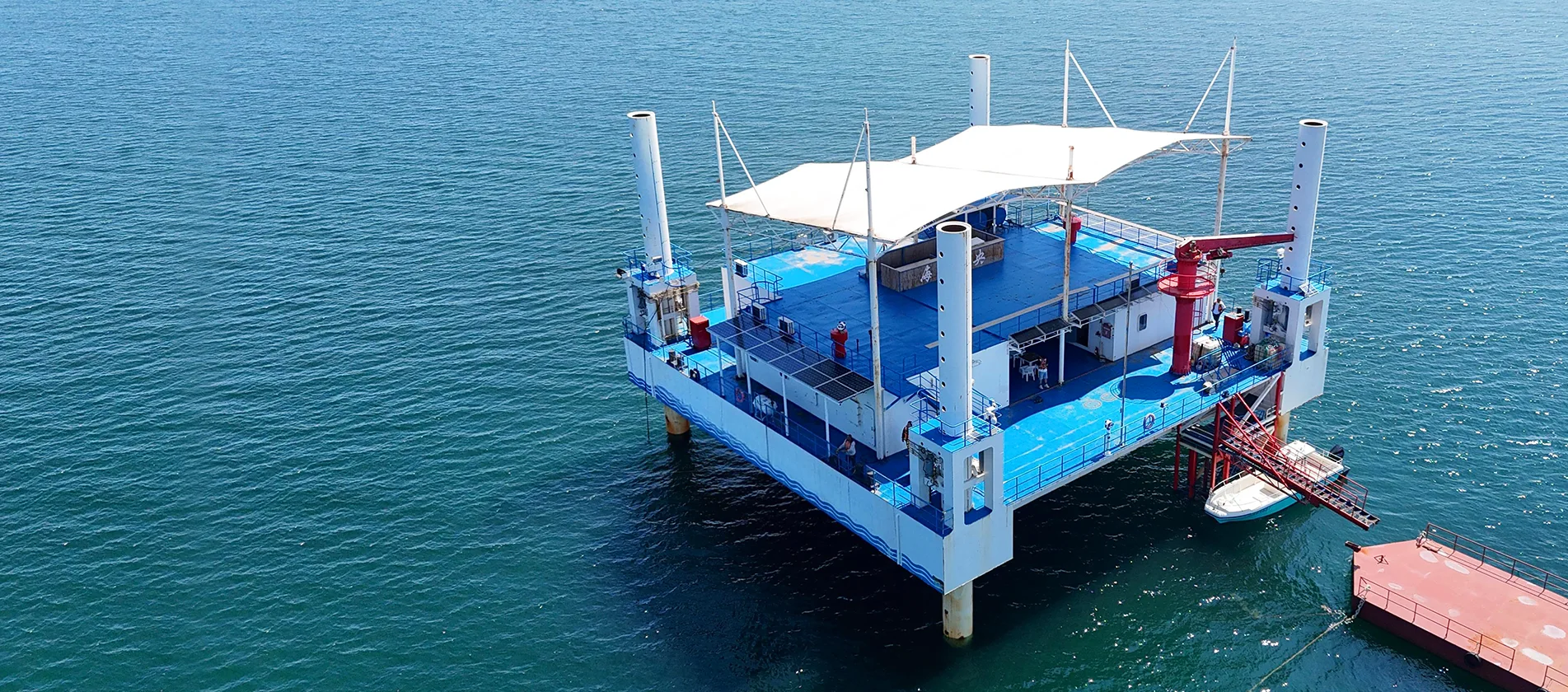
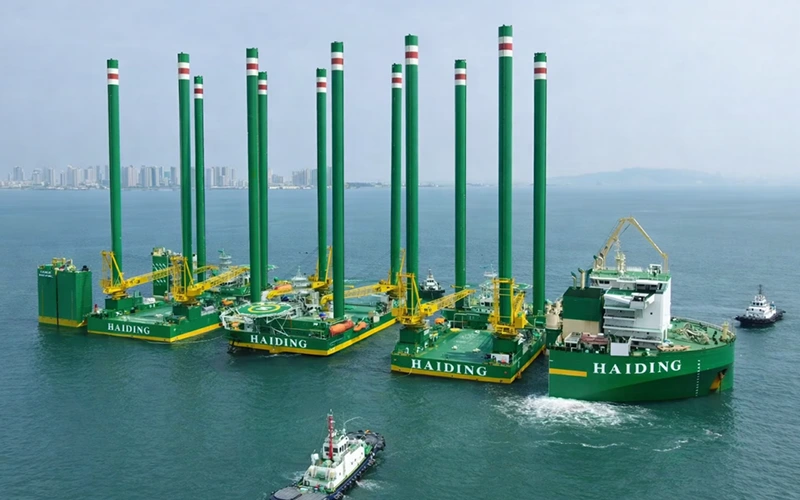
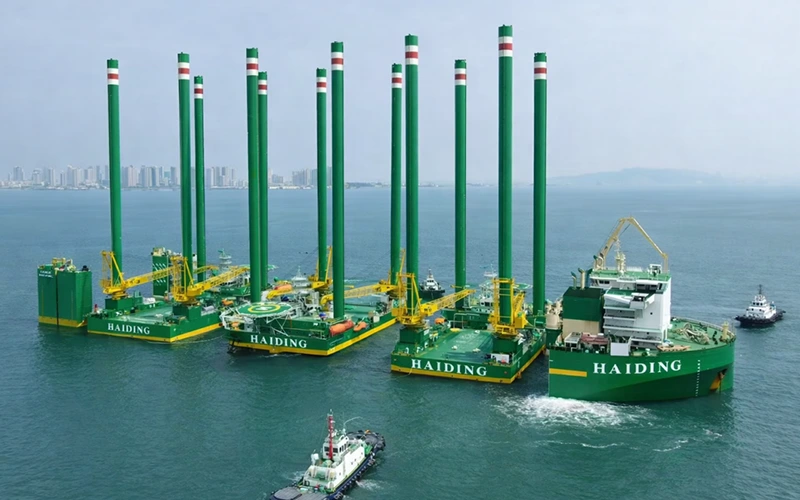
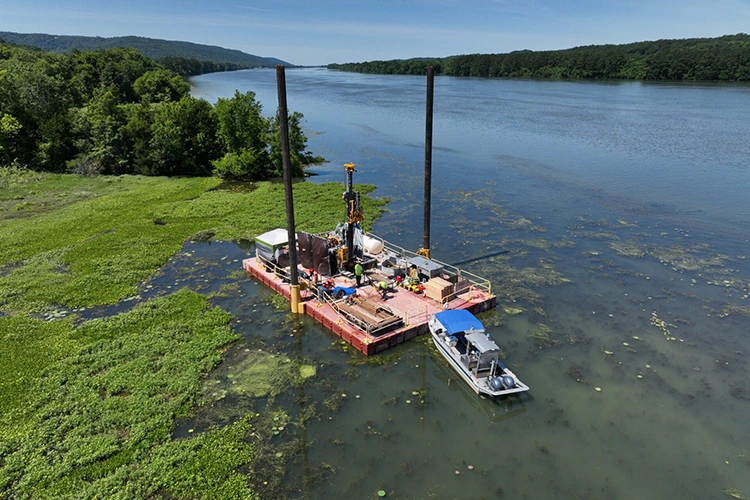
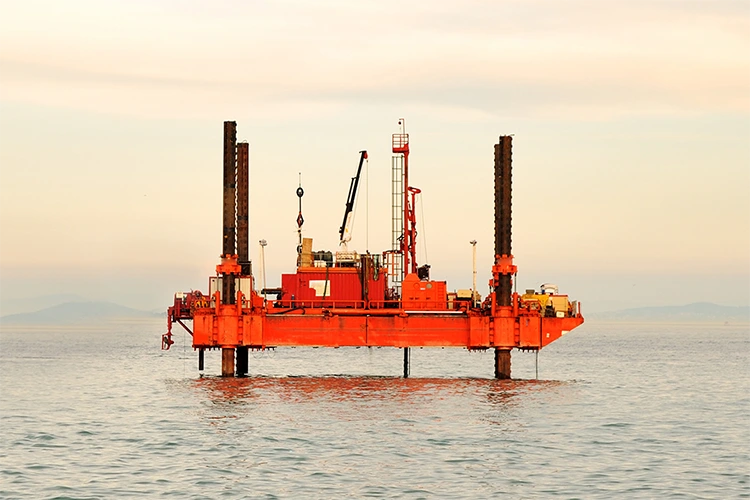
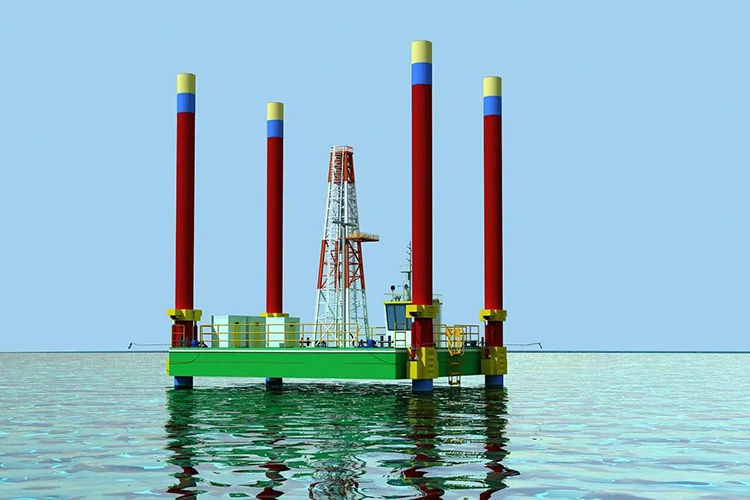
  • Sectional Jack Up Barge
    Sectional Jack Up Barge

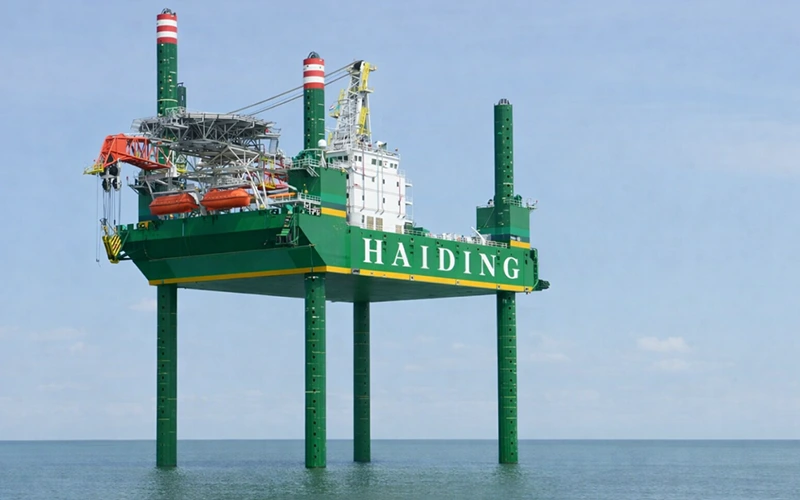
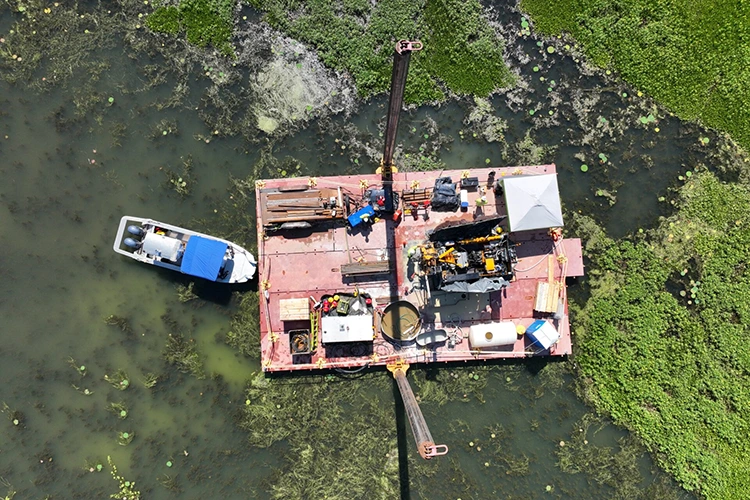
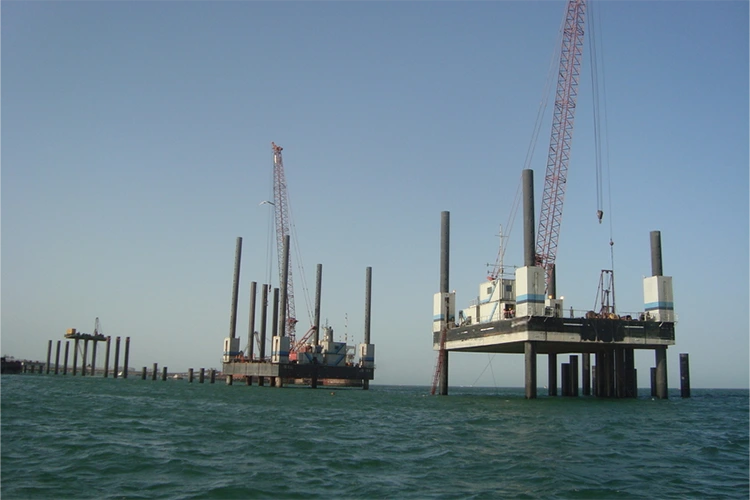
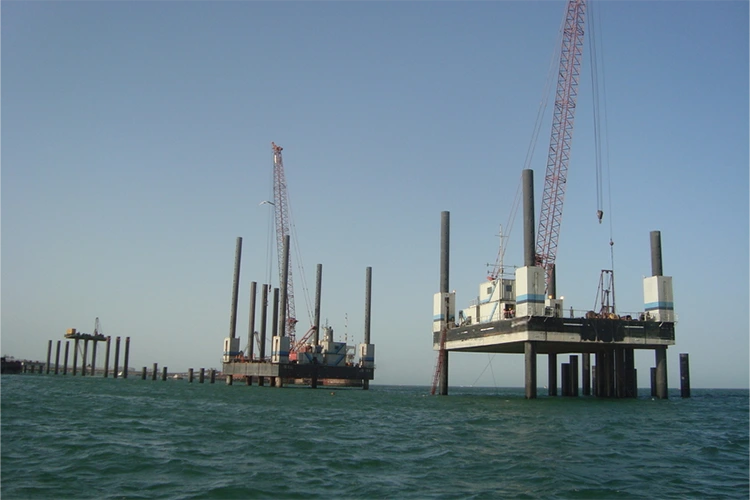
    Sectional Jack Up Barge is a modular self-elevating work platform developed for marine construction, dredging, offshore lifting, drilling, wind power installation and other projects where a stable working deck is required. HAIDING SHIPYARD combines sectional hull construction with spud legs and a hydraulic or mechanical jacking system, allowing large platforms to be transported in separate modules and assembled close to the project site.


    The key difference is the way the platform works. After reaching the designated location, the spud legs are lowered to the seabed and the hull is lifted above the water. This creates a relatively stable working surface for cranes, excavators, drilling equipment and other machinery, reducing the effect of wave movement during construction. The platform can therefore be configured according to the actual equipment, water depth, seabed conditions and working load of the project.


    Main Advantages

    Modular Transportation

    Large marine platforms are not always easy to move as a complete vessel, especially when the project site has limited water access. The sectional design allows the hull to be divided into transportable units and assembled at the destination. This gives contractors more flexibility when working at inland waterways, coastal sites and remote construction areas.

    Stable Working Platform

    Once the spud legs are firmly supported on the seabed, the hull can be raised to the required operating height. The working deck is separated from most surface movement, providing a more suitable foundation for lifting, drilling, excavation and other precision operations.

    Flexible Configuration

    The platform is not limited to one type of equipment. Depending on the project, the deck can be arranged for hydraulic excavators, marine cranes, drilling rigs, generators, construction materials, workshops or accommodation modules. Hull dimensions, deck capacity, leg length and equipment arrangement can be developed around the actual operating requirements.

    Built for Different Projects

    HAIDING SHIPYARD can develop self-elevating platforms for different water depths and operating conditions. The design process considers seabed bearing capacity, leg penetration, environmental loads, equipment weight and deck load distribution, helping ensure that the platform matches the real working environment rather than relying only on nominal tonnage.


    Typical Applications

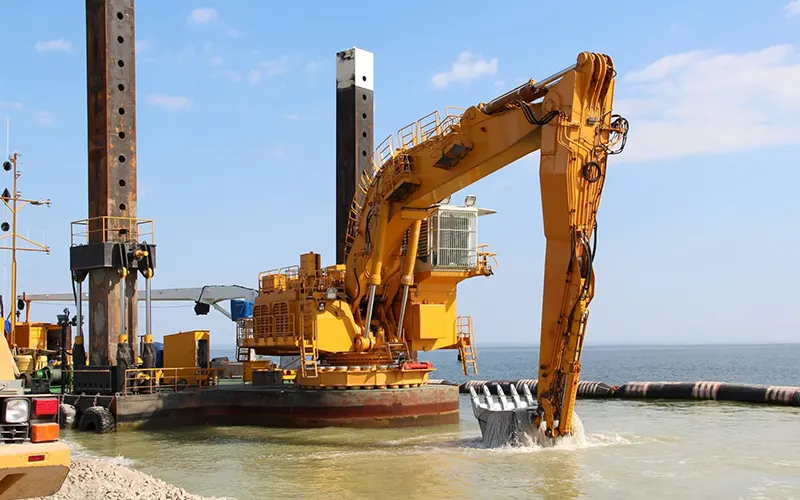
    A Sectional Jack Up Barge can serve as a working base for a wide range of marine engineering projects. Common applications include waterway and seabed excavation, port construction, bridge construction, offshore wind installation, marine equipment maintenance, geological exploration, drilling and heavy lifting.

    For dredging-related projects, the platform can carry excavators and supporting equipment for underwater excavation. For construction work, it can provide a stable base for cranes and material handling. For offshore wind projects, the deck can be configured for installation equipment and component handling.


    Engineering Options

    HAIDING SHIPYARD can configure the platform according to the project requirements, including hull size, deck load, spud leg length, jacking capacity, crane arrangement, excavation equipment, drilling equipment and auxiliary systems.

    For projects with restricted transportation access, the sectional hull can be designed around the available road, rail or water transportation conditions. For shallow-water or soft-seabed applications, leg configuration and penetration requirements can be evaluated during the engineering stage.

    The final configuration depends on the intended water depth, seabed conditions, operating environment and equipment to be installed.


    Technical Reference

    Item

    Reference Range

    Operating Water Depth

    3–100 m

    Spud Leg Length

    10–150 m

    Maximum Platform Load

    Up to 3,000 tons

    Deck Uniform Load

    ≥80 kN/m²

    Platform Leveling Accuracy

    Approx. ±0.1°

    Main Section Configuration

    Approx. 5–8 sections

    Available Functions

    Lifting, excavation, drilling, maintenance, exploration and more

    These are reference values for typical configurations. Actual specifications are engineered according to project conditions and equipment requirements.


    Why HAIDING SHIPYARD

    HAIDING SHIPYARD has experience in the design and construction of engineering vessels and modular marine structures. Its production and engineering capabilities cover hull fabrication, structural assembly, marine equipment integration and project-specific customization.

    The company holds GB/T 19001-2016 / ISO 9001:2015, GB/T 23331-2020 / ISO 50001:2018, RB/T 119-2015 and GB/T 45001-2020 / ISO 45001:2018 related certifications.

    Whether the project requires a compact platform for inland construction or a larger self-elevating platform for offshore engineering, HAIDING SHIPYARD can develop the hull, spud legs and working equipment around the actual project requirements.

    Send us your water depth, required deck load, equipment type and project location to discuss a suitable sectional jack-up configuration.


    Sectional Jack Up BargeSectional Jack Up Barge


    FAQ

    What is a Sectional Jack Up Barge?

    A Sectional Jack Up Barge is a modular self-elevating work platform that uses spud legs and a jacking system to raise its hull above the water. It provides a stable working deck for marine construction, dredging, lifting, drilling and offshore wind projects.


    What is the difference between a sectional jack-up barge and a conventional barge?

    A conventional barge remains afloat during operation and is therefore affected by waves and vessel movement. A jack-up barge lowers its legs to the seabed and raises the hull, creating a more stable working platform for fixed-position operations.


    Why is the barge designed in sections?

    The sectional design makes a large platform easier to transport to locations where a complete vessel cannot be delivered. The modules can be transported separately and assembled at or near the project site.


    What equipment can be installed on the platform?

    The deck can be configured for marine cranes, hydraulic excavators, drilling rigs, generators, welding equipment, material storage systems and other project-specific equipment. Equipment layout is determined by deck loading, working radius and the intended application.


    What water depth can a Sectional Jack Up Barge operate in?

    The reference operating water depth can range from approximately 3 to 100 m. The actual range depends on spud leg length, seabed conditions, required leg penetration, environmental loads and platform configuration.


    How are the spud legs selected?

    Spud legs are selected according to water depth, seabed soil conditions, required penetration, platform load and environmental forces. For soft seabeds, leg-end configuration and bearing area are particularly important for controlling penetration and platform stability.


    What is the maximum load capacity?

    HAIDING SHIPYARD reference configurations can reach a platform load capacity of approximately 3,000 tons. The actual capacity depends on hull dimensions, structural design, equipment weight and load distribution across the working deck.


    Can the platform be customized for dredging?

    Yes. The platform can be designed to carry hydraulic excavators and other dredging equipment. The deck structure, equipment arrangement and local reinforcement can be developed according to the excavation method and equipment specifications.


  • Modular Pontoons
    Modular Pontoons

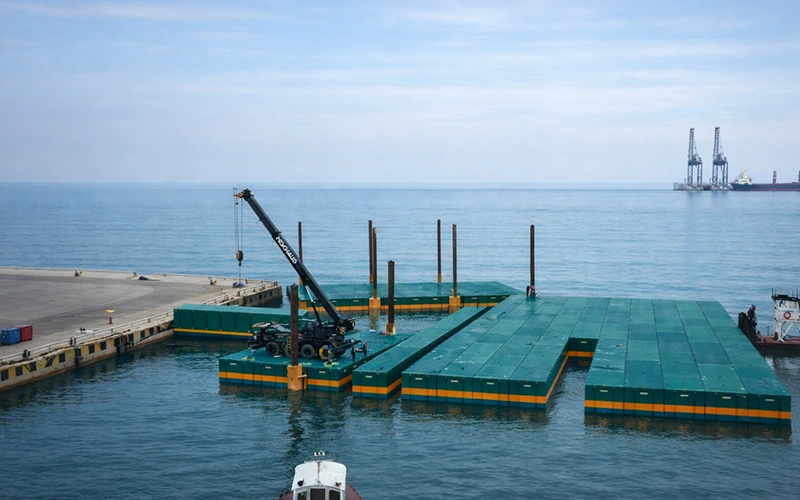
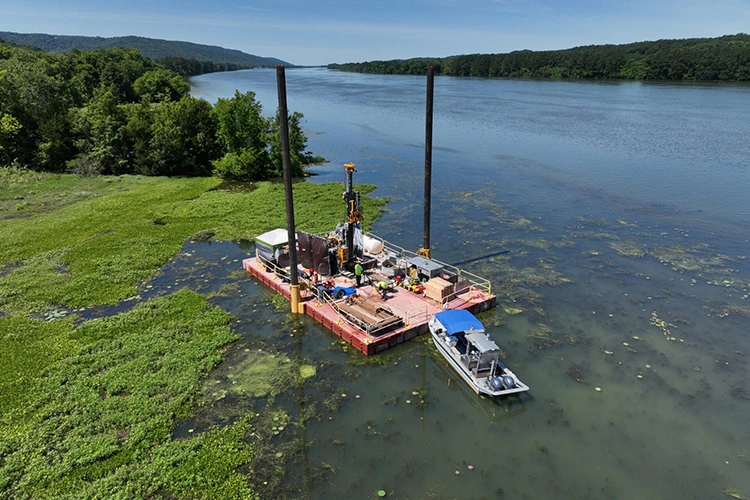
    Modular pontoons produced by HAIDING SHIPYARD are standardized floating modules designed for temporary and semi-permanent marine and inland waterway works. The system is based on a repeatable steel pontoon unit that can be connected in different arrangements to form work platforms, transfer decks, floating docks, and support structures for construction equipment.

    This product category is intended for contractors, port operators, and engineering teams that need a transportable floating foundation without committing to a permanently built barge or platform. The key design requirement is repeatable assembly under field conditions using basic lifting and hand tools.


    Design Basis and Structural Configuration

    Each pontoon module is fabricated from A-36 or HSLA high-strength steel. The deck surface is formed with a slip-resistant profile. Connection points are reinforced with double webs, and the corner transitions are shaped to reduce stress concentration. The structural design uses a safety factor of 1.8 or higher against yield under the specified deck load.

    Wind and wave design conditions are established for each project. The standard module is suitable for light to moderate wave exposure, not for open-ocean towing without additional structural review. For installations in tidal or exposed locations, the shipyard performs a site-specific mooring and connection analysis.


    Connection and Assembly

    The modules use a mechanical locking system that does not require welding on site. Connections can be made side-to-side, end-to-end, or in stepped patterns. A team of two to four workers can connect one module in approximately 1.5 hours under normal site conditions. This time may increase if crane access is limited or if the modules are assembled in moving water.

    Disassembly follows the reverse sequence. The locking system is designed for repeated use, but inspection and replacement of consumable locking components are recommended after a defined number of assembly cycles.


    Corrosion Protection

    The coating system consists of a heavy-metal-free primer and a marine-grade composite topcoat. Underwater surfaces receive zinc-aluminum anode protection. In freshwater environments, the design basis for underwater component corrosion protection is 20 years. In seawater, the corresponding design life is 15 years. Actual performance depends on water chemistry, coating damage, and maintenance practice.


    Transport and Deployment

    Module dimensions follow standard road transport limits. A conventional flatbed truck can carry two to four modules without oversize permits in most regions. This is a practical advantage over one-piece floating structures, which often require waterborne delivery or special permits. The modules can also be shipped in standard containers when fully knocked down, subject to weight limits.


    Modular PontoonsModular Pontoons


    Technical Parameters

    Item

    Standard Range

    Notes

    Module series

    HD-H50, HD-S50, HD-S70

    Light, medium, heavy-duty deck load classes

    Deck load capacity

    5–20 t/m² depending on series

    Uniformly distributed load, confirmed per project

    Main material

    A-36 or HSLA steel

    Grade selected by structural requirement

    Deck surface

    Slip-resistant formed plate

    Open or closed deck option

    Connection type

    Mechanical locking, no site welding

    Side and end connection compatible

    Design safety factor

    ≥1.8

    Against yield under specified load

    Wind design condition

    Beaufort Force 8

    Higher ratings require additional anchoring

    Corrosion protection

    Zinc-aluminum anode + marine coating

    15 years seawater, 20 years freshwater design basis

    Assembly time per module

    Approximately 1.5 hours

    With 2–4 workers and crane access

    Road transport

    2–4 modules per truck

    Based on standard flatbed trailer limits


    Application Scope

    Modular pontoons are commonly used for construction access platforms, temporary docks, equipment transfer decks, dredging support platforms, and floating work areas for repair or inspection. They are also used as floating foundations for small cranes, generators, and pumps when load distribution and stability are checked.

    For projects that require a self-propelled working platform or a more permanent floating structure, HAIDING also builds Sectional Barges and Sectional Dredgers. These product lines use a similar modular philosophy but are designed for different operational loads and regulatory requirements.


    Limitations and Design Review

    Modular pontoons are not a substitute for a classed barge when the assembly must carry heavy tracked equipment, work in strong currents, or remain on station for extended periods without inspection. The connection system is designed for static and slowly varying loads; dynamic loads from wave action, crane slewing, or vessel impact require a project-specific calculation.

    Before order confirmation, the shipyard requests the intended deck load, water depth, wave exposure, mooring arrangement, and duration of deployment. This information is used to confirm the module series, number of anodes, and whether additional stiffening is needed.


    Certification and Quality System

    HAIDING SHIPYARD operates under ISO 9001:2015 quality management procedures. Material traceability, weld inspection, and dimensional checks are recorded for each production batch. The company has delivered modular floating equipment to projects in multiple countries and can provide references upon request.

    When required, the modules can be supplied with third-party inspection reports, material certificates, and load test documentation. Classification society involvement is project-specific and is normally limited to the completed assembly if it is to be registered as a floating structure.


    Frequently Asked Questions

    What is the difference between HD-H50, HD-S50, and HD-S70?

    The series refers to deck load capacity and structural scantlings. HD-H50 is the light-duty series, HD-S50 is medium-duty, and HD-S70 is heavy-duty. The correct series depends on the equipment load and wheel or track pressure, not only the total weight.


    Can the modules be used in seawater?

    Yes. The coating and anode system is designed for seawater exposure. However, the corrosion protection life is shorter in seawater than in freshwater, and maintenance intervals should reflect the actual water chemistry.


    Do I need a crane to assemble the modules?

    A crane or excavator with sufficient reach is normally used to lift modules from the transport truck and position them for connection. The locking operation itself can be done by workers without heavy equipment.


    Can the pontoons be towed as a floating platform?

    Towing is possible only after a structural and stability assessment. The connection system must be checked for the expected towing loads, and a proper bridle arrangement is required. Unapproved towing can damage the locks and create a safety risk.


    How long does delivery take?

    Delivery time depends on the quantity, series, and current production schedule. The shipyard provides a schedule after the technical requirements and module count are confirmed.


Shandong Haiding Shipbuilding Co., Ltd.

Shandong Haiding Shipbuilding Co., Ltd. is located in Qingzhou City, Shandong Province, the first of the ancient nine states. The company covers an area of 59,400 square meters, the company has a wide range of products, the core products include: dredgers, transport ships, gold dredgers, rocker floating boat pump station, backhoe dredgers, ro-ro ferries, tugboats, multi-functional working ship, offshore lifting platforms, improved ribbon bridges, and ocean fishing ships, etc. These products are widely used in many fields, such as dredging, waterway maintenance, land reclamation, harbor construction, mineral mining, water extraction from lakes and reservoirs, wind power operation and maintenance, cargo transportation, fishery fishing, emergency rescue, etc., which builds up a complete industry chain of engineering ship.
about us

A Manufacturing Partner You Can Trust

Life experience brings us the most comprehensive services
1993

Was Established In

59400

Factory Area

132

Export Countries

80

Company Employees

Why Choose HAIDING SHIPYARD

Customized Engineering Ships Built for Real-World Projects
01

Complete Shipbuilding Capability

From engineering design and vessel construction to assembly and commissioning, HAIDING SHIPYARD provides integrated solutions for dredgers, tugboats, transport ships and other specialized vessels.

02

Modular Construction for Flexible Deployment

Large engineering ships can be manufactured into transportable modules, allowing delivery and assembly in areas with limited waterways or challenging transportation conditions.

03

59,400㎡ Manufacturing Base

Equipped with coastal and riverside assembly facilities, HAIDING SHIPYARD has the production capacity to support various engineering ship projects, including large-scale vessel construction.

04

Customized Vessel Design

Each ship is developed according to actual operating requirements, including working environment, vessel function, equipment configuration and project conditions.

05

Engineering Experience Across Multiple Industries

Our vessels serve applications including dredging projects, waterway maintenance, port construction, land reclamation, offshore operations, mining projects and marine transportation.

06

Certified Manufacturing System

HAIDING SHIPYARD follows internationally recognized management standards, including ISO9001 Quality Management System, ISO14001 Environmental Management System and ISO45001 Occupational Health & Safety Management System.

07

Full Project Support

From initial technical communication to vessel delivery and operation support, HAIDING SHIPYARD provides continuous assistance throughout the project process.

08

Reliable Long-Term Partnership

With shipbuilding qualifications, engineering capabilities and comprehensive service support, HAIDING SHIPYARD helps customers build marine solutions with confidence.

FAQ

Q1: What types of vessels does HAIDING SHIPYARD build?

HAIDING SHIPYARD specializes in engineering vessels, including dredgers, backhoe dredgers, gold dredgers, tugboats, transport ships, offshore working vessels, ro-ro ferries and customized marine equipment.

Q2: Can HAIDING SHIPYARD customize ships for specific projects?

Yes. We design and manufacture vessels according to project requirements, including operating conditions, vessel functions, equipment selection and transportation requirements.

Q3: What is the advantage of modular ship construction?

Modular construction allows large vessels to be divided into sections for transportation and assembled at the final working location, making ship deployment possible in areas with limited marine infrastructure.

Q4: What industries use HAIDING SHIPYARD vessels?

Our vessels are used in river and waterway dredging, harbor engineering, land reclamation, offshore operations, mining, cargo transportation and emergency projects.

Q5: How does HAIDING SHIPYARD ensure vessel quality?

Quality control covers the complete manufacturing process, including material inspection, hull fabrication, welding inspection, equipment installation, system testing and final commissioning.

Q6: What information is needed for a ship quotation?

To recommend a suitable vessel solution, customers usually provide vessel type, application scenario, working area, required capacity, technical specifications and special equipment requirements.

Q7: Does HAIDING SHIPYARD provide overseas support?

Yes. We provide technical communication, operation guidance, maintenance support and spare parts assistance to help customers operate vessels smoothly after delivery.

Q8: How long does it take to build a customized ship?

The construction period depends on vessel type, size, technical requirements and equipment configuration. After reviewing project details, our team provides a customized production schedule.

Send Inquiry

If you have any enquiry about quotation or cooperation, please feel free to email or use the following inquiry form. Our sales representative will contact you within 24 hours.

News

Explore our latest shipbuilding projects, production updates and marine engineering developments.

What Makes a Jack Up Wind Farm Installation Platform the Smartest Choice for Offshore Wind Projects

What Makes a Jack Up Wind Farm Installation Platform the Smartest Choice for Offshore Wind Projects

This blog explores the critical role of jack up wind farm installation platforms in offshore wind construction. It answers key questions about what these platforms are, why they are essential, how they work, and which factors to consider when selecting a provider. It highlights how HAIDING SHIPYARD delivers robust, custom-built jack up wind farm installation platforms that enhance safety, efficiency, and project success in the growing offshore wind sector.

How Can a Jack Up Working Platform Improve Safety and Efficiency in Offshore Construction

How Can a Jack Up Working Platform Improve Safety and Efficiency in Offshore Construction

As offshore construction projects become more demanding, reliable access to stable working areas is essential for safe and efficient marine operations. HAIDING SHIPYARD provides marine engineering and modular barge solutions designed to support demanding offshore applications. A Jack Up Working Platform is an important solution for projects that require a stable elevated working surface above the water, helping contractors carry out construction, maintenance, installation, and inspection activities with greater operational control.

How Can a Jack Up Drilling Platform Improve Offshore Drilling Safety, Stability, and Operational Efficiency

How Can a Jack Up Drilling Platform Improve Offshore Drilling Safety, Stability, and Operational Efficiency

As offshore oil and gas exploration moves into increasingly challenging marine environments, choosing reliable drilling equipment is essential for maintaining operational efficiency and controlling project costs. HAIDING SHIPYARD provides a specialized Jack Up Drilling Platform designed for offshore exploration and development drilling, combining a self-elevating structure, advanced hydraulic jacking technology, integrated drilling equipment, and modular transportation capabilities.

How Can a Controllable Pitch Propeller Tug Improve Towing Efficiency and Port Maneuverability

How Can a Controllable Pitch Propeller Tug Improve Towing Efficiency and Port Maneuverability

For ports, offshore projects, and marine towing operations that demand precise thrust control, Haiding Shipbuilding provides the Controllable Pitch Propeller Tug as a configurable propulsion solution. By adjusting propeller blade pitch through a hydraulic control system, the tug can regulate thrust without changing the main engine's rotational speed or direction, supporting efficient towing, rapid maneuvering, and reliable operation across changing working conditions.

How Can a Jack Up Living Quarter Platform Improve Safety and Efficiency in Offshore Operations

How Can a Jack Up Living Quarter Platform Improve Safety and Efficiency in Offshore Operations

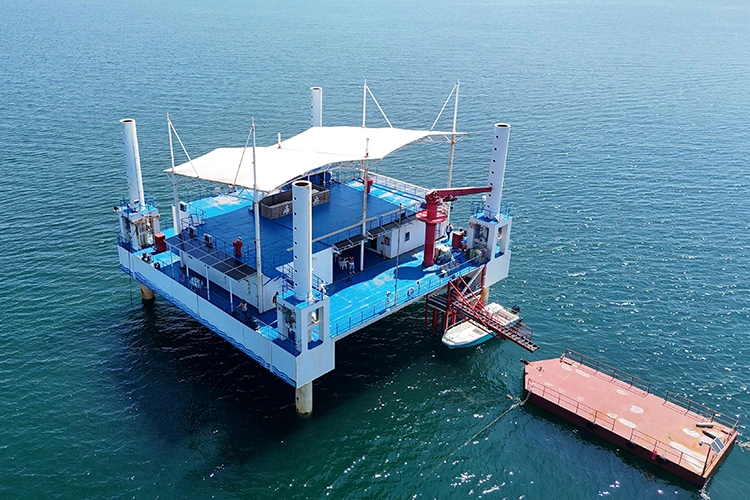
HAIDING SHIPYARD develops the Jack Up Living Quarter Platform as an integrated offshore accommodation and support solution for demanding marine projects. Designed for water depths of 3–100 m, the platform can accommodate up to 100 people and support a total platform load of up to 3,000 tons, combining accommodation, catering, offices, medical facilities, emergency systems, freshwater storage, and power supply in one self-elevating structure.

How Can a Rapidly Emplaced Bridge Transform Emergency Water-Crossing and Infrastructure Recovery

How Can a Rapidly Emplaced Bridge Transform Emergency Water-Crossing and Infrastructure Recovery

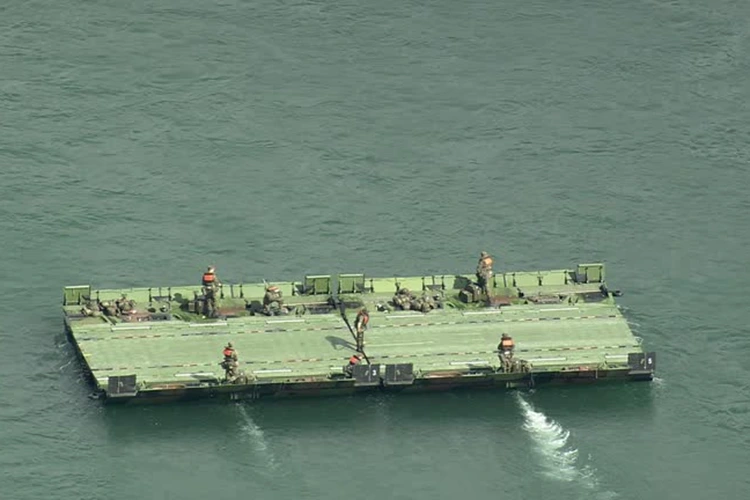
HAIDING SHIPYARD specializes in modular waterborne engineering equipment and develops the Rapidly Emplaced Bridge for flood control, disaster relief, emergency transportation, infrastructure recovery, and marine engineering. With standardized self-propelled pontoon modules, the system can create temporary floating crossings from 10 meters to more than 100 meters, providing a practical solution when conventional transportation routes are damaged or unavailable.

How Can a Jack Up Wind Farm Installation Platform Transform Offshore Wind Turbine Installation

How Can a Jack Up Wind Farm Installation Platform Transform Offshore Wind Turbine Installation

When offshore wind projects demand heavy lifting, precise turbine alignment, and reliable operation in challenging marine environments, the Jack Up Wind Farm Installation Platform from HAIDING SHIPYARD provides a purpose-built solution. Designed for large offshore turbines of 16MW and above, this heavy-duty installation platform combines an 800-ton-class slewing crane, automatic hydraulic leveling, modular transportation, and robust marine construction to support efficient wind farm installation from shallow to deep water.

How Can Modular Pontoons Transform Modern Marine Construction and Floating Platform Projects

How Can Modular Pontoons Transform Modern Marine Construction and Floating Platform Projects

HAIDING SHIPYARD provides professionally engineered Modular Pontoons designed for flexible marine construction, temporary docks, equipment platforms, inland waterway projects, and offshore applications. With standardized modules, high-strength steel construction, flexible connections, and efficient transportation, these floating systems provide a practical alternative to conventional fixed-size floating structures.

How Does an Ocean-Going Tug Support Demanding Deep-Sea Operations?

How Does an Ocean-Going Tug Support Demanding Deep-Sea Operations?

An Ocean-Going Tug is more than a powerful towing vessel. It is a specialized marine platform designed to move, escort, support, rescue, and protect large assets across demanding offshore environments. Long-distance towing, unpredictable weather, high wave loads, saltwater corrosion, limited refueling opportunities, precise maneuvering, and emergency response all place exceptional demands on tugboat design. This article explains the key technologies, performance factors, operating considerations, and customization options that determine whether an Ocean-Going Tug can perform reliably on extended maritime missions. It also examines how HAIDING SHIPYARD approaches power configuration, hull strength, propulsion, dynamic positioning, endurance, and specialized equipment to address practical challenges faced by offshore operators.

How Does a Sectional Dredger Improve Modern Dredging Operations?

How Does a Sectional Dredger Improve Modern Dredging Operations?

Dredging projects often face challenges such as difficult transportation conditions, limited working areas, changing water environments, and high equipment deployment costs. A sectional dredger provides an efficient solution by combining modular design, flexible assembly, and reliable dredging performance. This article explains how a sectional dredger works, why it is valuable for different waterway projects, and how it helps contractors overcome common operational problems.

How Rapidly Emplaced Bridge Systems Solve Emergency Infrastructure Challenges

How Rapidly Emplaced Bridge Systems Solve Emergency Infrastructure Challenges

Rapidly Emplaced Bridge systems provide a practical solution for situations where traditional bridge construction methods cannot meet urgent transportation demands. From disaster recovery and military mobility to temporary infrastructure projects and remote area access, these modular bridge solutions help organizations restore connectivity quickly while maintaining safety, durability, and operational efficiency. This article explains how Rapidly Emplaced Bridge technology works, why it is becoming an essential infrastructure solution, and how HAIDING SHIPYARD supports customers with reliable modular bridge manufacturing solutions.
Haiding Shipbuilding Secures Export Order of Eco-Friendly Hybrid Dredgers for African Infrastructure Project

Haiding Shipbuilding Secures Export Order of Eco-Friendly Hybrid Dredgers for African Infrastructure Project

Shandong Haiding Shipbuilding Co., Ltd. has officially finalized a contract with an African client to manufacture and deliver a customized fleet of new energy cutter suction dredgers. The commercial order consists of one large-capacity main dredger alongside two compact, highly maneuverable auxiliary dredgers, forming an integrated fleet solution for regional waterway maintenance.