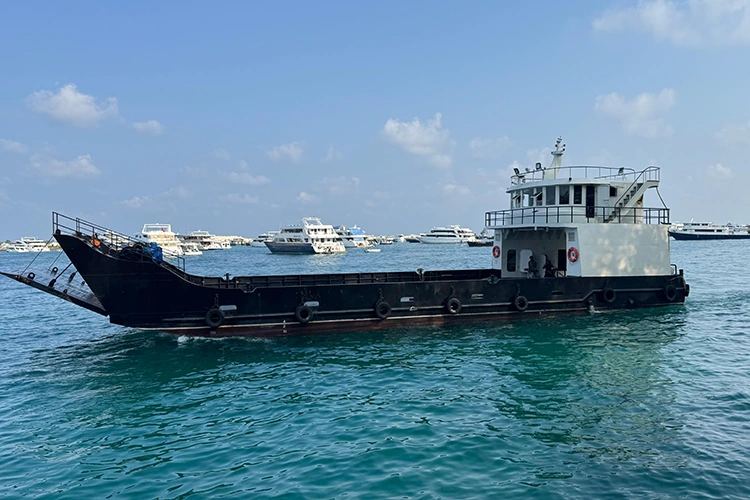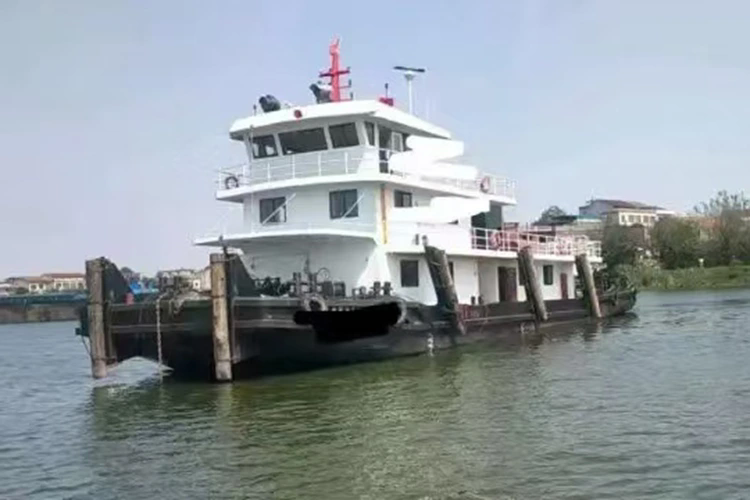
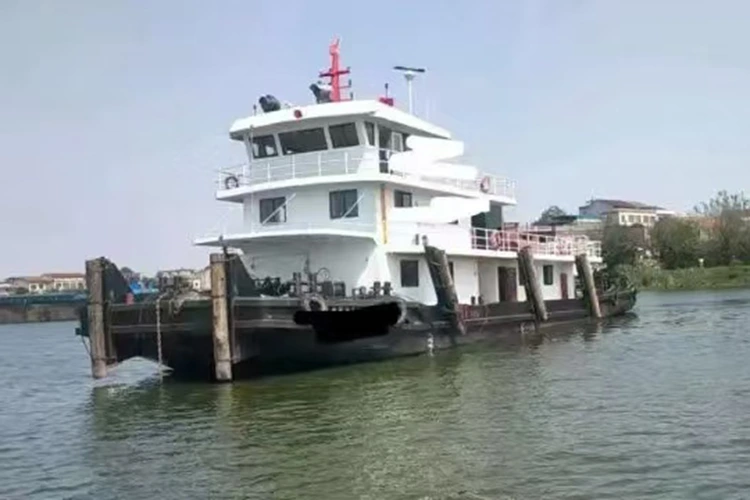
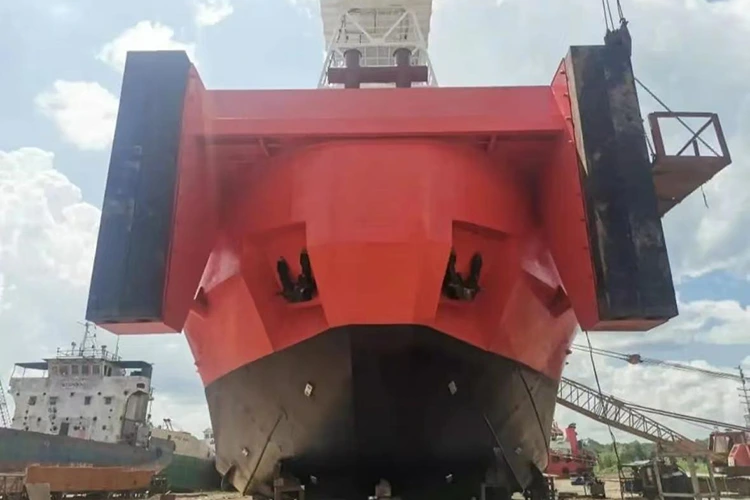
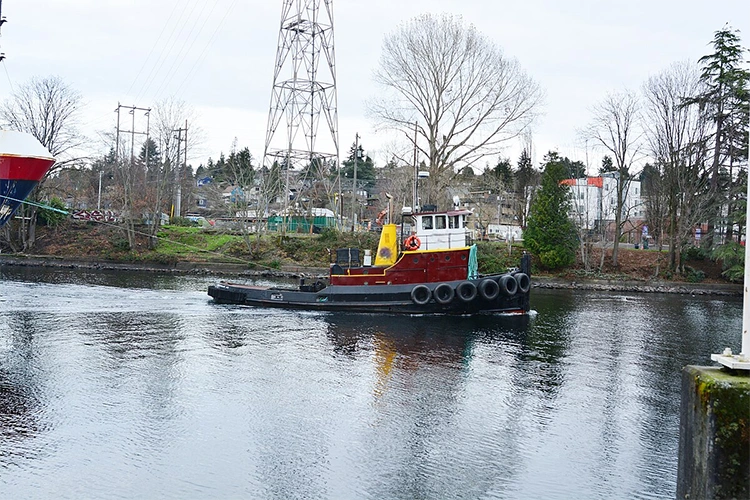
Vertical Stern Propeller Tug
HAIDING SHIPYARD, a trusted manufacturer and supplier, offers vertical stern propeller tugs with cycloidal thrusters for 360° thrust control. Our factory
built vessels deliver 500–8000 HP and 30–120 tf bollard pull, perfect for shallow waterways and icy harbours. Optional DP, fire
fighting, and oil recovery. Superior manoeuvrability for docking, but less efficient for open
water tows; not for long hauls. CCS approved, 15
year service life. Contact us for custom engineering.
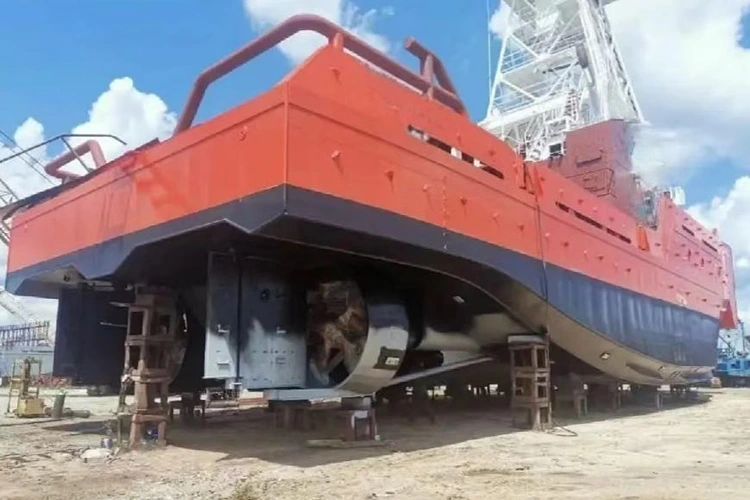
The HAIDING SHIPYARD Vertical Stern Propeller Tug uses a cycloidal propeller instead of a conventional shaft, rudder, or podded thruster. A rotating disc carries several vertical blades. Each blade changes angle during rotation to generate thrust in any horizontal direction. This design eliminates the need for a rudder and allows the tug to move sideways, rotate in place, or hold position without changing engine speed or gearbox direction.
The propulsion system offers high low-speed control authority. The trade-off is a more complex mechanical unit and higher acquisition cost compared with fixed pitch or azimuth stern drive tugs. The vessel is intended for operators that need frequent, precise maneuvering in restricted water or ice-affected harbors.
How the Propulsion Works
Thrust generation
The vertical-axis rotor is fitted with three to five blades. A linkage inside the rotor adjusts blade pitch continuously. The result is a thrust vector that can rotate through 360 degrees without reversing the main engine.
Maneuvering characteristics
Because thrust direction changes quickly, the vessel responds to control inputs without the delay of a conventional reversing gearbox. The master operates the tug through a joystick or similar interface. This is useful when working close to large vessels, inside locks, or near fixed structures.
Shallow draft and debris behavior
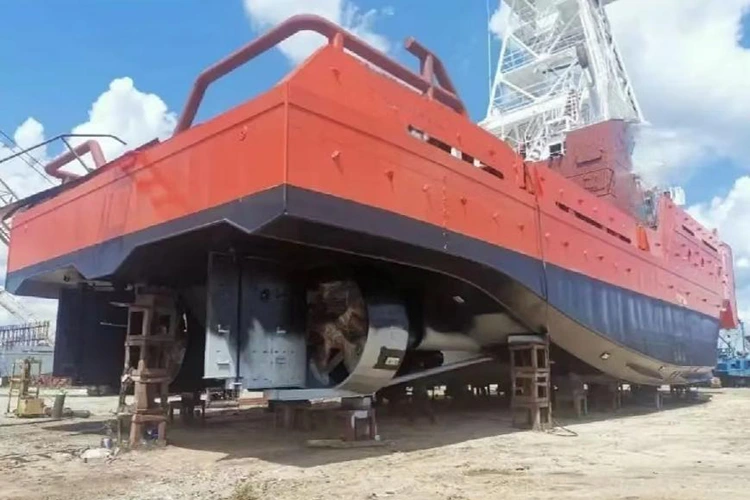
The vertical blades extend below the hull but the rotor can be recessed into the hull bottom. The draft can be optimized for shallow waterways, subject to blade length, rotor diameter, and required thrust. Floating lines and nets may be less likely to wrap around the rotor than around a horizontal propeller, but no system is immune to heavy debris.
Ice capability
For ports with seasonal ice, the hull and rotor can be upgraded with materials and scantlings suitable for ice class service. The vertical blade arrangement generally handles light ice better than a tunnel thruster, but the class notation depends on the complete vessel design.
Main Technical Parameters
|
Item |
Value or Range |
Comment |
|
Total power |
500–8000 HP, modular |
Selected from operating profile and required bollard pull |
|
Bollard pull |
30–120 tf (294–1177 kN) |
Calculated at design draft, still water, specified rotor |
|
Number of blades per rotor |
3–5 |
Depends on rotor diameter and thrust requirement |
|
Steering method |
Cycloidal thrust vectoring |
No rudder, no reversing gearbox |
|
Engine options |
Weichai, Cummins, Niigata, Yanmar |
Marine continuous rating |
|
Rotor blade material |
High-strength alloy steel |
Ice class option available |
|
Hull material |
Marine grade steel |
Meets CCS structural requirements |
|
Fender arrangement |
Heavy-duty rubber fenders |
Bow, stern, and side protection |
|
Coating |
Coastal or low-temperature formulation |
Selected for operating environment |
|
Design service life |
15 years or more |
Based on assumed annual operating hours |
|
Wind design condition |
Beaufort Force 10 |
Subject to stability and loading limits |
|
Control |
PLC based joystick system |
Optional position hold function |
|
Positioning accuracy |
±0.3 m with DP option |
Requires suitable reference sensors |
|
Fire fighting |
Class 1 external system |
Optional |
|
Pollution response |
Oil recovery gear |
Optional |
|
Certification |
CCS, ISO |
Certificate issued after survey |
For a specific project, the shipyard also provides length, beam, depth, tank capacities, towing winch data, and accommodation details during the design phase.
Engineering Notes
Propulsion module
The cycloidal rotor is built as a module that can be lifted through a deck opening. Major overhauls can sometimes be completed without dry docking. The blade control mechanism is the most maintenance-sensitive part and requires trained technicians.
Control system
The joystick control maps the master's input to blade pitch and engine load. The system can be configured for manual operation, simple station keeping, or full dynamic positioning. The final configuration depends on the sensors and reference systems installed.
Structural reinforcement
The stern structure is reinforced around the rotor opening. Local stiffening is added to handle the cyclic loads from blade thrust. For ice class notation, additional plating and internal framing are required.
Performance trade-offs
The vertical-axis tug is highly maneuverable at low speed but less efficient in free running than a conventional shaft tug. Fuel consumption during transit may be higher. The system is not the most economical choice for long-distance towing where steady course keeping is the main requirement.
Propulsion Selection Guide
|
Operating requirement |
Vertical-axis tug |
Alternative |
|
Precision docking and lock work |
Recommended |
ASD tug |
|
Shallow harbor assistance |
Recommended |
FPP shallow-draft tug |
|
Ice port operations |
Suitable with ice class |
Azimuth tug with ice class |
|
Dynamic positioning |
Suitable |
Z-drive or tunnel thruster vessel |
|
Long open-water tow |
Not recommended |
FPP or CPP tug |
|
Minimum initial cost |
Not recommended |
FPP tug |
|
Frequent rapid thrust changes |
Strong match |
ASD tug |
|
Simple crew training |
Moderate |
FPP tug simpler |
This table is intended to help owners decide whether a vertical-axis propulsion tug matches their service profile. The shipyard can provide a written comparison based on specific route, barge size, and port layout.
Technical Review and Design Authority
The content on this page has been reviewed by the shipyard's engineering group. The team includes naval architects, marine engineers, and propulsion integration specialists. Review scope covers hull structure, propulsion selection, control integration, sea trial procedures, and class documentation.
For each project, a designated lead engineer is assigned to handle technical questions. The shipyard provides design calculations, material certificates, and test reports as part of the contract documentation package.
Representative Projects
The following profiles are examples of Vertical Stern Propeller Tug configurations that the shipyard has built or offered. Specific names and owner details are provided under confidentiality agreement.
|
Power |
Bollard pull |
Length overall |
Area |
Primary work |
Year |
|
1000 HP |
20 tf |
22 m |
Inland river port |
Barge positioning |
2023 |
|
2200 HP |
40 tf |
26 m |
Shallow coastal harbor |
Vessel assist |
2024 |
|
3200 HP |
60 tf |
28 m |
Ice-affected port |
Towing and ice management |
2024 |
|
5000 HP |
90 tf |
32 m |
Deepwater harbor |
Firefighting standby |
2025 |
For each project, the following documents are available on request: delivery certificate, bollard pull test record, sea trial summary, and class certificate.
Design Input Checklist
To produce a meaningful technical proposal, the shipyard needs the following from the buyer:
l Required bollard pull and maximum towed vessel size
l Operating water depth and any draft limitations
l Port or waterway location and seasonal conditions
l Expected operating hours per year
l Need for ice class or cold climate equipment
l Whether dynamic positioning is required
l Engine brand preference or budget constraints
l Classification society and flag state requirements
l Fire fighting and pollution response duties
l Deck machinery: towing winch, capstan, crane
l Crew number and accommodation standard
l Special requirements: noise, vibration, heating, cooling
This list reduces the risk of over-specifying or under-specifying the vessel.
FAQs
What is the difference between this tug and a Voith Schneider tug?
The term "Voith Schneider Propeller" refers to a specific brand of cycloidal propeller. This vessel uses a vertical-axis cycloidal propulsion concept. If a Voith unit is required, the shipyard can specify and integrate it. The operating principle is similar, but the exact equipment brand depends on project choice and classification.
Why choose a cycloidal tug instead of an azimuth stern drive tug?
Cycloidal propulsion provides smooth thrust direction change and strong side force. Azimuth thrusters are simpler and may have better open-water efficiency. The choice depends on whether the owner values low-speed control or transit performance more.
How much water depth does the tug need?
The draft is project specific. It depends on rotor diameter, blade length, and hull shape. The shipyard calculates the safe operating draft and required under-keel clearance for each design. Do not assume the tug can operate in water depth equal to its draft.
What maintenance is required for the cycloidal rotor?
Regular checks include blade linkage, seals, hydraulic oil, and rotor bearing. The module can be lifted out for overhaul. The blade control mechanism requires specialist service. The shipyard recommends a service agreement and operator training.
Can the tug operate in ice?
Yes, if the hull and rotor are built to an ice class notation. The vertical blades handle light ice better than tunnel thrusters, but the final ice capability is determined by the complete design and class approval.
Does the vessel need a rudder?
No. Thrust direction is controlled by the rotor. Removing the rudder simplifies the stern arrangement and improves maneuverability at low speed.
Can the tug hold a fixed position?
Yes. With a dynamic positioning package, the tug can hold position within approximately ±0.3 m under suitable environmental conditions. Accuracy depends on sensors and current.
Related Category
Send Inquiry
Contact Info
-
Address
No. 8888, Wanhong Avenue, Huanglou Sub-district, Qingzhou City, Weifang City, Shandong Province, China
-
Tel
-
Email
Looking to buy a dredger, tugboat or custom engineering vessel? Send your requirements to HAIDING SHIPYARD for product details, technical consultation and a competitive shipbuilding quotation.
News Recommendations