Fixed Pitch Propeller Tug
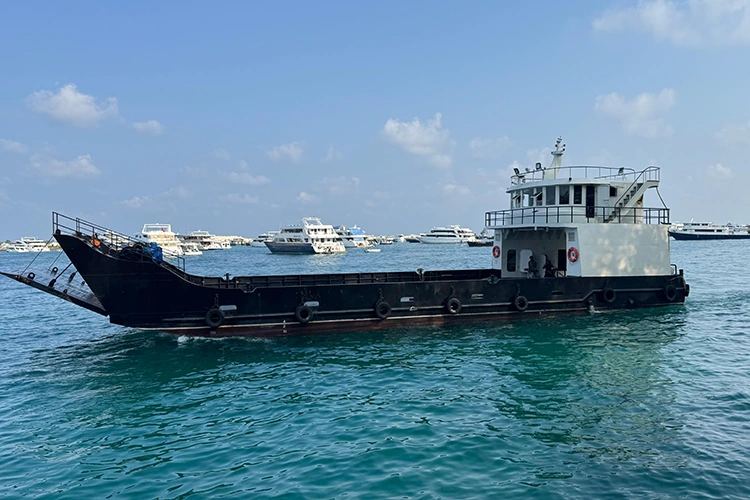
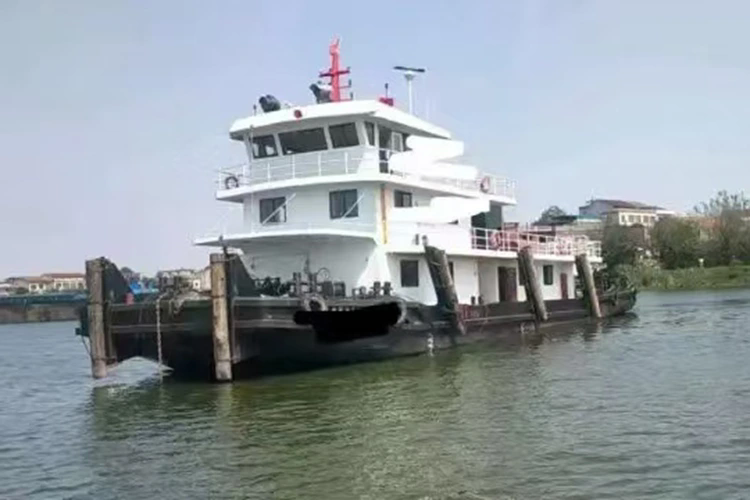
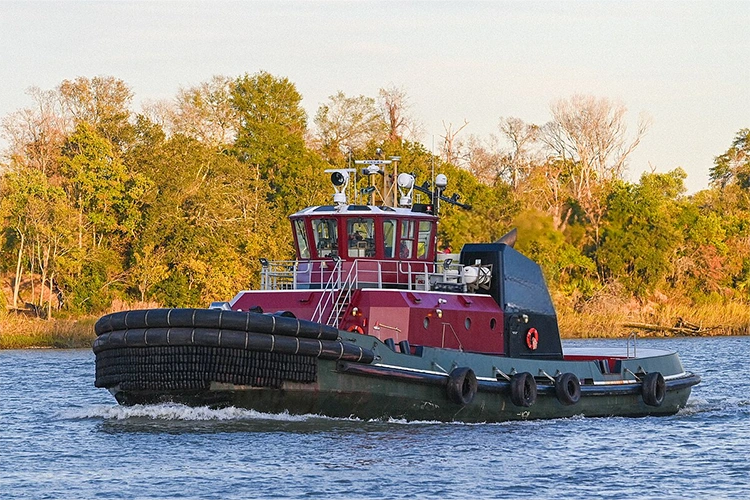
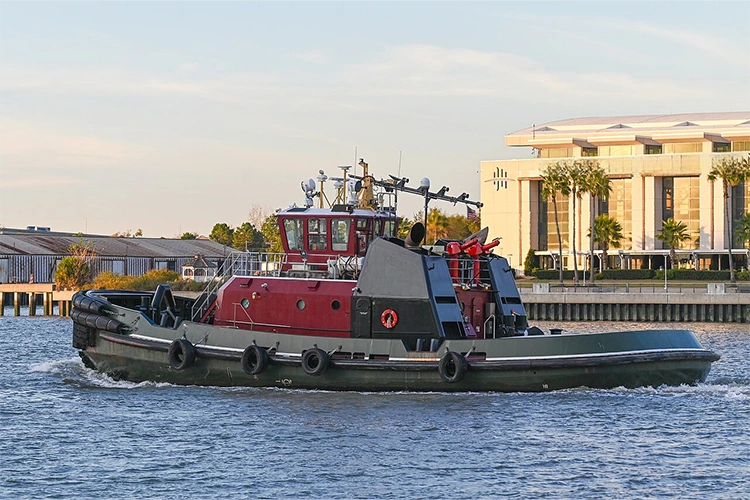
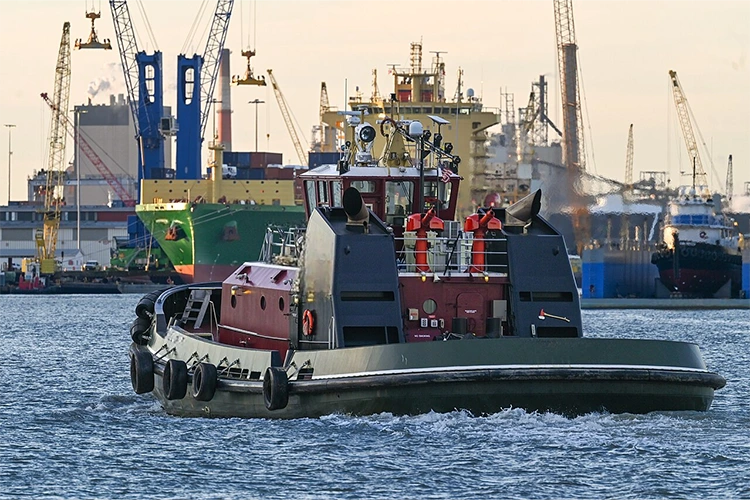
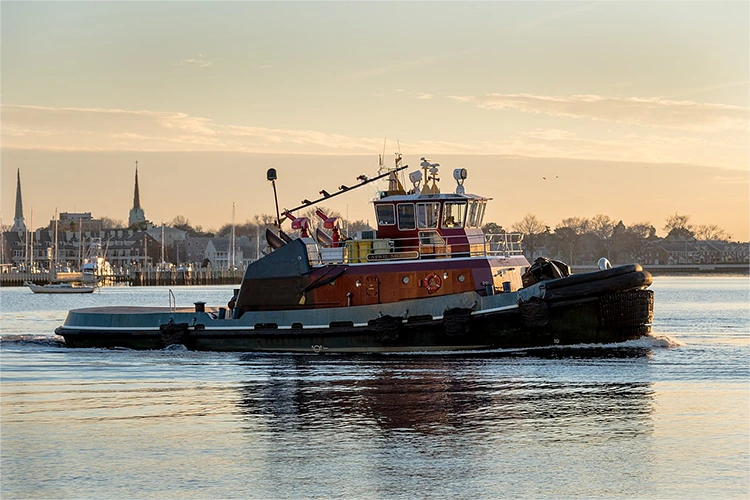
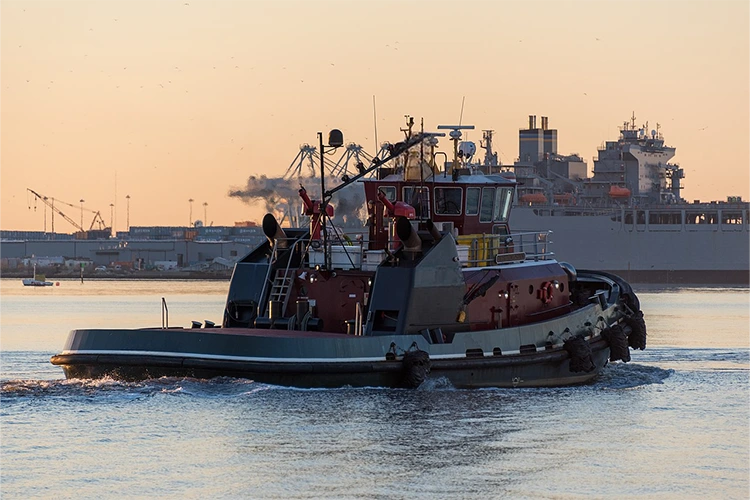
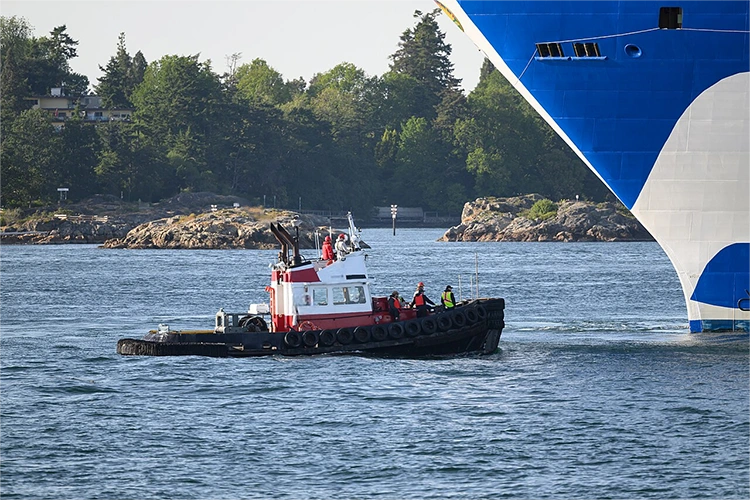
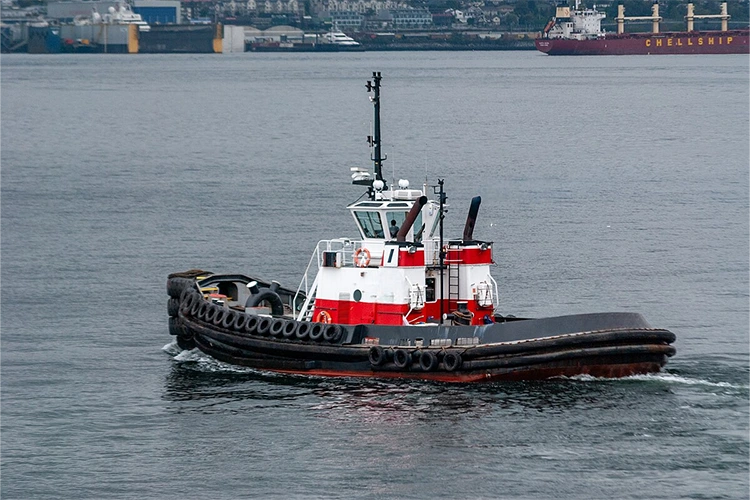
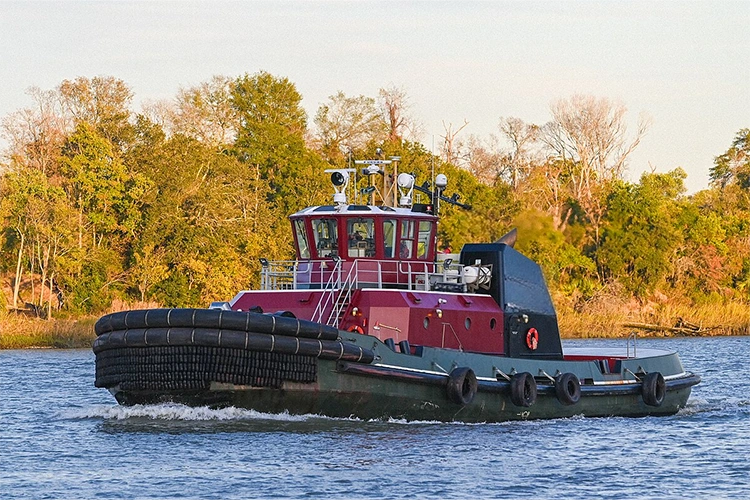
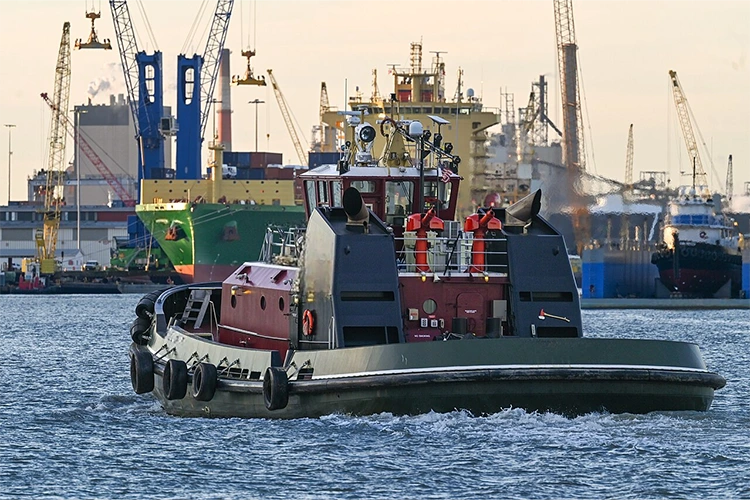
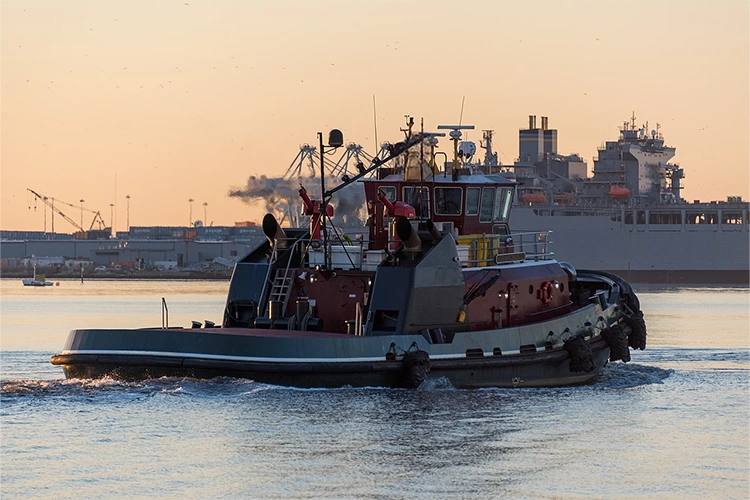
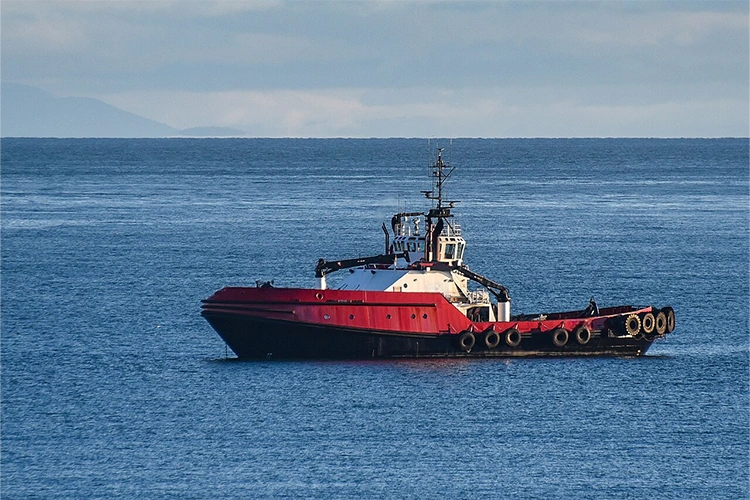
The HAIDING SHIPYARD fixed pitch propeller tug is a conventional shaft-line tug designed for routine towing, barge handling, and port service. With a mechanically simple FPP propulsion system, it offers lower initial cost, straightforward maintenance, and reliable operation. Power is available from 500–8000 HP, with bollard pull of 30–120 tf. The configuration can be customized for inland, coastal, or offshore duties, with CCS certification available per vessel.
The HAIDING SHIPYARD fixed pitch propeller tug is a conventional shaft-line tug. The propeller blades are fixed at a set pitch during construction. Thrust and direction are controlled by main engine speed, gearbox engagement, and rudder angle. This arrangement is mechanically simple, has a low initial cost, and is easy to maintain. The main operational trade-off is slower reversing response and reduced low-speed maneuverability compared with azimuth or controllable pitch systems.
This vessel is intended for routine towing and port duties where rapid direction changes and precise station keeping are not critical. It is not recommended for operations that require continuous high-precision maneuvering, such as escorting large vessels in narrow channels or performing frequent push-pull sequences.
Propulsion System and Operating Characteristics
The propulsion train consists of four main components: propeller, propeller shaft, reduction gearbox, and rudder. The propeller is directly connected to the main engine through the gearbox. Blade angle cannot be adjusted during operation.
Reversing is achieved by disengaging the ahead clutch and engaging the astern clutch in the gearbox. This process typically takes 3 to 5 seconds, depending on the gearbox model and control system. The captain must anticipate maneuvers in advance because thrust reversal is not instantaneous.
Steering is performed by a conventional rudder behind the propeller. This is different from azimuth thrusters, which can rotate 360 degrees and direct thrust in any direction. The rudder-based system is simpler but offers less control authority at low speed.
Core Specifications
|
Parameter |
Specification |
Design Basis / Notes |
|
Power range |
500–8000 HP, modular |
Selected according to required bollard pull and operating profile |
|
Bollard pull |
30–120 tf (294–1177 kN) |
Calculated at design draft with specified propeller and gearbox ratio |
|
Engine options |
Weichai, Cummins, Niigata, Yanmar |
Marine duty rating, fresh or coastal water configuration |
|
Propulsion type |
Fixed pitch propeller, shaft line |
With reduction gearbox and conventional rudder |
|
Reversing method |
Gearbox clutch engagement |
Ahead to astern in 3–5 seconds |
|
Rudder system |
Hydraulic steering, single or twin rudder |
No independent azimuth thruster |
|
Hull material |
High-strength marine steel |
Meets CCS strength and rigidity requirements |
|
Fender system |
Reinforced anti-collision fenders |
Protects hull and berth during contact |
|
Coating system |
Coastal or inland water specific anti-corrosion coating |
Depending on operating area |
|
Design service life |
≥15 years |
Under assumed operating hours and maintenance schedule |
|
Wind condition |
Beaufort Force 10, subject to stability calculations and loading conditions |
Not an unrestricted operating limit |
|
Control system |
PLC integrated monitoring |
Engine, gearbox, and alarm monitoring |
|
Fire fighting |
Class 1 external fire fighting system |
Optional, as defined by CCS rules |
|
Pollution control |
Oil spill recovery device |
Optional, depending on configuration |
|
Life-saving equipment |
Full set: life rafts, life jackets |
Meets maritime safety requirements |
|
Certification |
CCS, ISO |
Per vessel after survey |
Additional data such as length, beam, depth, tank capacities, towing winch specifications, and accommodation layout are provided during design review.
Cost Considerations
The manufacturing cost of a fixed pitch propeller tug is generally lower than a comparable controllable pitch propeller tug because the propulsion system has fewer components and no hydraulic blade control mechanism. The exact difference depends on engine power, gearbox selection, propeller material, and control system configuration. Shipyard quotations should be compared on a like-for-like basis.
Routine maintenance is simpler than for azimuth thruster systems because the shaft line and rudder can be inspected and serviced without specialized equipment. Most routine checks can be performed in port without dry docking. Major overhauls follow the manufacturer's maintenance schedule.
Suitability Assessment
The following table compares FPP tugs with alternative propulsion types for common operational requirements.
|
Operating Requirement |
FPP Tug Suitability |
Alternative to Consider |
|
Routine towing and barge handling |
Suitable |
CPP or ASD tug for higher maneuverability |
|
Harbor assistance in open water |
Suitable |
ASD tug for confined basins |
|
Frequent rapid reversing |
Limited |
CPP or ASD tug |
|
Tight maneuvering in confined spaces |
Not recommended |
ASD or Z-drive tug |
|
Low initial cost and simple maintenance |
Strong advantage |
FPP is preferred |
|
Dynamic positioning or precise station keeping |
Not available |
Z-drive or thruster-equipped vessel |
|
Long-distance towing with steady load |
Suitable |
FPP or CPP, depending on fuel economy |
|
Fire fighting and pollution response |
Can be configured |
Same as FPP if additional equipment added |
Representative Project Profiles
The following examples are based on previously delivered or offered FPP tug configurations. Actual specifications are confirmed during order review.
|
Power |
Bollard Pull |
Length |
Operating Area |
Primary Duty |
Delivery Year |
|
1200 HP |
25 tf |
24 m |
Inland river port |
Barge shifting and berthing assistance |
2023 |
|
2400 HP |
45 tf |
28 m |
Coastal harbor |
Unpowered vessel transfer, line handling |
2024 |
|
3600 HP |
70 tf |
30 m |
Deepwater port |
Towing of medium-size barges |
2025 |
|
6000 HP |
110 tf |
34 m |
Offshore support |
Long-distance towing of heavy barges |
2025 |
Project photos and sea trial data are available on request.
Design Input Checklist
To prepare a technical proposal, the shipyard requires the following information from the buyer:
Required bollard pull (tf or kN)
Maximum vessel size to be towed or assisted
Operating water depth and draft restrictions
Operating area: inland river, coastal, or offshore
Required speed, free running and towing
Engine brand preference, if any
Classification society requirement
Fire fighting requirements, if any
Oil spill response requirements, if any
Deck equipment: towing winch, crane, capstan
Accommodation requirements: crew size, cabins
Additional special requirements: ice strengthening, heating, air conditioning
This checklist helps the shipyard match the vessel to actual operating conditions and avoid over- or under-specification.
Frequently Asked Questions
What is the difference between an FPP tug and a CPP tug?
An FPP tug has a propeller with fixed blade angle. Thrust direction is changed by the gearbox and rudder. A CPP tug can adjust blade pitch to change thrust without reversing the shaft. CPP systems provide faster response and smoother control, but they are more complex and more expensive to maintain.
What is the difference between an FPP tug and an ASD tug?
An ASD (Azimuth Stern Drive) tug uses two azimuth thrusters that can rotate 360 degrees, giving high maneuverability and the ability to move sideways. An FPP tug uses a shaft and rudder, which is less maneuverable but much simpler and cheaper to build and maintain.
How is bollard pull determined for an FPP tug? B
ollard pull is calculated from propeller thrust, engine power, and gearbox reduction. The required value depends on the size and displacement of the vessels to be towed, current speed, wind conditions, and safety margin. The shipyard performs a calculation based on the buyer's operating profile.
What are the main limitations of an FPP tug?
The main limitations are slower reversing response, reduced low-speed maneuverability, and dependence on rudder for steering. It is not suitable for operations that require rapid thrust reversal or precise dynamic positioning.
Can an FPP tug be fitted with a towing winch?
Yes. A towing winch can be installed on the aft deck. The winch can be hydraulic or electric, with a brake holding load and spooling capacity matched to the towline size and expected towed vessel.
Is an FPP tug suitable for shallow water?
The draft can be optimized for shallow water by adjusting the hull form and propeller diameter. However, propeller diameter must be balanced against engine power and gearbox ratio to avoid cavitation. The design draft is confirmed during the engineering phase.
What fire fighting capability can be installed?
A Class 1 external fire fighting system can be installed, including fire pumps, monitors, and foam proportioning equipment. This requires additional engine power take-off and deck space. The system is designed according to CCS rules for the intended port environment.
Contact and Technical Inquiry
For technical specifications, project references, or a customized proposal, contact the engineering team at Shandong Haiding Shipbuilding. Provide the information listed in the Design Input Checklist to receive a more accurate quotation and delivery schedule.
Related Category
Send Inquiry
Contact Info
-
Address
No. 8888, Wanhong Avenue, Huanglou Sub-district, Qingzhou City, Weifang City, Shandong Province, China
-
Tel
-
Email
Looking to buy a dredger, tugboat or custom engineering vessel? Send your requirements to HAIDING SHIPYARD for product details, technical consultation and a competitive shipbuilding quotation.
News Recommendations