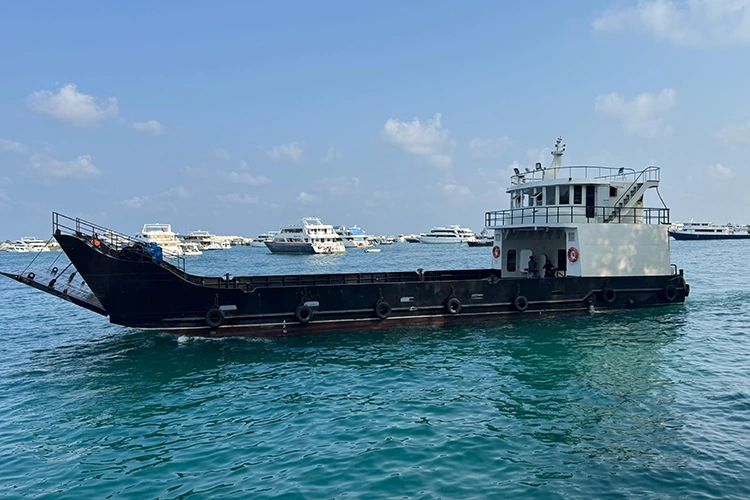
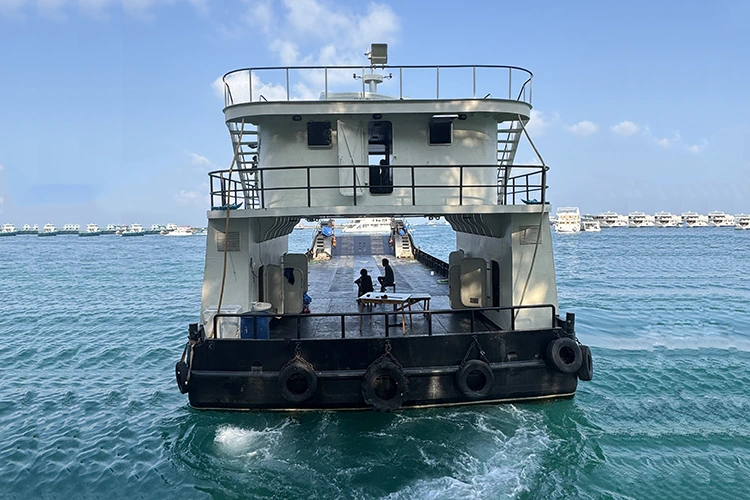
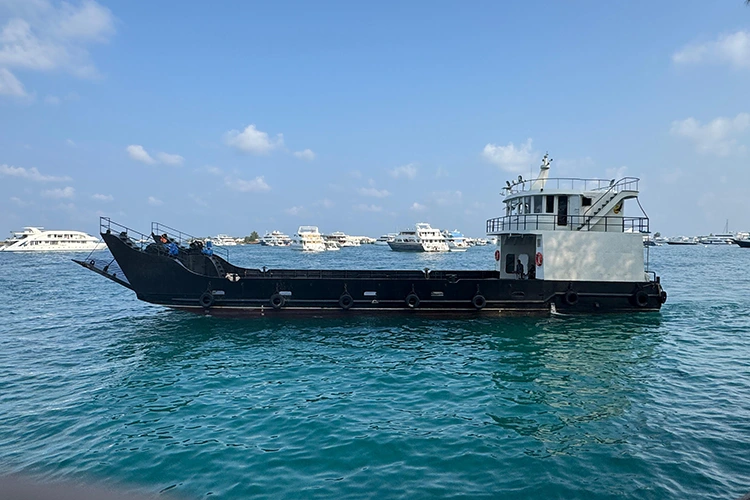
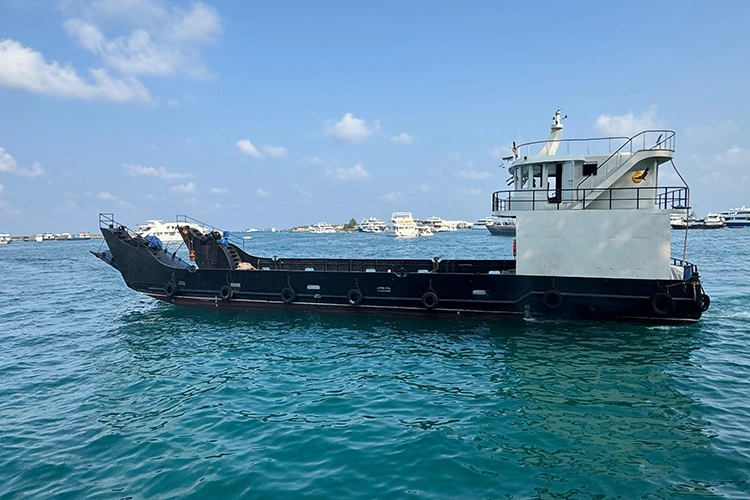
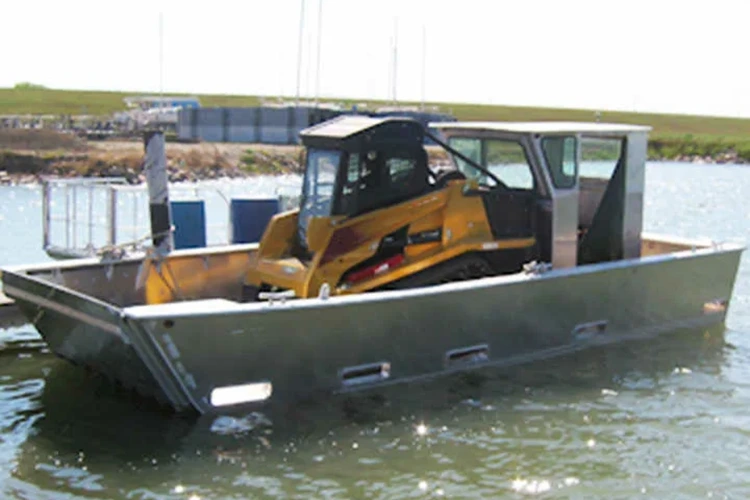
Ferry Boat
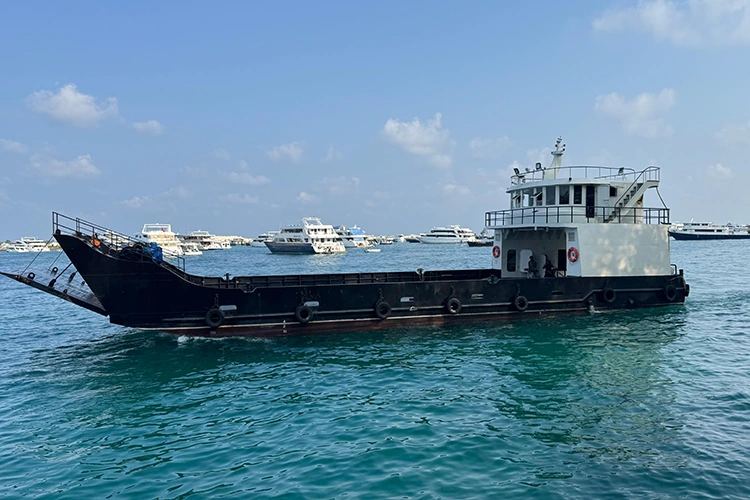
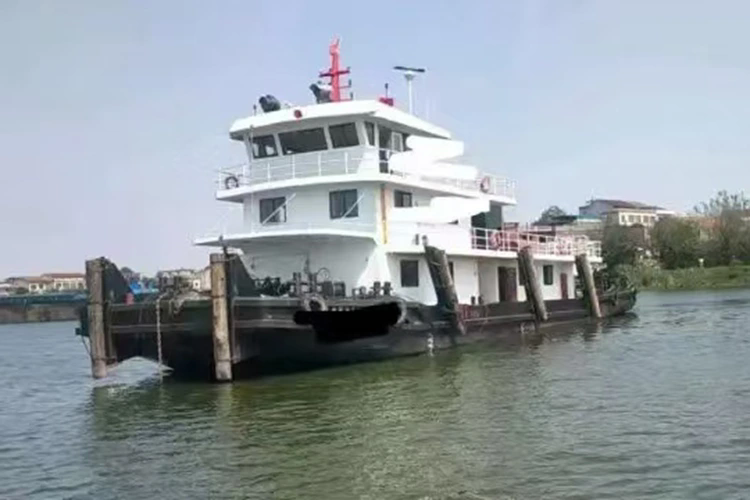
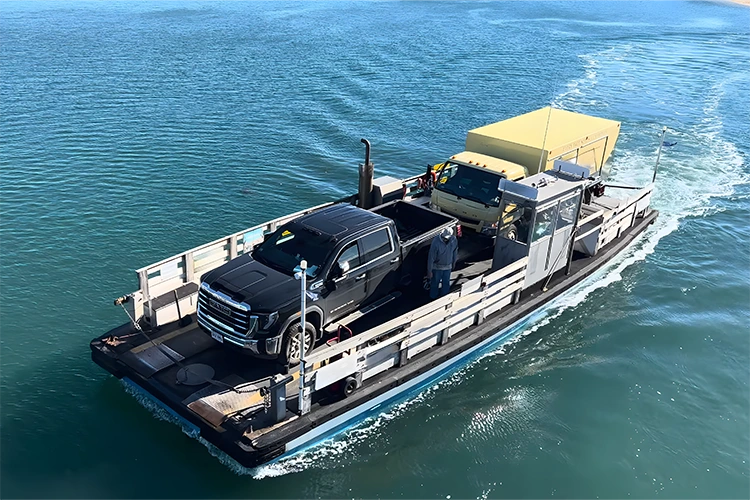
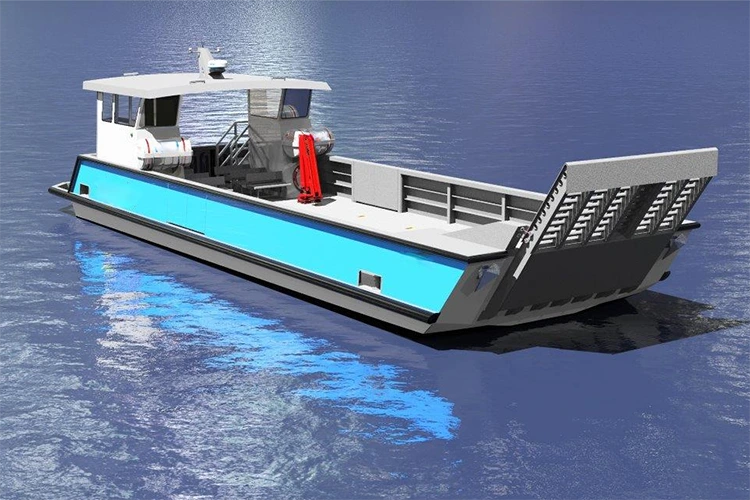
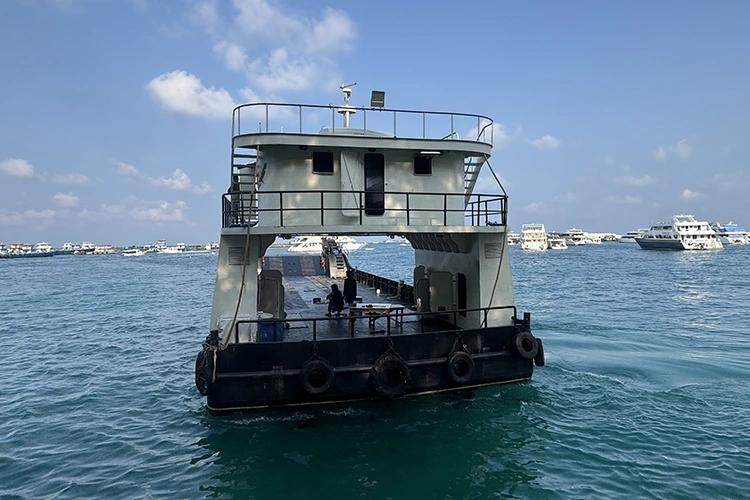
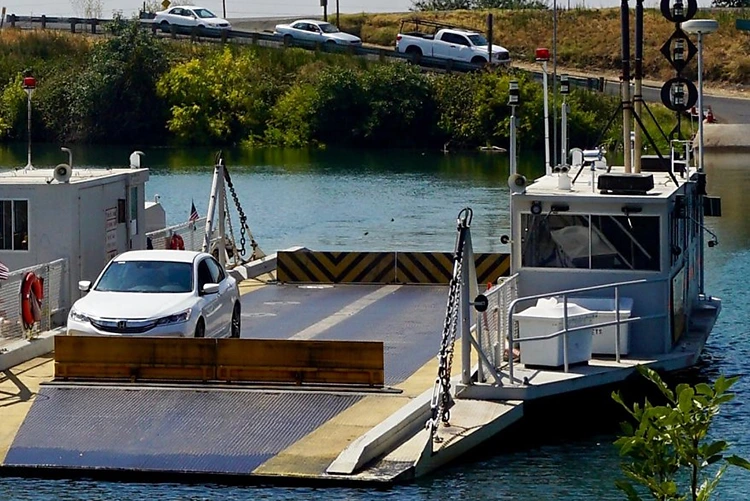
HAIDING SHIPYARD Ferry Boat is designed for reliable short-distance passenger, vehicle, and mixed cargo transportation across rivers, lakes, and coastal waters. With flexible capacity, shallow-draft navigation, dual-engine redundancy, and customizable cabin layouts, it supports urban commuting, tourism connections, and island logistics. Manufactured by an experienced China shipbuilding factory under ISO 9001, ISO 50001 and ISO 45001 management systems, it provides practical solutions for safe, efficient, and long-term ferry operations.
HAIDING SHIPYARD Ferry Boat is a purpose-built marine transportation solution for short-distance passenger, vehicle, and mixed cargo ferrying across rivers, lakes, and coastal waters. Designed and manufactured by Shandong Haiding Shipbuilding Co., Ltd., this China-based supplier and manufacturer provides passenger, vehicle, and passenger-cargo configurations with capacities ranging from 50 to 300 passengers or up to 50 vehicles. With dual-engine redundancy, shallow-draft navigation, anti-capsizing technology, and flexible cabin layouts, it helps operators improve daily transport efficiency while reducing operational and safety risks.
Built for Daily Ferry Operations
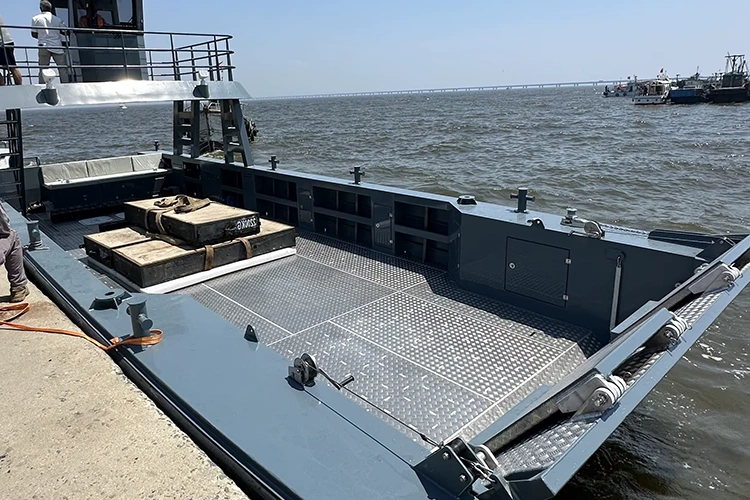
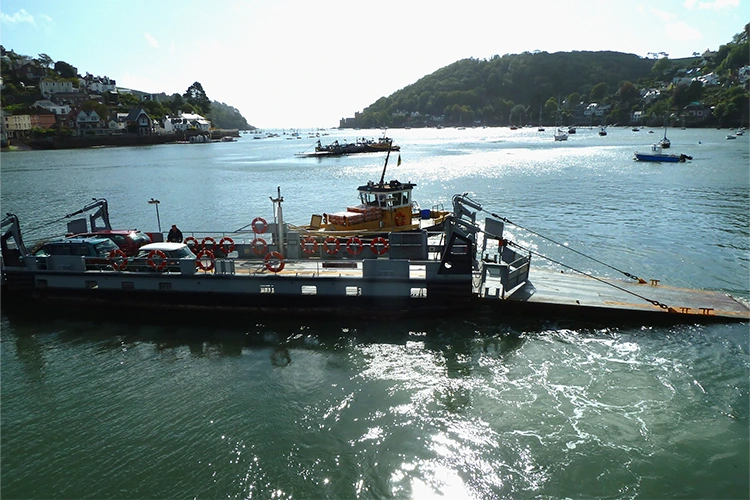
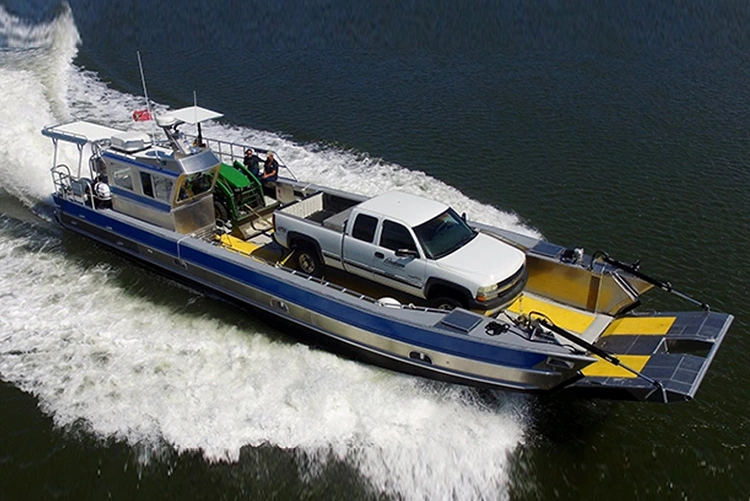
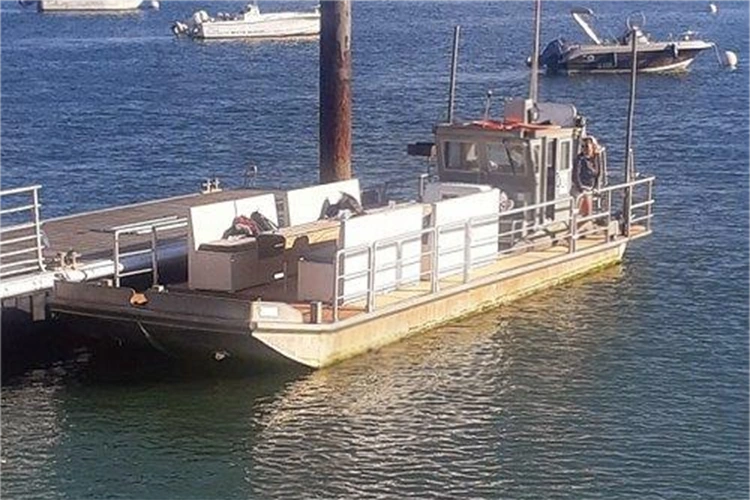
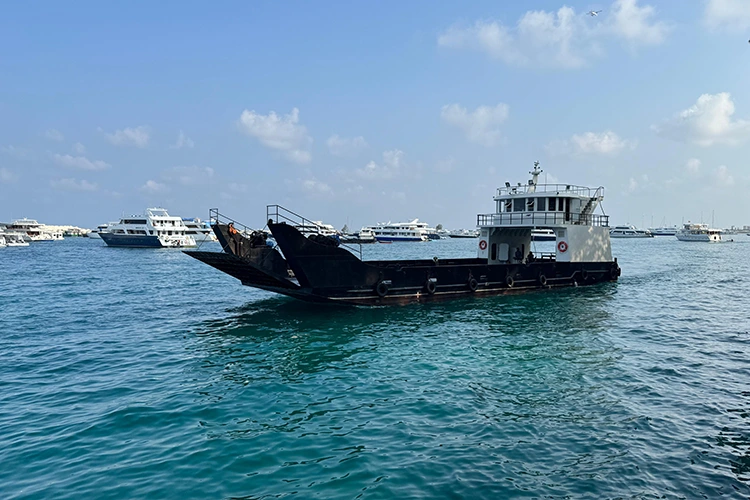
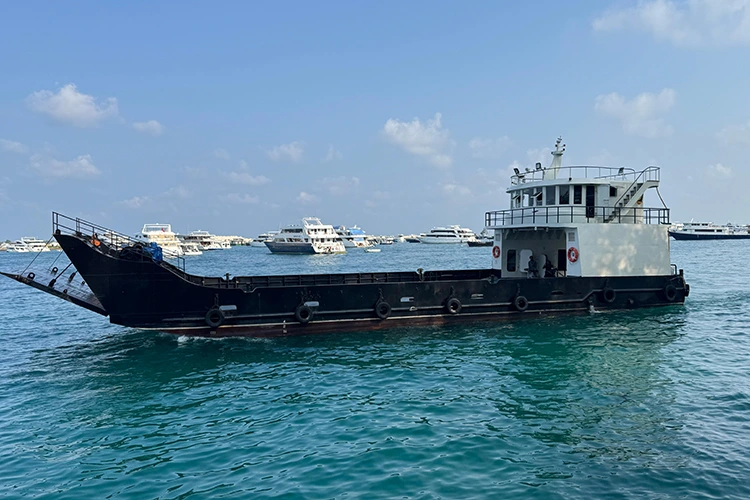
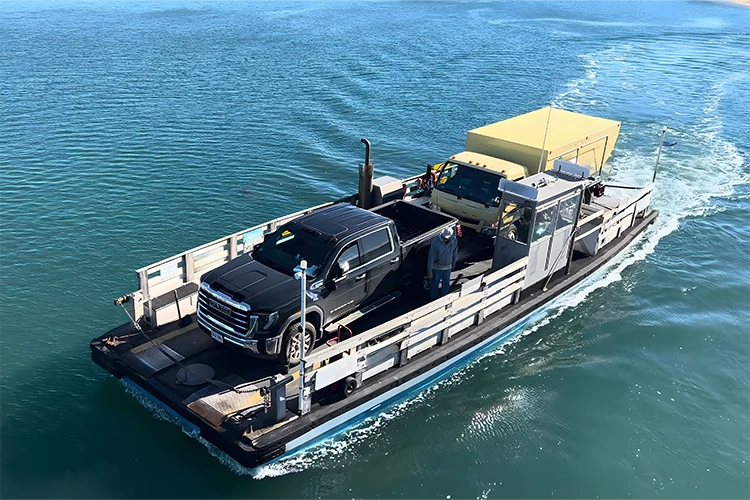
Unlike vessels designed for a single specialized task, HAIDING SHIPYARD Ferry Boat focuses on repeated short-distance transportation where boarding efficiency, load flexibility, navigation stability, and passenger safety directly affect operating costs. The hull can be configured as a passenger ferry, vehicle ferry, or passenger-cargo mixed ferry according to route requirements.
The shallow draft of 0.8-2.0 meters allows the vessel to access relatively shallow terminals, while the deck and cabin layout can be adjusted for different passenger volumes, vehicle types, or cargo requirements. For operators managing frequent daily crossings, this flexibility makes the vessel easier to integrate into existing ferry routes without extensive terminal reconstruction.
Safer Propulsion
For commercial ferry operations, propulsion reliability is particularly important because a single power failure can interrupt an entire route. The vessel uses a dual-main-engine and dual-propeller configuration. With engine power ranging from 200 to 1,000 HP depending on vessel type, the redundant propulsion arrangement provides an additional level of operational security. If one engine encounters a failure, the remaining propulsion system can continue supporting controlled navigation and return operations.
An emergency generator can automatically switch power within 10 seconds after main power interruption. Transverse stabilizing fins and an anti-capsizing stability system help control rolling, with the designed rolling angle limited to approximately 5°. Firefighting and lifesaving equipment are also arranged according to passenger and vehicle operating requirements.
Flexible Capacity
Different routes require very different carrying solutions. Passenger configurations accommodate approximately 50-300 people, while vehicle configurations can carry 10-50 cars or 5-10 trucks. For island supply routes and mixed transportation, the passenger-cargo configuration can combine 20-100 passengers with 5-20 vehicles.
This modular approach allows operators to select the appropriate hull dimensions, deck arrangement, propulsion power, and cabin configuration according to actual route demand instead of purchasing an oversized vessel. It can therefore support urban commuting, tourism transportation, industrial logistics, and island supply services within one product family.
Detailed Technical Parameters – Clarifying Procurement Specifications
|
Parameter Category |
Specific Item |
Passenger Ferry |
Vehicle Ferry |
Passenger-Cargo Mixed Ferry |
Remarks (Linked to Procurement Needs) |
|
Basic Dimensions |
Length (m) |
15-30 |
20-40 |
18-35 |
Customized by passenger/vehicle capacity, adapting to different procurement scenarios |
|
|
Width (m) |
5-10 |
8-12 |
6-11 |
Passenger Ferry for high speed, Vehicle Ferry for stability, meeting differentiated procurement needs |
|
|
Draft Depth (m) |
0.8-1.5 |
1.2-2.0 |
1.0-1.8 |
Adaptable to small terminals, reducing post-procurement usage restrictions |
|
Carrying Capacity |
Passenger Capacity (people) |
50-300 |
- |
20-100 |
Including 4-6 crew members, meeting different passenger flow procurement needs |
|
|
Vehicle Capacity (units) |
- |
10-50 cars/5-10 trucks |
5-20 cars |
Trucks converted at 10 tons/unit, adapting to logistics procurement needs |
|
|
Maximum Load (tons) |
10-50 |
50-200 |
30-100 |
Covering light, medium, and heavy-load procurement scenarios |
|
Power System |
Main Engine Power (HP) |
200-600 |
400-1000 |
300-800 |
Complies with National III emission standard, meeting environmental procurement requirements |
|
|
Speed (knots) |
12-15 |
8-12 |
10-14 |
Low fuel consumption at economic speed, reducing post-procurement operating costs |
|
Safety Configuration |
Stability System |
Transverse stabilizing fins + anti-capsizing system |
Transverse stabilizing fins + ballast water adjustment system |
Transverse stabilizing fins + anti-capsizing system |
Rolling angle ≤5°, meeting core safety procurement demands |
|
|
Life-saving Equipment |
Life rafts + life jackets (for all) |
Life rafts + vehicle fire blankets |
Life rafts + life jackets (for all) |
Life raft validity period 3 years, reducing post-procurement maintenance frequency |
|
Certification Standard |
Ship Certification |
CCS passenger ship certification + MSA inspection |
CCS vehicle carrier certification + MSA inspection |
CCS passenger-cargo ship certification + MSA inspection |
Complies with industry regulations, meeting compliant procurement needs |
Designed Around Route Conditions
Urban Cross-River Routes
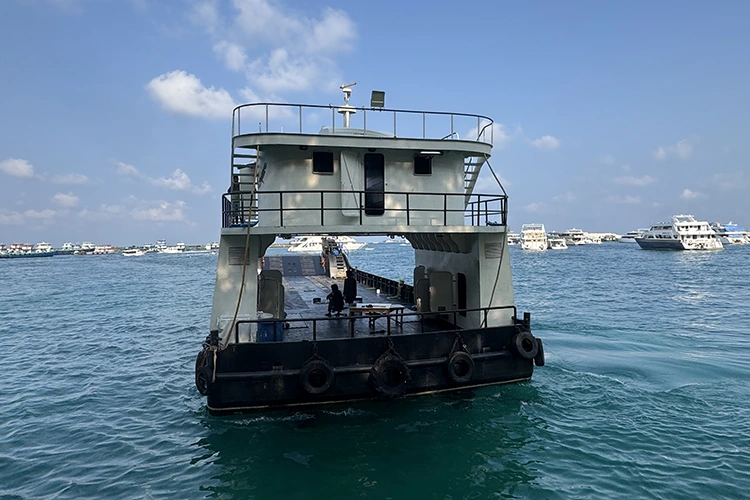
For urban and county-level ferry routes, the passenger or passenger-cargo configuration can provide regular daily crossings without relying entirely on bridges or tunnels. The shallow draft facilitates access to smaller ferry terminals, while front and rear boarding arrangements can shorten passenger loading and unloading time during peak periods.
Tourism Connections
For scenic areas, the passenger configuration can be equipped with panoramic windows, comfortable seating, air conditioning, charging interfaces, and barrier-free access. A single trip can be completed within approximately 30 minutes, while additional operating shifts can be arranged during holidays and seasonal passenger peaks.
Island Logistics
For island communities and coastal industrial areas, the mixed passenger-cargo configuration combines personnel transportation with daily material delivery. Vehicle fixing devices help secure transported vehicles and cargo, making the vessel suitable for regular supply routes where road transportation is unavailable or inefficient.
Real Application Case
A coastal transportation operator required a ferry solution capable of handling both passenger movement and vehicle transportation between an island and the mainland. Existing transportation equipment had limited vehicle capacity and required frequent loading adjustments during peak periods.
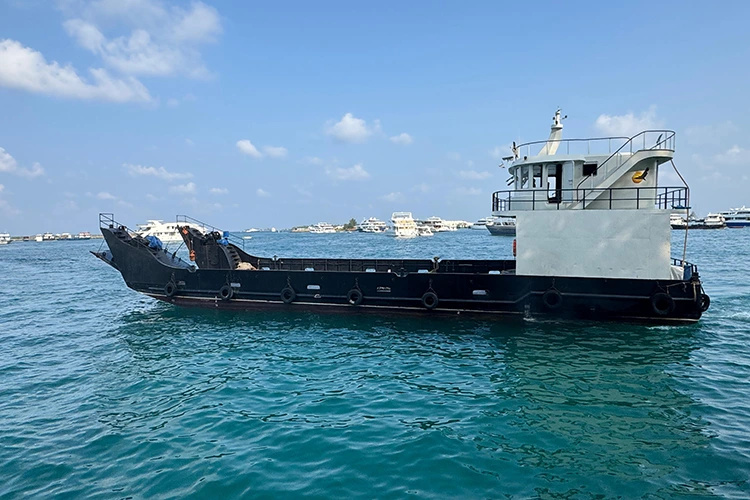
HAIDING SHIPYARD supplied a passenger-cargo mixed configuration with dedicated vehicle loading lanes, cargo fixing devices, and passenger seating areas. The vessel was configured for regular passenger and supply transportation, allowing the operator to combine two transportation tasks within the same sailing schedule.
After entering service, the ferry supported regular island transportation and reduced dependence on separate passenger and cargo transport arrangements. The flexible deck configuration also allowed the operator to adjust loading plans according to seasonal passenger and material demand.
Operating Efficiency
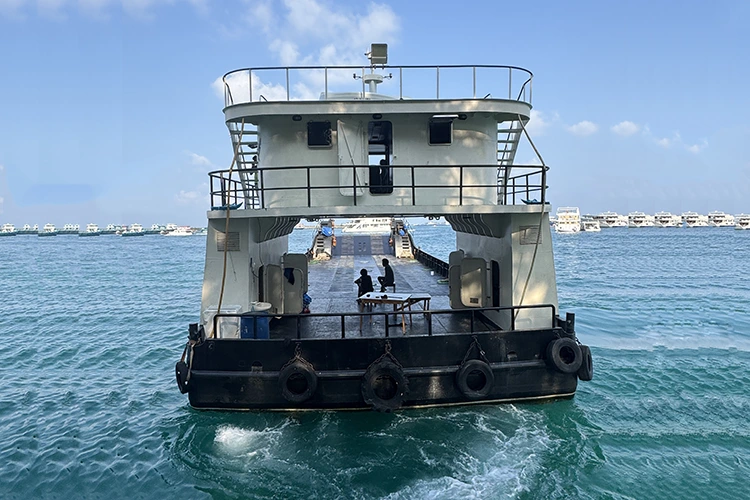
For operators, vessel performance is not only measured by navigation speed but also by how efficiently passengers, vehicles, and cargo can be handled throughout the day. HAIDING SHIPYARD Ferry Boat can be configured with front and rear boarding gates, dedicated vehicle lanes, and practical passenger circulation areas to reduce loading and unloading time. Depending on route length and vessel configuration, a single crossing can be completed within approximately 30 minutes.
The shallow-draft design also allows the vessel to serve smaller terminals and existing ferry facilities with fewer infrastructure limitations. For high-frequency routes, the combination of suitable capacity, economical cruising speed, and flexible loading arrangements helps operators improve daily utilization while controlling fuel and maintenance expenses.
Long-Term Reliability
Frequent ferry operations place continuous demands on the hull, propulsion system, deck structure, and safety equipment. HAIDING SHIPYARD uses Q345/Q460 high-strength steel for the hull structure and applies appropriate anti-corrosion protection to improve durability in freshwater, coastal, and other marine environments.
Routine inspection points are arranged around the propulsion, electrical, lifesaving, and firefighting systems to make maintenance more convenient. The shipyard can also provide spare parts, technical guidance, inspection assistance, and after-sales support according to the vessel's operating area. This approach helps buyers reduce unexpected downtime and maintain stable transportation capacity over the service life of the vessel.
Maintenance & Service
HAIDING SHIPYARD Ferry Boat is designed with practical maintenance access for propulsion, electrical, safety, and onboard systems. The dual-engine configuration allows maintenance planning without unnecessarily interrupting the entire transportation schedule. Core structures and propulsion systems are covered by defined warranty terms, while technical support is available for inspection, spare parts, annual maintenance, and operational requirements.
Customization Options
HAIDING SHIPYARD can customize vessel dimensions, passenger capacity, vehicle capacity, cabin arrangement, propulsion power, sightseeing windows, cargo areas, heating, air conditioning, and safety equipment according to route conditions. For international projects, the shipyard can also assist with classification and compliance requirements such as CCS and RINA, helping buyers complete vessel procurement from design through delivery.
FAQ
What type should buyers choose?
Passenger ferries are suitable for people-focused routes, vehicle ferries are intended for vehicle and logistics transportation, while passenger-cargo configurations are better for islands and routes requiring both functions.
Can the vessel operate at shallow terminals?
Yes. Depending on the selected configuration, the draft can be designed between approximately 0.8 and 2.0 meters, making the vessel suitable for many shallow-water ferry terminals.
Can the capacity be customized?
Yes. HAIDING SHIPYARD supports customization of passenger capacity, vehicle capacity, hull dimensions, propulsion power, cabin layout, and onboard equipment according to route and operating requirements.
Send Inquiry
Contact Info
-
Address
No. 8888, Wanhong Avenue, Huanglou Sub-district, Qingzhou City, Weifang City, Shandong Province, China
-
Tel
-
Email
Looking to buy a dredger, tugboat or custom engineering vessel? Send your requirements to HAIDING SHIPYARD for product details, technical consultation and a competitive shipbuilding quotation.
Related Products
News Recommendations