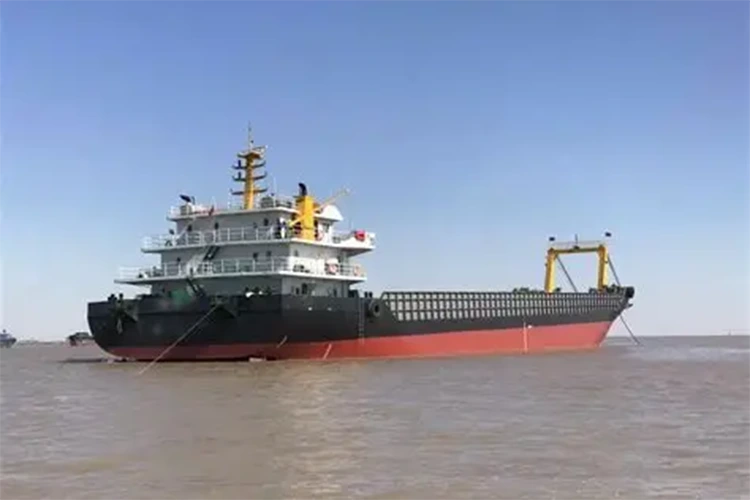
Deck Barge
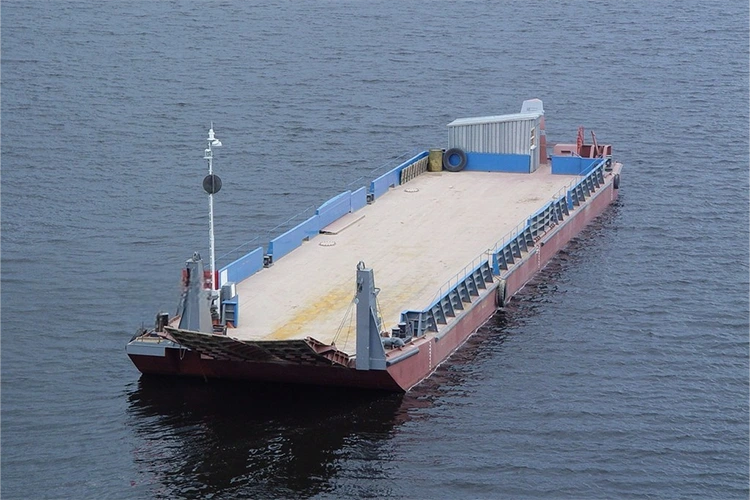
HAIDING SHIPYARD manufactures deck barges for heavy cargo transport, marine construction and temporary floating platforms. Available in 50–3,000 ton payload capacities with 1.0–3.5 m draft, the open deck supports steel, containers, excavators, cranes and oversized equipment. Deck loads, hull structure, cargo securing, towing systems and dimensions can be customized for inland and coastal projects.
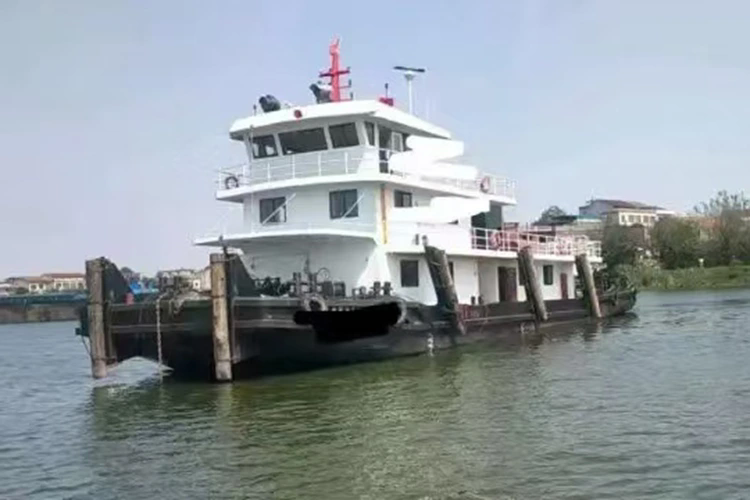
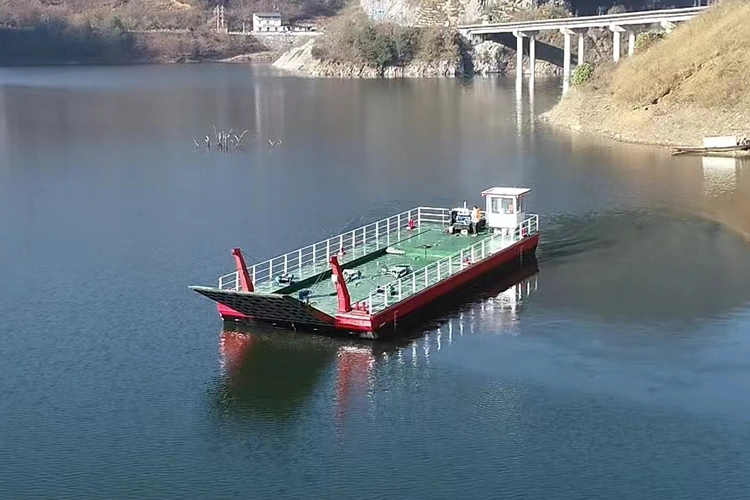
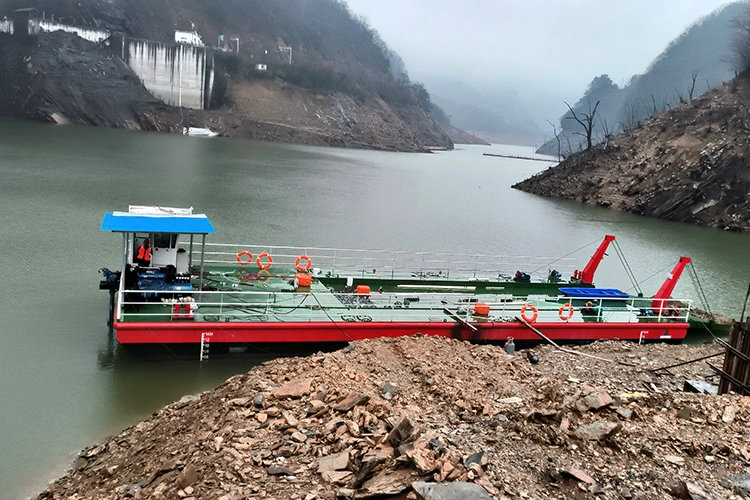
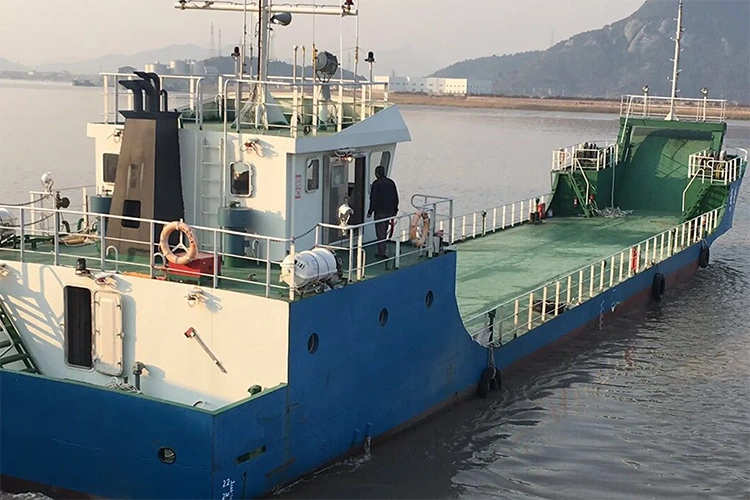
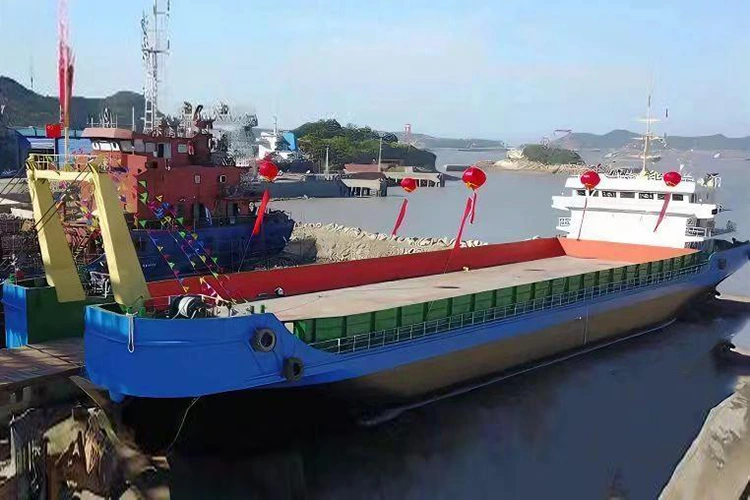
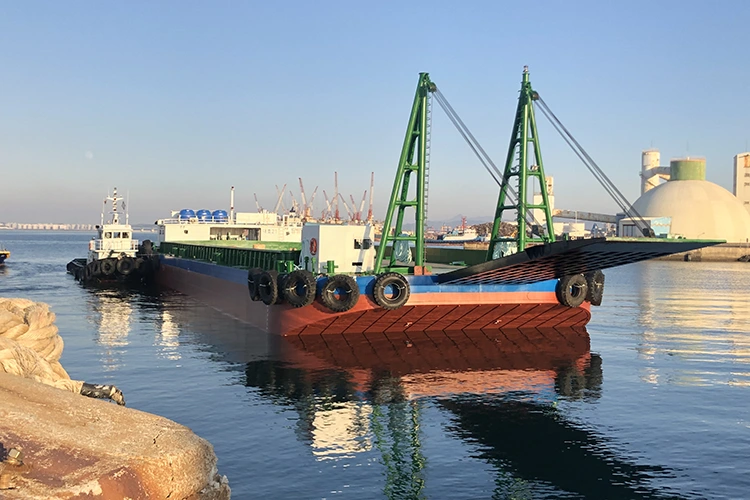
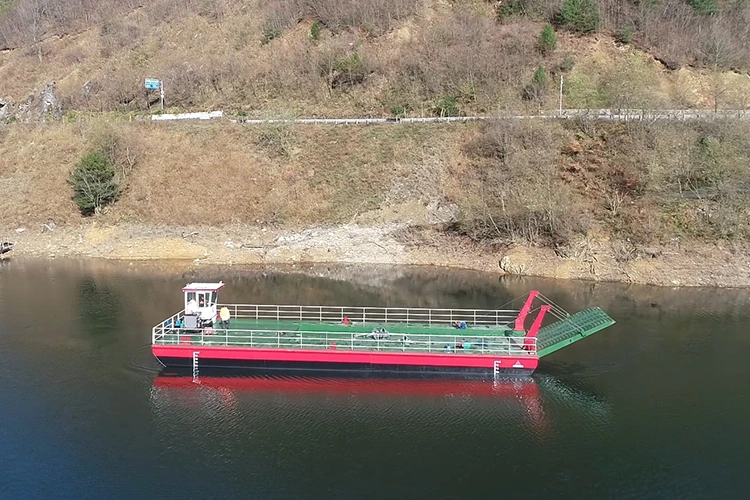
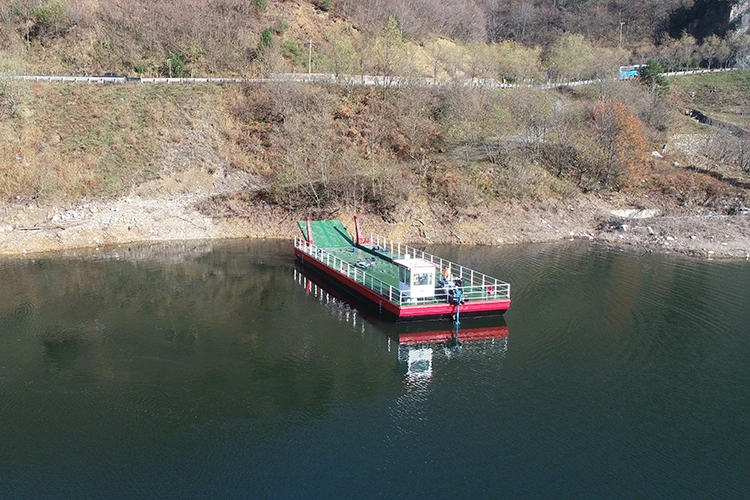
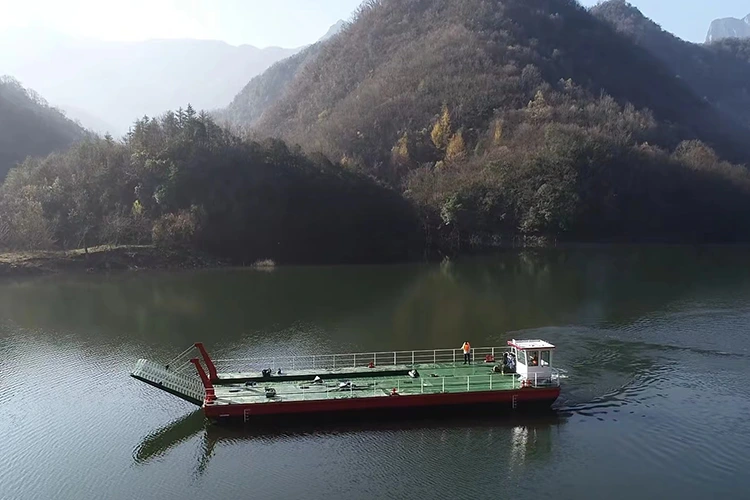
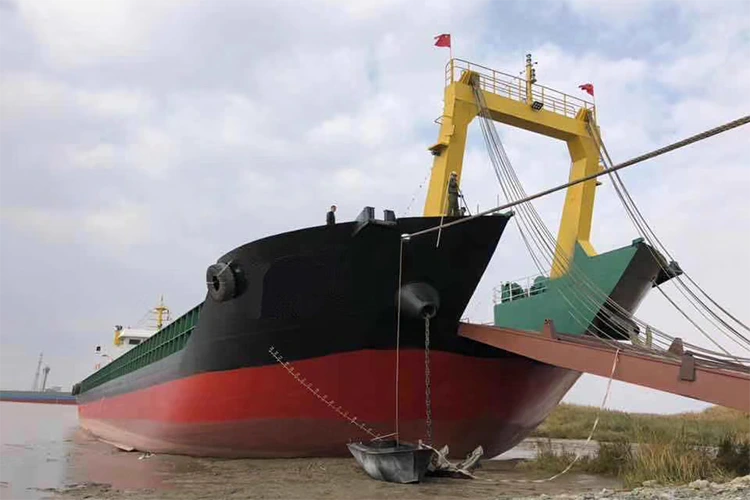
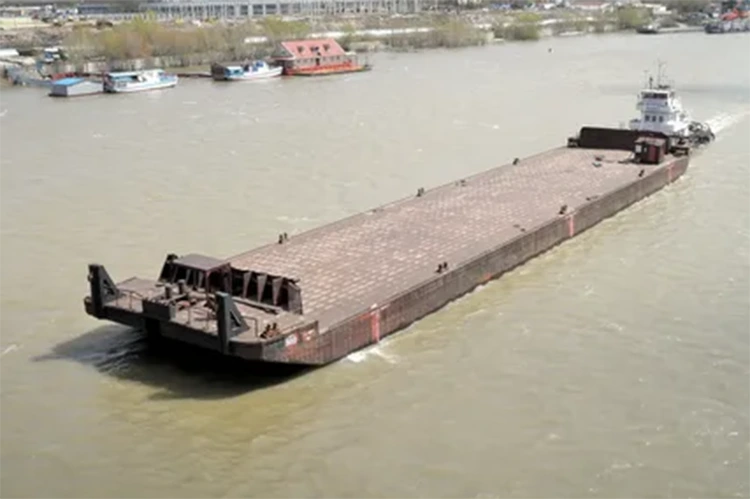
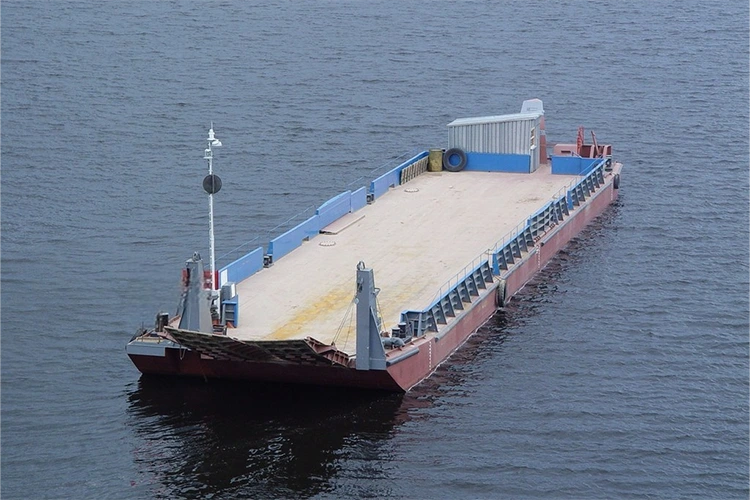
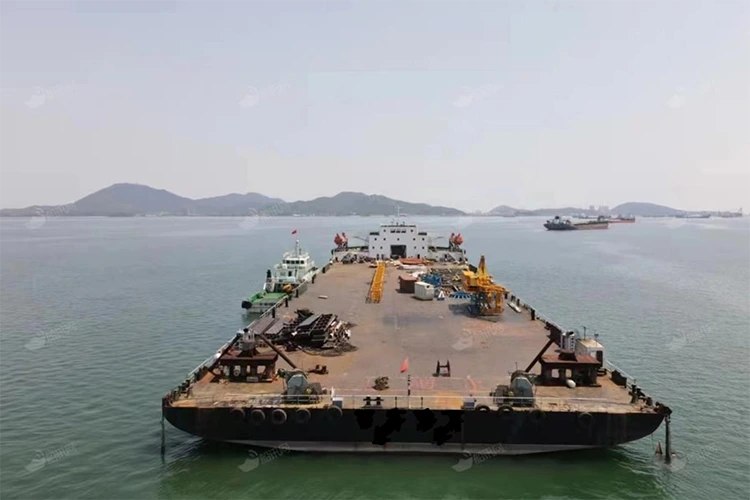
The Deck Barge from HAIDING SHIPYARD is a non-self-propelled flat-deck vessel developed for heavy cargo transportation, marine construction and temporary waterborne operations. Its open deck provides a continuous loading surface without the height and dimensional restrictions of a conventional cargo hold, making it suitable for steel products, containers, construction machinery, pipes, prefabricated structures and other project cargo.
The vessel can operate on inland rivers, coastal waters and sheltered marine construction sites. Depending on the project, the same hull concept can also be configured as a material transport barge, equipment carrier or temporary floating working platform.
For a deck barge, the most important design parameters are not simply length and payload. Cargo weight, deck loading, cargo distribution, draft, freeboard, stability and towing conditions all affect the final vessel design. HAIDING SHIPYARD develops these parameters together according to the intended cargo and operating route.
Working Principle
Buoyancy
A deck barge carries cargo through the combined action of hull buoyancy and structural load-bearing capacity. As cargo is loaded onto the deck, the total displacement of the vessel increases and the hull settles deeper into the water. The vessel reaches its operating draft when the displaced water provides sufficient buoyant force to balance the weight of the hull, cargo, equipment and other onboard loads.
This means that a larger deck does not automatically mean a higher payload. The available payload depends on hull dimensions, lightweight displacement, draft limits, freeboard and stability requirements.
Load Distribution
Cargo distribution has a direct influence on structural loading and vessel stability. A 1,000-ton cargo load spread over a large deck area creates a different loading condition from the same weight concentrated on several small support points.
This is particularly important when transporting excavators, cranes, transformers or other heavy equipment. Wheel loads, track loads and equipment support points can produce high local loads even when the total cargo weight remains within the vessel's rated payload.
For this reason, HAIDING SHIPYARD can evaluate the cargo footprint and loading position when designing the deck structure for heavy project cargo.
Key Advantages
Open Deck
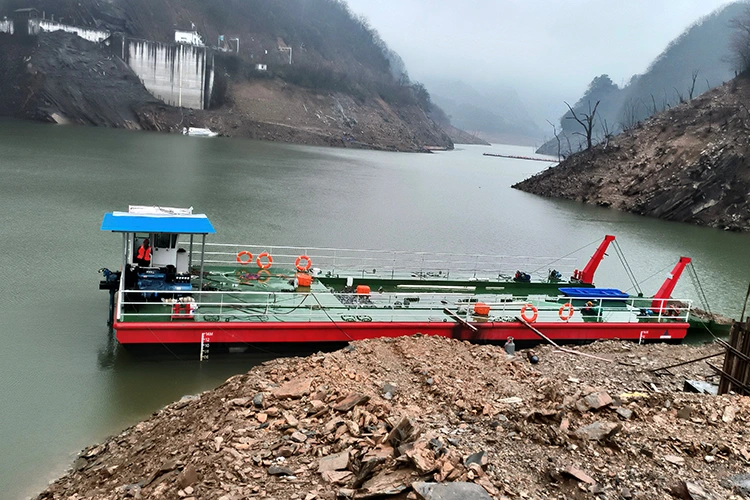
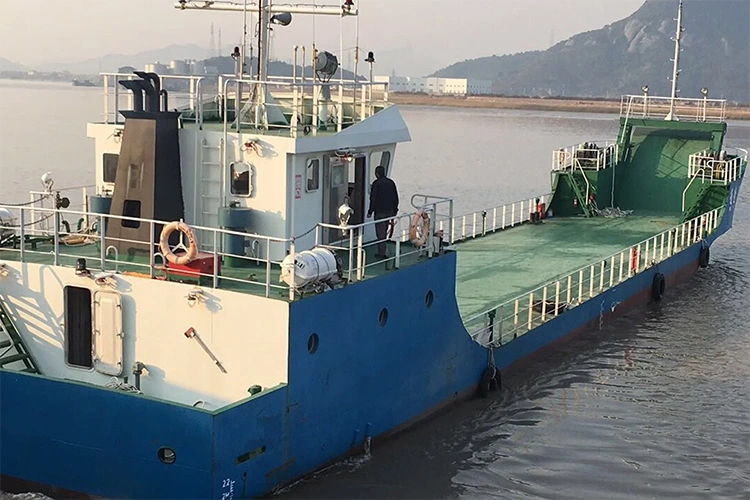
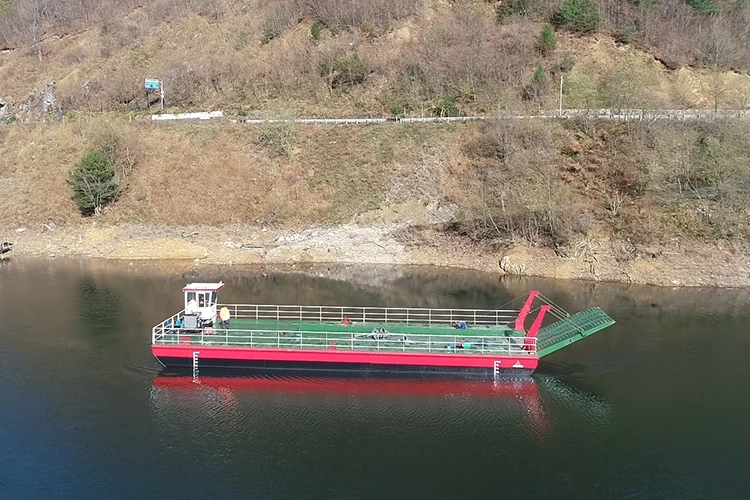
The unobstructed deck allows cargo to be loaded using shore cranes, floating cranes, mobile cranes or ramps. Long and oversized cargo can extend across a much larger usable loading area than would normally be available inside an enclosed cargo hold.
This configuration is particularly practical for steel structures, pipes, construction machinery, containers and prefabricated components that require flexible loading arrangements.
Heavy Load
The deck structure uses longitudinal and transverse framing to transfer cargo loads through the deck and into the hull structure. Reference deck uniform loading can range from approximately 10–30 kN/m², while local concentrated loads can be designed separately for specific equipment.
For heavy machinery, the structural design should consider the actual contact area of wheels, tracks or support legs rather than calculating only the total machine weight.
Flexible Loading
Cargo can be loaded from the side, stern or deck depending on the project arrangement. Ramps can be incorporated when self-propelled construction machinery needs to drive directly onto the vessel, while lifting points and cargo securing fittings can be added for crane loading.
The loading method should be determined before finalizing the deck structure because different loading methods produce different local forces.
Shallow Draft
The reference operating draft is approximately 1.0–3.5 m. The final draft depends on hull dimensions, cargo weight, displacement and required freeboard.
For inland river projects, shallow draft can be important because the vessel may need to pass through areas where water depth changes seasonally. The available under-keel clearance should therefore be considered together with the loaded draft rather than using nominal draft as the only selection criterion.
Detailed Technical Parameters
|
Parameter Category |
Specific Item |
Specification Range |
Remarks |
|
Basic Dimensions |
Length |
20-80m |
Customizable according to cargo length |
|
|
Width |
6-20m |
Adapted to different waterway widths |
|
|
Depth |
1.5-4.0m |
Ensures deck load stability |
|
|
Draft Depth |
1.0-3.5m |
1.0-1.8m (unloaded), 2.5-3.5m (loaded) |
|
Load Performance |
Maximum Load Capacity |
50-3000 Tons |
Adapted to steel/containers/bulk cargo |
|
|
Deck Uniform Load |
10-30kN/㎡ |
Local concentrated load customizable (≤50kN/㎡) |
|
|
Lifting Points (Optional) |
2-4 points, 20-100 Tons per point |
Adapted to truck crane/floating crane operations |
|
Structure & Material |
Hull Material |
Q345 High-strength Steel |
Deck thickness 12-20mm, side thickness 10-16mm |
|
|
Core Structure |
Longitudinal-transverse framed deck + anti-collision guardrail |
Guardrail height 1.2m, spacing ≤1.5m |
|
|
Anti-corrosion Treatment |
Inland River: 3-layer anti-corrosion coating |
Coastal: Salt-spray resistant coating (optional) |
|
|
Anti-slip Design |
Deck surface sandblasting (friction coefficient ≥0.6) |
Prevents cargo sliding in rainy days |
|
Safety Configuration |
Fire-fighting System |
Deck fire hydrants (1 per 30m) + dry powder fire extinguishers (4-8 units) |
Complies with CCS fire-fighting standards |
|
|
Life-saving Equipment |
Life rings (1 per 50m) + life jackets (for crew, 4-6 pieces) |
Ensures operator safety |
|
|
Mooring Device |
Bow/stern mooring bollards (diameter 150-200mm, 4-6 per end) |
Stabilizes hull during tug towing |
|
Adaptability |
Towing Interface |
Stern reserved towing hook interface (compatible with 50-300 Ton tugs) |
No additional modification required |
|
|
Auxiliary Devices (Optional) |
Side thrusters (power 50-200HP), deck lighting (LED lights, full deck coverage) |
Improves maneuverability in narrow waters and safety in night operations |
|
Certification Standard |
Ship Certification |
CCS、DNV、LR、 BV、KR、RINA、RS |
Complies withTechnical Rules for Statutory Inspection of Inland River Ships (China) andSOLAS Convention (international) |
Hull Structure
Deck Structure
The deck can use a longitudinal-transverse framing system. Longitudinal members help distribute loads along the hull, while transverse frames maintain structural stiffness and transfer loads toward the side and bottom structures.
Q345 high-strength steel can be used for the main hull structure, with deck plate thickness and structural spacing determined according to vessel size, loading requirements and applicable design rules.
For heavy project cargo, additional reinforcement can be concentrated beneath areas subject to high local loading. This may be required under crane legs, excavator tracks, container positions, steel coil supports or large prefabricated structures.
Cargo Securing
Because the deck is open, cargo securing becomes an important part of the transportation system. Depending on the cargo, the deck can be equipped with lashing points, bollards, stoppers, guide rails or customized support structures.
The securing arrangement should consider longitudinal forces during towing, transverse movement caused by wind and waves, and the vessel's motion in changing water conditions.
For oversized equipment, the cargo's center of gravity and support points should be provided before vessel design so that the loading arrangement can be properly evaluated.
Stability
Loading Condition
Stability needs to be checked under the actual loading condition rather than based only on the vessel's maximum payload.
Heavy cargo positioned too high can raise the vessel's center of gravity and reduce the available stability margin. Uneven loading can also produce transverse heel or longitudinal trim.
For this reason, the loading plan should consider cargo weight, cargo position, center of gravity, deck loading and the required freeboard. Heavy equipment is normally positioned according to the approved loading arrangement rather than simply placed wherever there is available deck space.
Draft Control
The loaded draft affects both waterway access and stability. A vessel carrying dense cargo such as steel or machinery may reach its draft limit with a smaller volume of cargo than when carrying lighter materials.
For shallow-water projects, buyers should provide the minimum channel depth, required payload, towing route and expected water-level changes. These factors allow the appropriate hull dimensions and loading condition to be established during design.
Hydraulic and Deck Equipment
Deck Fittings
The open deck can be configured with cargo securing points, lifting points, mooring bollards, stoppers, guardrails, ramps and other fittings according to the intended operation.
For equipment transportation, customized foundations can also be incorporated into the deck so that machinery or other project cargo can be secured without relying only on temporary supports.
Optional Equipment
Depending on the project, side thrusters, deck lighting, anti-slip treatment, utility connections and other auxiliary equipment can be incorporated.
The equipment configuration should be determined by the actual working conditions. A transport barge used only for cargo delivery does not necessarily require the same equipment as a barge that will remain on site as a marine construction platform.
Towing System
Tugboat Operation
The standard vessel is non-self-propelled and requires a tugboat for transportation. The towing arrangement can be designed around the loaded displacement and operating route.
Tug selection depends on more than the size of the barge. Loaded displacement, towing distance, current, wind, wave conditions, waterway width and required towing speed all affect the required towing force.
The reference configuration can be designed for approximately 50–300 ton-class tugboats, while the final tug requirement should be confirmed according to project-specific towing conditions.
Comparison
Deck Barge vs Hopper Barge
A deck barge is designed primarily for cargo that needs an unobstructed working surface. Steel, containers, machinery and prefabricated structures can be loaded directly onto the deck.
A hopper barge is designed around bulk cargo such as dredged soil, sand and gravel and normally uses a hopper arrangement for loading and discharge. When direct bottom discharge is the main requirement, a hopper configuration is generally more appropriate.
Deck Barge vs Pontoon Barge
A deck barge can be used for both transportation and marine construction, but its design normally focuses on cargo carrying, towing and deck loading.
A pontoon barge is often selected when the primary requirement is a floating platform, temporary work surface or modular marine structure. Its final configuration depends heavily on the required working load, stability and mooring arrangement.
Deck Barge vs Self-Propelled Barge
A self-propelled barge incorporates its own propulsion system, allowing it to navigate independently. A conventional deck barge relies on a tugboat.
For projects where the same vessel will repeatedly operate on a defined route, self-propulsion may be considered. For project cargo transportation or dedicated construction work, a non-self-propelled configuration can provide a simpler hull arrangement and allows the propulsion function to be separated from the cargo platform.
Applications
Inland River Transportation
The vessel can transport steel products, construction machinery, containers and other project cargo between inland ports, industrial facilities and construction sites.
The open deck is particularly useful when the cargo is too long, wide, tall or heavy for a conventional enclosed cargo hold.
Construction Equipment
Excavators, cranes, drilling equipment, loaders and other machinery can be transported to bridge construction, dredging, waterway maintenance and infrastructure projects.
Ramp loading can be considered for self-propelled machinery, while crane loading can be used for equipment that cannot drive onto the deck.
Container Transport
The deck can be configured for 20 ft and 40 ft containers. Container positioning and securing arrangements should be established according to the required loading pattern.
Where multiple containers are carried, the design needs to consider deck loading, stack height, center of gravity and securing arrangements together.
Steel and Project Cargo
Steel plates, steel coils, pipes, fabricated structures and other heavy industrial products can be transported on the open deck.
For concentrated loads, local deck reinforcement and suitable cargo supports can be incorporated according to the actual cargo dimensions and support points.
Marine Construction
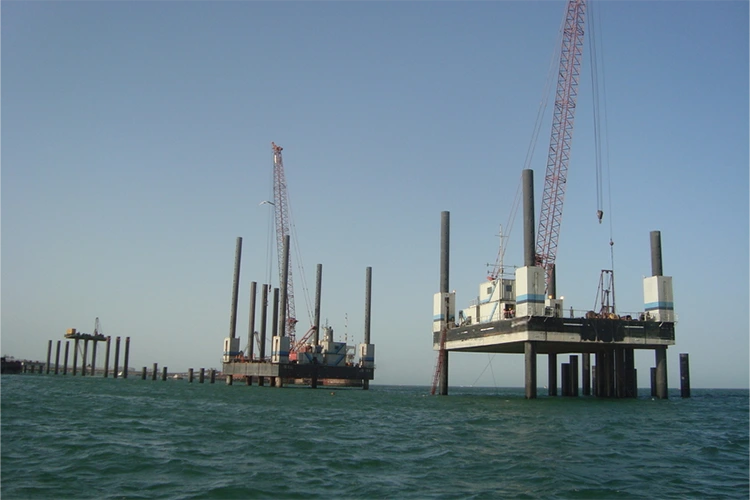
The vessel can transport construction materials, prefabricated structures, cranes and equipment between coastal terminals and marine construction sites.
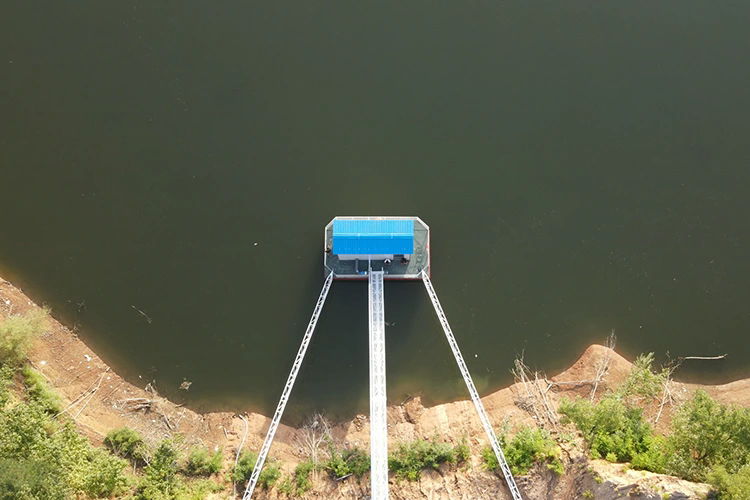
It can also remain at the construction area as a temporary material or equipment platform when the project requires suitable mooring and working arrangements.
Temporary Working Platform
The flat deck can be configured for bridge construction, wharf maintenance, marine equipment installation, dredging support and other temporary water-based operations.
When used as a working platform rather than a transportation vessel, the design needs to consider equipment loads, personnel loads, mooring conditions, wind, waves and other environmental forces.
Corrosion Protection
Inland Waterways
For freshwater operation, a multi-layer protective coating system can be used on the hull and exposed structural surfaces. Coating selection should consider immersion, cargo handling and the vessel's maintenance conditions.
Coastal Waters
For coastal service, the coating system can be upgraded for saltwater and salt-spray exposure. Underwater structures may also use sacrificial anodes where required.
The areas around welds, structural connections and permanently submerged components require appropriate surface preparation and coating inspection because localized corrosion can develop more quickly in these areas.
Customization
HAIDING SHIPYARD develops vessels according to the cargo and operating conditions of each project.
The hull length, breadth, draft and payload can be adjusted according to the required transportation route. Deck reinforcement can be designed for concentrated loads such as excavator tracks, crane legs, steel coils and heavy machinery.
Cargo securing points, lifting points, bollards, ramps, guardrails, anti-slip surfaces and equipment foundations can also be incorporated into the deck arrangement.
For quotation, buyers should provide the cargo type, total weight, cargo dimensions, center of gravity, support-point arrangement, loading method, minimum water depth, towing route and existing tugboat information.
FAQ
How does a deck barge float?
The hull generates buoyancy by displacing water. As cargo is loaded, displacement and draft increase until the buoyant force balances the total weight of the vessel, cargo and equipment.
How much cargo can it carry?
The reference payload range is 50–3,000 tons. Actual payload depends on hull dimensions, lightweight displacement, draft, freeboard, structural capacity and stability.
Can it carry an excavator or crane?
Yes. However, heavy machinery should be checked by its actual wheel, track or support-point loads. The equipment weight and dimensions should be provided before finalizing the deck structure.
Can containers be transported?
Yes. The open deck can be configured for 20 ft and 40 ft containers. Container positioning and securing arrangements should be determined according to the loading plan.
What is the difference between a deck barge and a hopper barge?
A deck barge is primarily designed for open-deck cargo such as machinery, steel and containers. A hopper barge is designed for bulk materials such as dredged soil, sand and gravel and normally uses a hopper system for loading and discharge.
Is it self-propelled?
The standard configuration is non-self-propelled and requires a tugboat. A self-propelled configuration can be considered when independent navigation is required.
What draft is available?
The reference draft range is approximately 1.0–3.5 m. The actual draft depends on the vessel's displacement, cargo weight and loading condition.
Can the deck be reinforced?
Yes. Local reinforcement can be designed for concentrated loads from crane legs, excavator tracks, steel coils, machinery supports and other heavy cargo.
What information is needed for a quotation?
The most useful information includes cargo type, cargo weight, dimensions, center of gravity, support points, loading method, required draft, minimum water depth, towing route and tugboat specifications.
Can the vessel be transported by road?
Yes. HAIDING SHIPYARD can use modular construction for projects where a completed vessel cannot reach the site by water. The vessel can be divided into transportable sections and assembled at the destination.
Send Inquiry
Contact Info
-
Address
No. 8888, Wanhong Avenue, Huanglou Sub-district, Qingzhou City, Weifang City, Shandong Province, China
-
Tel
-
Email
Looking to buy a dredger, tugboat or custom engineering vessel? Send your requirements to HAIDING SHIPYARD for product details, technical consultation and a competitive shipbuilding quotation.
Related Products
News Recommendations