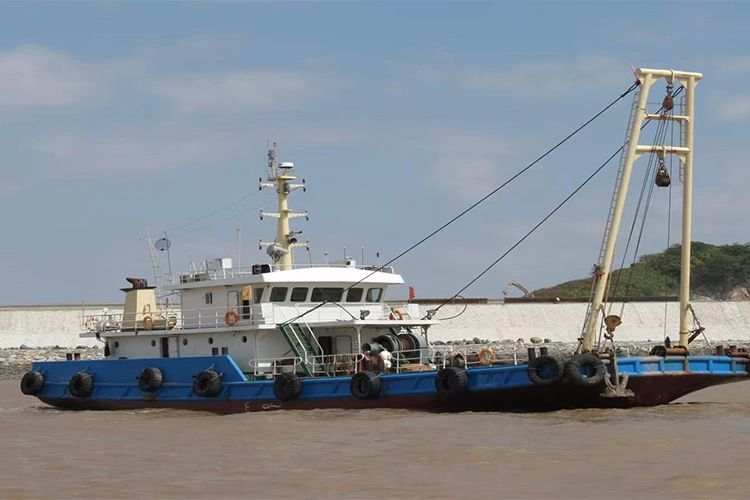
Anchoring Launch
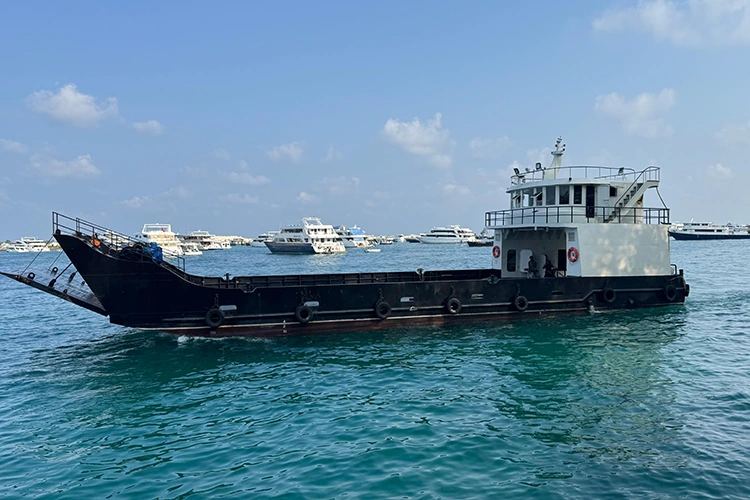
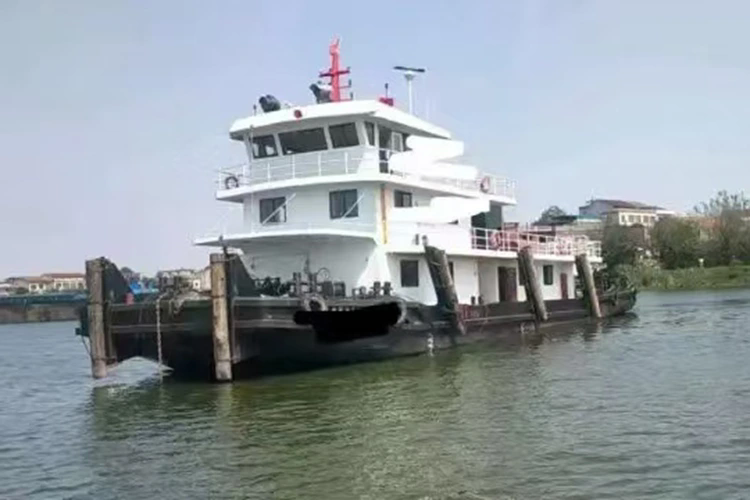
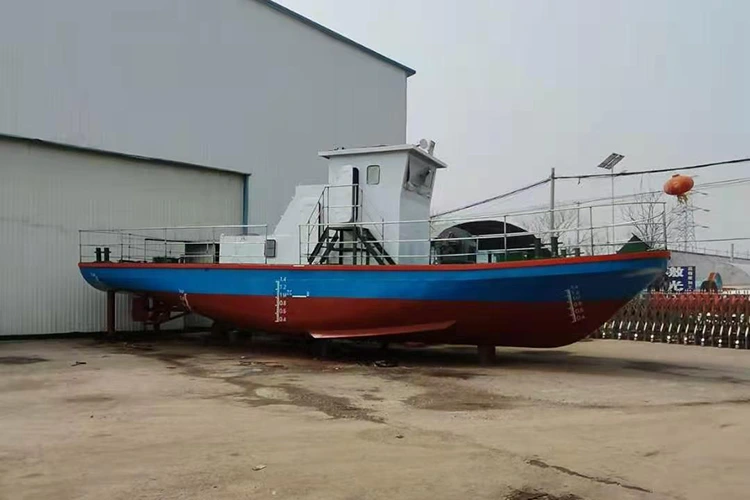
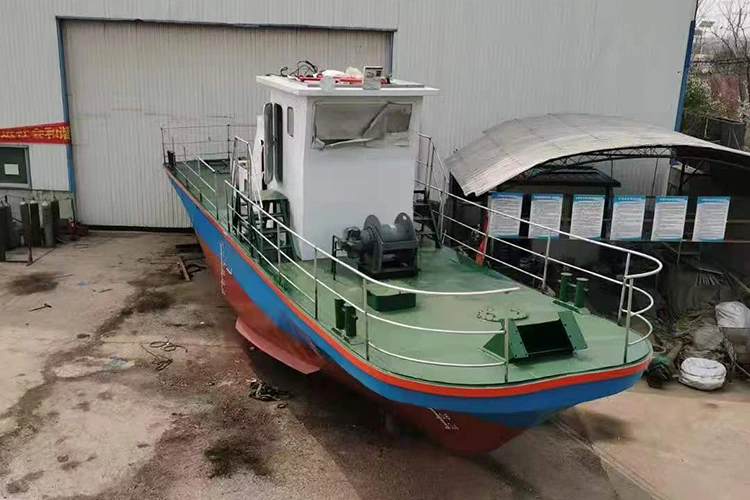
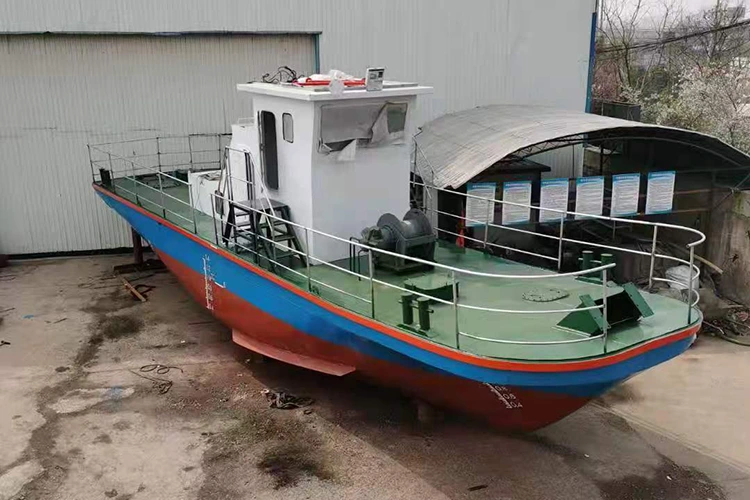
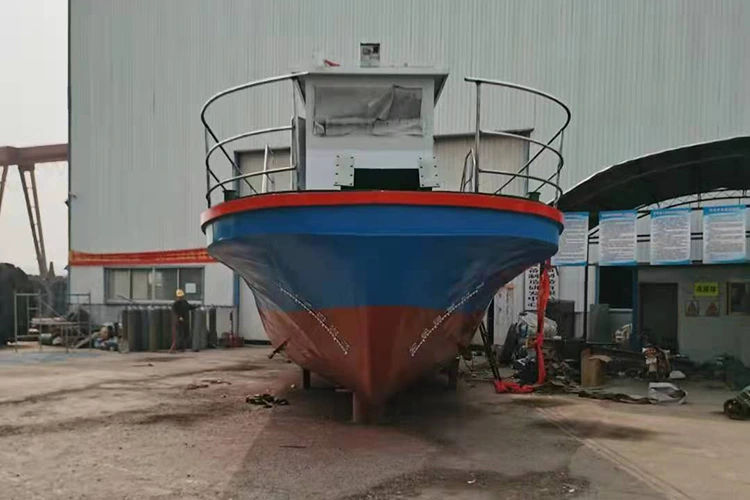
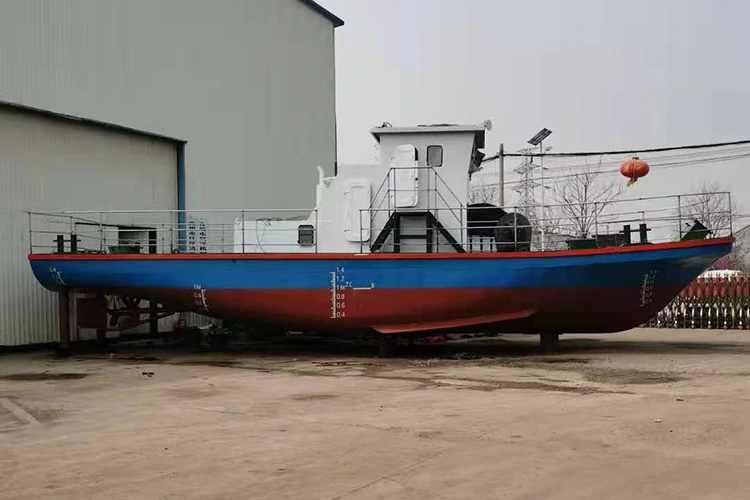
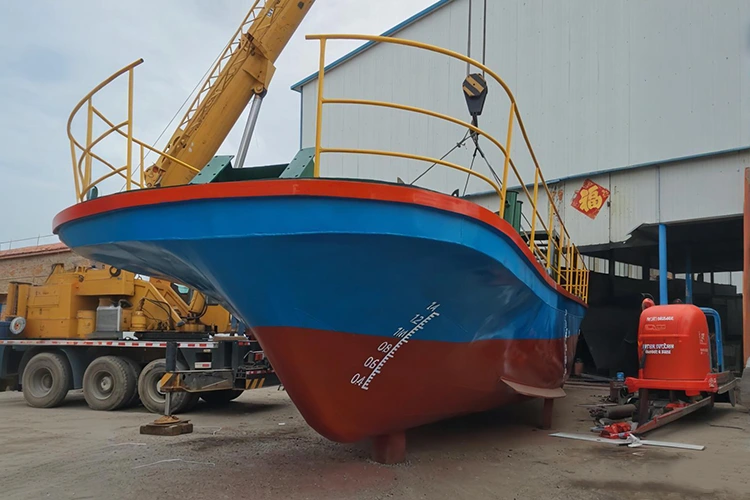
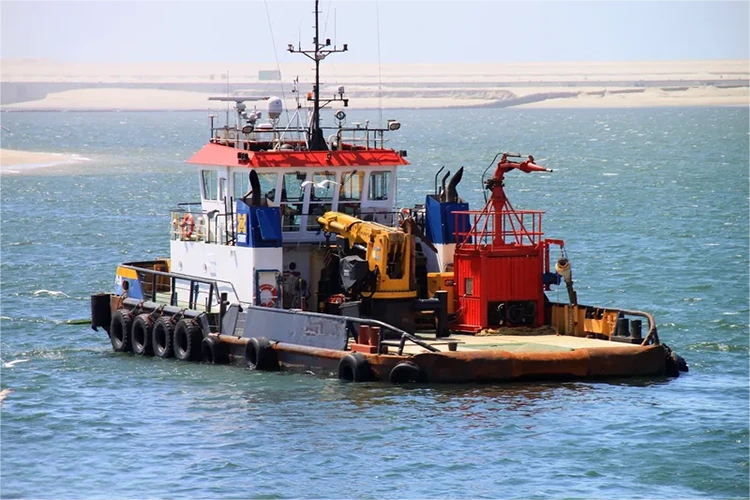
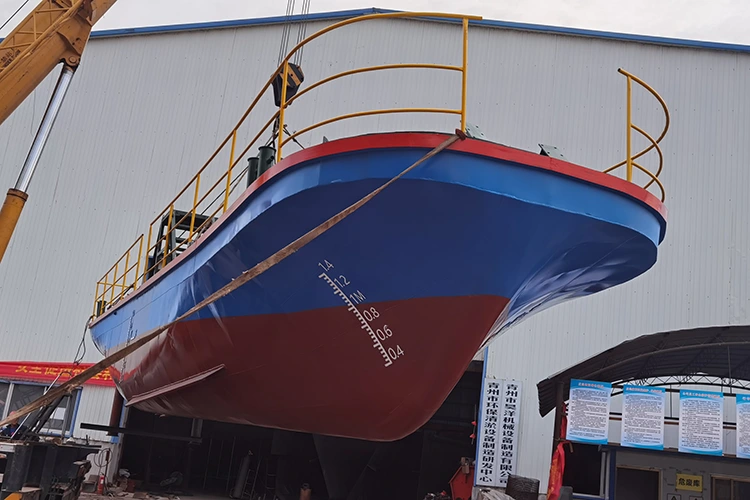
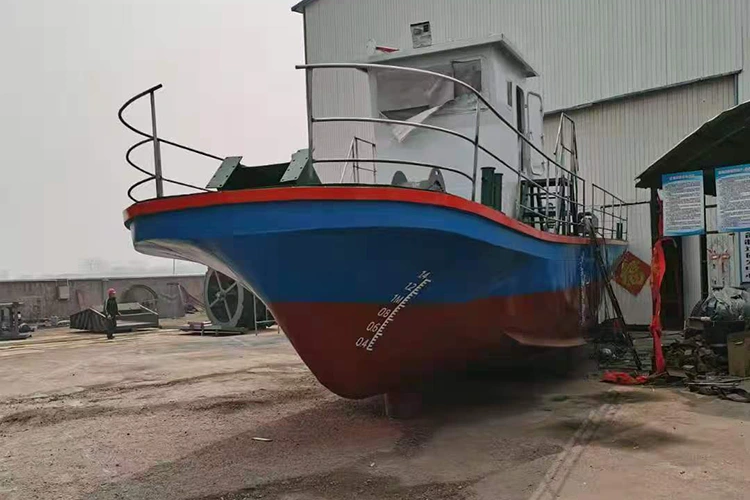
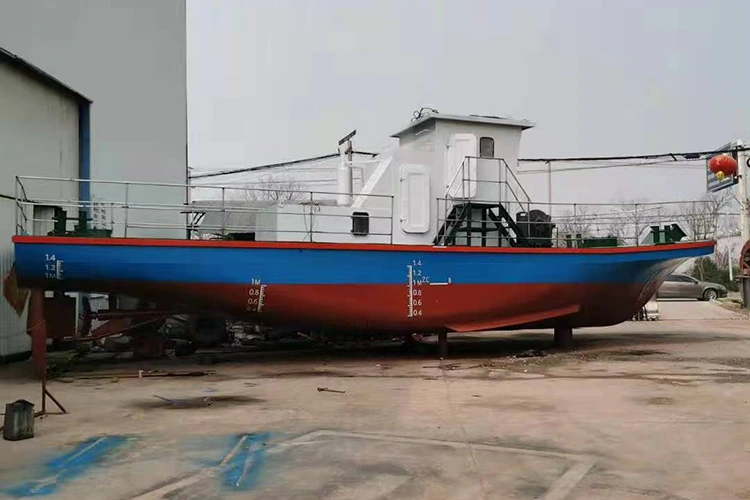
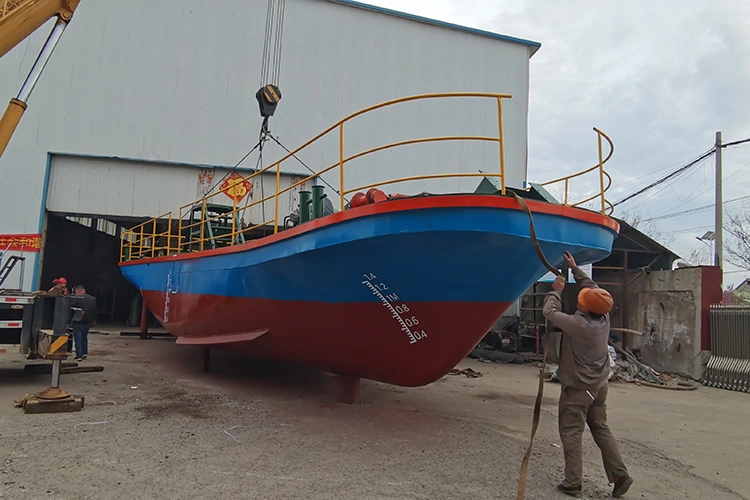
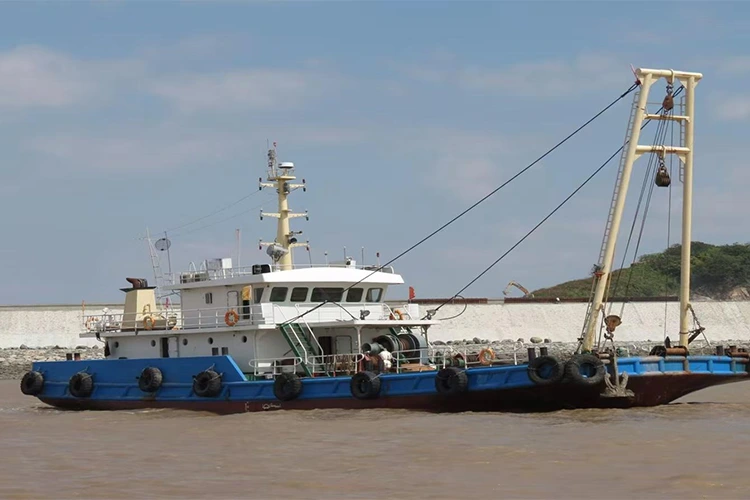
The HAIDING SHIPYARD Anchoring Launch is a shallow-draft workboat for anchor handling, navigation buoy maintenance, barge assistance, dredging support and port operations. With customizable propulsion, anchor winch and lifting equipment, it provides precise maneuverability in confined and shallow inland waterways.
The HAIDING SHIPYARD Anchoring Launch is a compact workboat developed for inland waterway operations that require fast movement, precise positioning and frequent handling of anchors, mooring equipment and navigation aids. Unlike a conventional tugboat or general-purpose workboat, its design places greater emphasis on shallow-water access, close-quarters maneuvering and deck equipment operation.
Shandong Haiding Shipbuilding Co., Ltd. designs and builds engineering vessels for dredging, waterway maintenance, marine construction, cargo transportation and emergency operations. The company covers 59,400 square meters and has an experienced team of marine engineers, ship designers, construction engineers, quality engineers and after-sales technicians.
The Anchoring Launch can be configured with an anchor winch, lifting equipment, towing fittings and shallow-water propulsion according to the intended operation. Typical applications include navigation buoy maintenance, anchor deployment and recovery, barge assistance, dredging support, port service and emergency work in shallow waterways.
Working Principle
Anchor Handling
The vessel approaches the working position under its own propulsion and uses the anchor winch to deploy or recover the anchor and anchor chain. During recovery, the winch supplies controlled pulling force while the vessel maintains its position and heading.
For anchor deployment, the operator first positions the vessel according to the required anchor location, lowers the anchor through the handling equipment and pays out the required length of chain or wire. The final holding capacity depends on the anchor type, seabed condition, water depth, scope of the anchor line and environmental loads.
This makes the vessel different from a standard speedboat. Its propulsion system is primarily used for positioning and movement, while the deck machinery performs the actual anchor-handling task.
Positioning and Maneuvering
In narrow rivers, around navigation buoys or alongside barges, the ability to make small heading and position adjustments is more important than simply having a high maximum speed.
Depending on the configuration, the vessel can use an azimuth propulsion system or other maneuvering arrangements suited to shallow-water operation. This allows the operator to approach a buoy, barge or anchor point with controlled movement rather than relying on large turning circles.
Advantages
Fast Response
With a power configuration of approximately 100–500 HP for the lightweight high-speed version, the reference maximum speed can reach around 18 knots.
The actual speed depends on hull dimensions, displacement, propulsion selection, payload and operating conditions. For waterway maintenance fleets, the benefit of a fast workboat is mainly the ability to move quickly between maintenance locations rather than remaining alongside a larger work vessel.
Shallow Draft
A shallow draft is important when the vessel needs to approach riverbanks, shoals, floating navigation aids or work areas where larger vessels cannot operate.
The reference design can be configured for a draft of ≤0.8 m, while the detailed propulsion configuration may use a draft of up to approximately 1.2 m depending on the selected equipment.
The final draft should be determined from the required payload, propulsion arrangement and minimum operating water depth.
Compact Working Platform
The vessel provides a dedicated working area for anchor handling and auxiliary equipment rather than using the deck only for passenger or cargo transportation.
Anchor winches, lifting devices, towing fittings and other equipment can be arranged according to the working procedure. This is particularly useful for fleets that need one small vessel to perform several recurring maintenance tasks.
Strong Bottom Protection
Shallow-water work exposes the hull to floating debris, submerged obstacles and occasional bottom contact. The reference configuration uses a reinforced bottom structure with a 12 mm manganese steel protective plate to improve resistance to impact and abrasion.
The appropriate plate thickness and reinforcement arrangement should be confirmed according to the operating area and expected contact conditions.
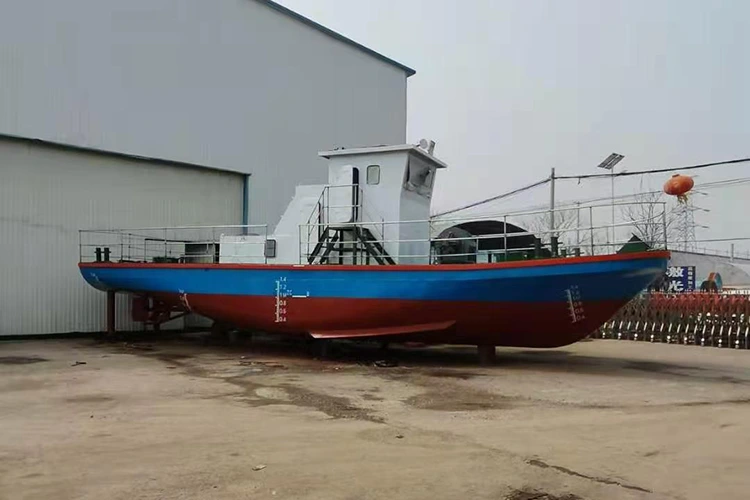
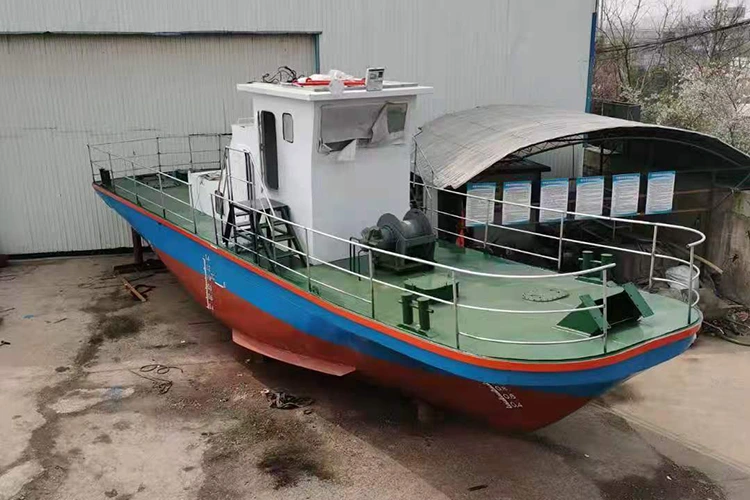
Propulsion
Power System
The reference specifications provide a modular power range of 300–5,000 HP for different vessel configurations, while the lightweight high-speed anchoring version can be equipped with a lower power range depending on its size and mission.
Engine options may include Weichai, Cummins and Yanmar, subject to project requirements and final equipment selection.
For inland waterways, propulsion selection should consider more than horsepower. Shallow-water draft, propeller protection, fuel consumption, low-speed maneuverability and cooling conditions all affect the suitability of the propulsion system.
Shallow-Water Propulsion
Azimuth propulsion or other shallow-water-specific propulsion systems can be selected where close-quarters maneuvering is required.
A protected propeller arrangement can reduce the risk of damage from floating debris and underwater obstacles. The final propulsion arrangement should be matched to the vessel's draft and the actual river conditions.
Anchor Equipment
Anchor Winch
The anchor winch is one of the key working systems of the vessel. It controls the deployment and recovery of the anchor line and should be selected according to anchor weight, chain or wire diameter, required pulling force and operating depth.
For different projects, the winch can be configured with appropriate hydraulic or electric drive systems, braking capacity and line storage arrangements.
Lifting Equipment
A compact lifting device can be installed for handling navigation buoys, small anchors, chains and other maintenance equipment.
The lifting capacity and working radius need to be calculated together. A lifting device with a high rated capacity does not automatically mean that the vessel can safely lift the same weight at every boom position. Vessel stability and load moment must be considered during equipment selection.
Stability and Deck Load
Working Load
Because anchor-handling operations involve suspended loads and changing line tension, stability is an important design consideration.
When the vessel retrieves a heavy anchor or lifts a buoy from the water, the load can create a moment around the vessel's longitudinal or transverse axis. The effect becomes more significant when the load is positioned near the side of the vessel.
For this reason, the lifting point, winch position, equipment weight and working radius should be determined during the vessel design stage.
Low-Speed Operation
Most anchor and buoy maintenance work is performed at low speed. A suitable vessel therefore needs predictable handling characteristics at low speed, not just a high maximum speed.
The propulsion and steering system should allow the operator to maintain heading while the winch is working, approach a buoy safely and make small positional corrections in confined water.
Applications
Navigation Buoy Maintenance
The vessel can transport personnel and maintenance equipment to navigation buoys and assist with buoy positioning, retrieval, anchor handling and replacement work.
Its shallow draft and compact size allow it to approach locations that may be difficult for larger maintenance vessels.
Barge Assistance
The vessel can assist barges during positioning, mooring and other close-quarters operations. Depending on the selected configuration, towing and pushing functions can also be incorporated.
For large barge formations, the required bollard pull should be calculated according to barge displacement, current, wind, towing arrangement and operating route.
Dredging Support
During dredging operations, the vessel can support anchor deployment and recovery for dredgers, assist with positioning work and transport small equipment or personnel between the dredging site and support facilities.
This makes it particularly useful where a large dredger needs a smaller auxiliary vessel to handle routine positioning tasks.
Port Operations
The vessel can be used for short-distance towing, berthing assistance, mooring work and equipment transfer around ports, terminals and inland wharves.
Its compact dimensions make it suitable for work areas where a larger tug would have limited maneuvering space.
Emergency Response
A shallow-draft workboat can reach shoals, narrow waterways and isolated work areas more easily than larger vessels.
Depending on the configuration, the vessel can carry emergency equipment, assist stranded vessels, support waterway obstruction removal or transport personnel to an incident location.
Technical Parameters
|
Parameter |
Reference Specification |
|
Vessel Type |
Anchoring and auxiliary workboat |
|
Power Range |
100–500 HP for lightweight high-speed configuration; larger configurations available |
|
Maximum Speed |
Up to approximately 18 knots, depending on configuration |
|
Hull Material |
Q345 high-strength steel |
|
Draft |
≤0.8 m for shallow-draft configuration |
|
Alternative Propulsion Draft |
Up to approximately 1.2 m depending on propulsion arrangement |
|
Propulsion |
Azimuth / shallow-water propulsion options |
|
Engine Options |
Weichai, Cummins, Yanmar and others |
|
Bottom Protection |
12 mm manganese steel protective plate, reference configuration |
|
Control System |
PLC integrated control system, optional |
|
Positioning Accuracy |
Up to ±0.5 m with suitable positioning equipment |
|
Anchor Equipment |
Anchor winch and handling equipment |
|
Lifting Equipment |
Optional, capacity according to project requirements |
|
Bollard Pull |
Approximately 20–80 tons for larger configurations |
|
Fire Protection |
Marine fire-fighting equipment according to vessel requirements |
|
Life-Saving Equipment |
Life jackets, life rings and other required equipment |
|
Certification |
CCS or other classification requirements according to project |
|
Warranty |
2 years for core components, subject to contract |
The figures above are reference values rather than a fixed specification for every vessel. Final dimensions, propulsion power, draft, anchor winch capacity and lifting capacity should be determined from the customer's operating conditions.
Professional Selection Guide
For Shallow Rivers
If the vessel will work on tributaries, canals or seasonal waterways, draft should be one of the first parameters considered. A lower draft can improve access, but excessive reduction in draft may limit displacement, equipment weight and fuel capacity.
The design should therefore balance draft, displacement, propulsion and payload rather than pursuing the minimum possible draft alone.
For Anchor Handling
The anchor system should be selected according to anchor weight, chain diameter, working depth and required recovery speed.
A larger winch is not necessarily better. Excessive equipment weight can increase the vessel's displacement and affect stability and draft. The winch should therefore be matched to the actual anchor-handling load.
For Buoy Maintenance
If the primary task is navigation buoy maintenance, the vessel should be evaluated according to deck working space, lifting capacity, low-speed maneuverability and equipment storage rather than maximum speed alone.
For frequent buoy replacement operations, an integrated lifting and deck arrangement can reduce the need for additional support equipment.
FAQ
How shallow can it operate?
The reference shallow-draft configuration can be designed for a draft of ≤0.8 m. The actual draft depends on vessel size, displacement, propulsion system and payload.
Can it tow barges?
It can be configured for towing and barge assistance. However, the required bollard pull should be calculated from the barge displacement, environmental loads and towing conditions rather than selected only by vessel size.
What determines the anchor winch capacity?
The main factors include anchor weight, chain or wire diameter, operating depth, required recovery speed and maximum line tension.
Can the vessel operate in coastal waters?
Yes, if the hull structure, corrosion protection, stability, propulsion and safety equipment are designed for the intended coastal operating conditions.
Why is shallow draft important for this vessel?
Anchor and buoy maintenance often takes place close to riverbanks, shoals and confined waterways. A shallow draft allows the vessel to access areas that are unavailable to larger workboats.
Can it support dredging operations?
Yes. It can assist dredgers with anchor handling, positioning work, equipment transfer and other auxiliary operations.
Can HAIDING SHIPYARD customize the vessel?
Yes. HAIDING SHIPYARD can customize the hull dimensions, draft, propulsion system, anchor winch, lifting equipment, deck layout, corrosion protection and other equipment according to the project requirements.
Related Category
Send Inquiry
Contact Info
-
Address
No. 8888, Wanhong Avenue, Huanglou Sub-district, Qingzhou City, Weifang City, Shandong Province, China
-
Tel
-
Email
Looking to buy a dredger, tugboat or custom engineering vessel? Send your requirements to HAIDING SHIPYARD for product details, technical consultation and a competitive shipbuilding quotation.
Related Products
News Recommendations