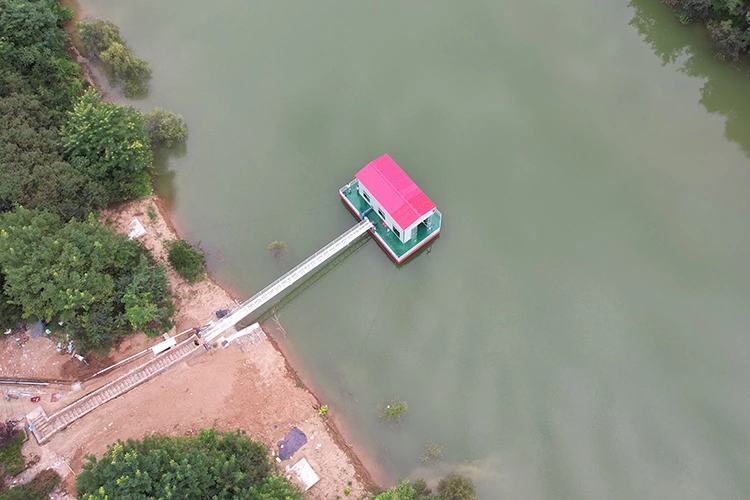
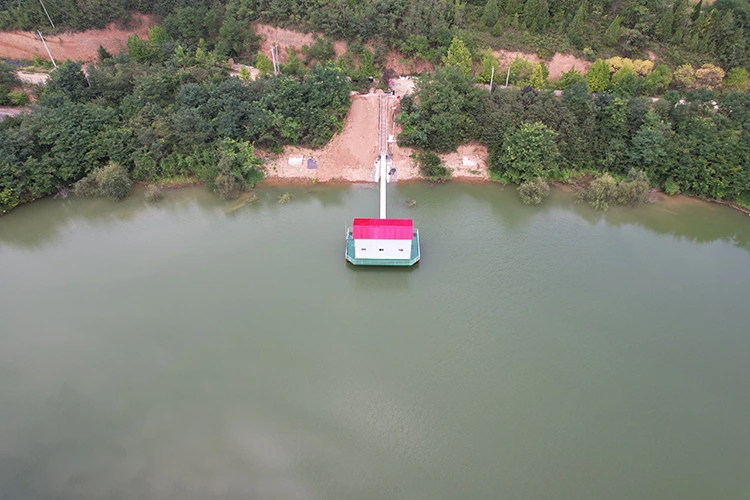
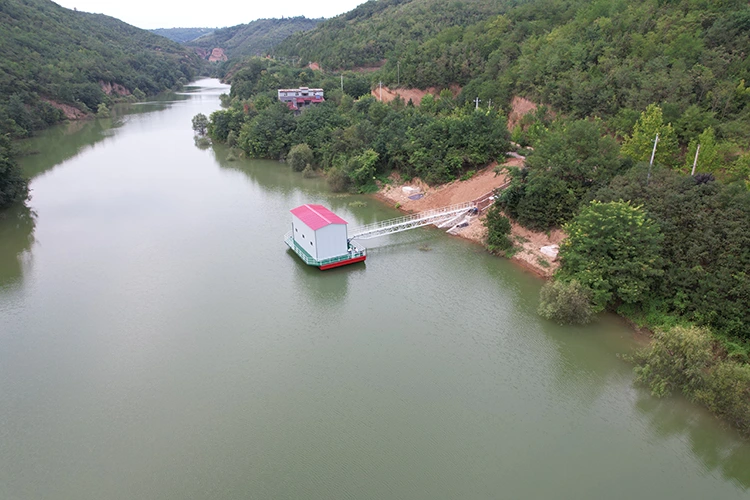
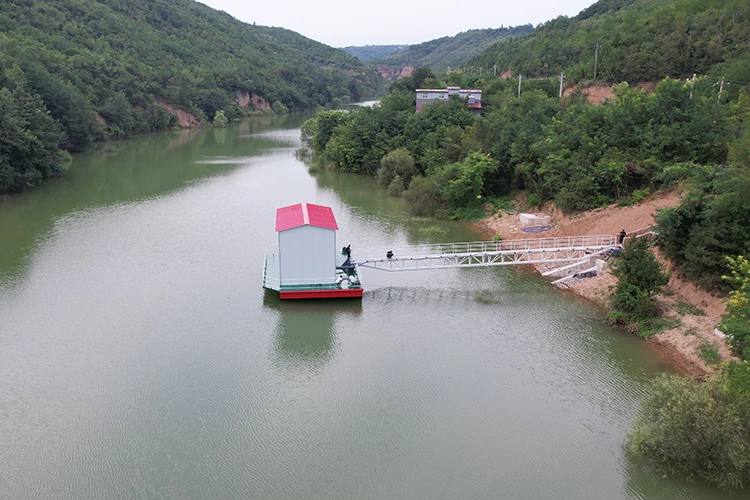
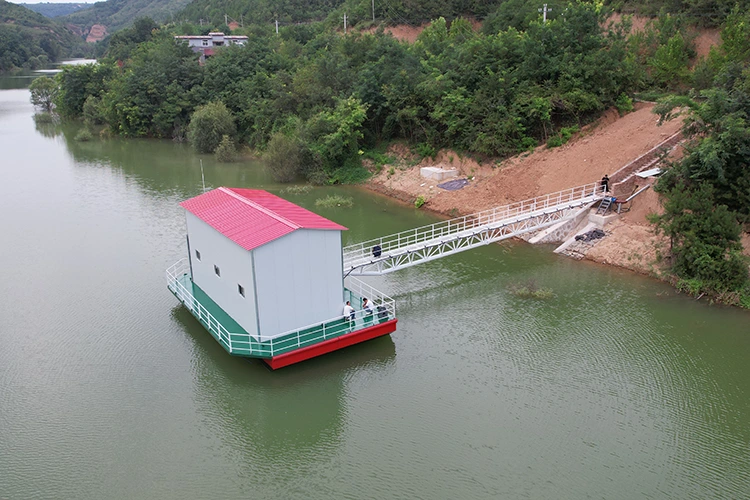
Reservoir Water Intake Pumping Station
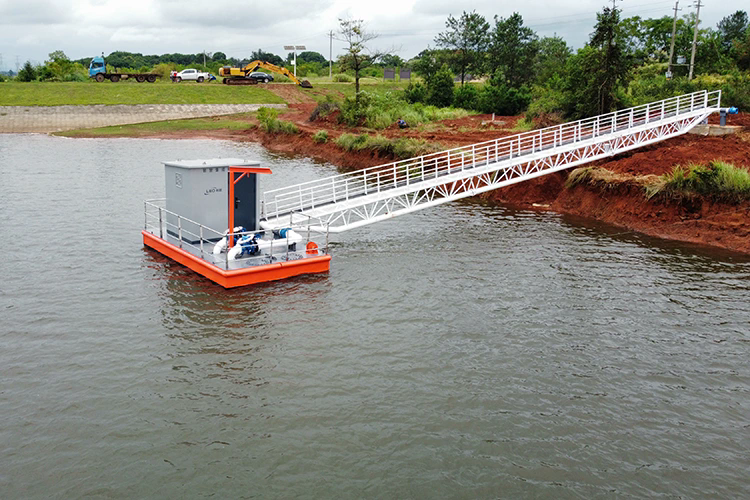
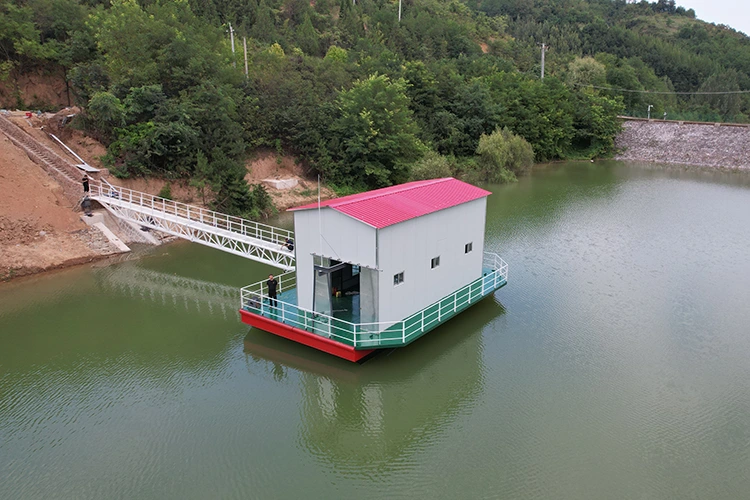
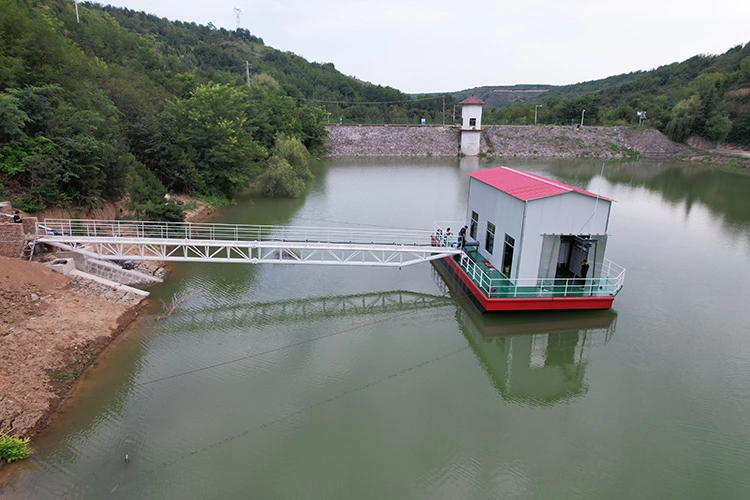
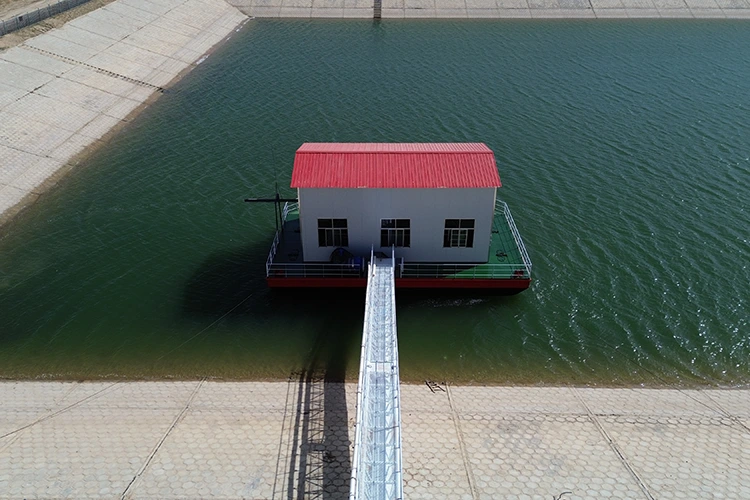
HAIDING SHIPYARD, a China manufacturer since 1993, presents the Reservoir Water Intake Pumping Station—engineered with a self-priming floating hull that automatically tracks water levels and draws water even below dead storage. Its modular sectional design requires zero civil engineering, deploys within days via road or rail, and integrates real-time flow telemetry with remote operation. It delivers uninterrupted supply for drought relief, irrigation.
As a source manufacturer specializing in water conservancy and dredging equipment, HAIDING SHIPYARD developed the Reservoir Water Intake Pumping Station to resolve long-standing challenges in reservoir water extraction—seasonal water level variations that render fixed intakes useless during dry periods, remote reservoir locations lacking infrastructure, and the prohibitive cost of permanent civil works. Built on the company's modular sectional water intake floating ship platform, this pumping station represents a mobile solution for fixed water needs, serving agricultural irrigation districts, municipal water authorities, and emergency response agencies across 132+ countries worldwide.
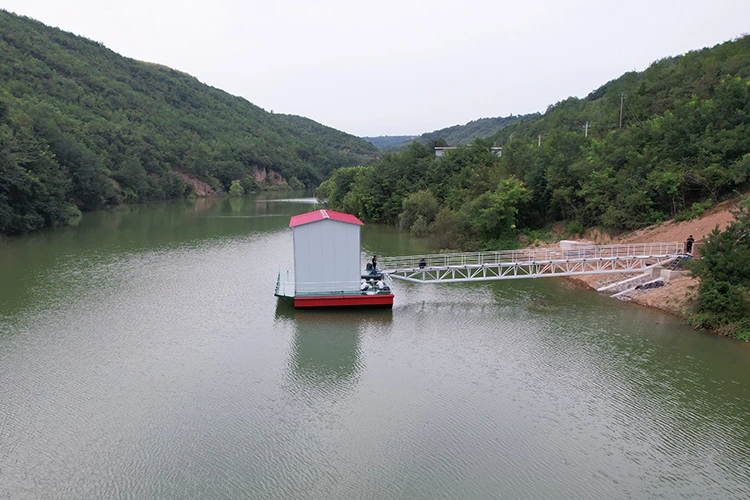
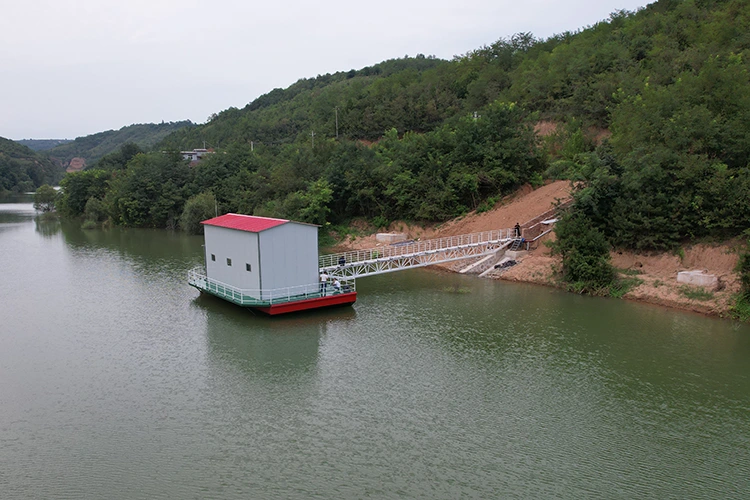
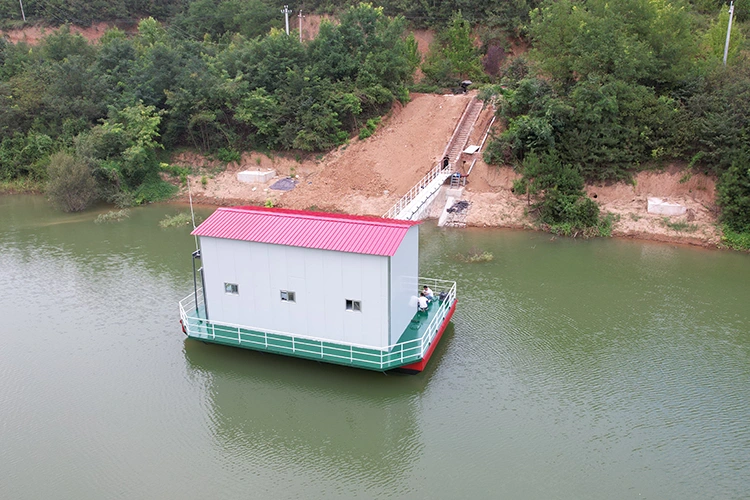
Floating Design for Water Level Changes
Reservoir water levels typically swing dramatically between wet and dry seasons, often dropping below the intake elevation of conventional fixed pumping facilities. The floating architecture of the Reservoir Water Intake Pumping Station directly addresses this limitation by maintaining the pump intake at an optimal depth regardless of reservoir elevation.
1. Self-priming floating hull: The buoyant platform rises and falls passively with the water surface, keeping the suction inlet submerged at a consistent depth without manual adjustment or mechanical lifting systems.
2. Dead water level operation: Unlike fixed concrete intake towers that cease functioning once the reservoir drops below their design elevation, the floating unit continues drawing water even when the level falls below the reservoir's dead storage threshold.
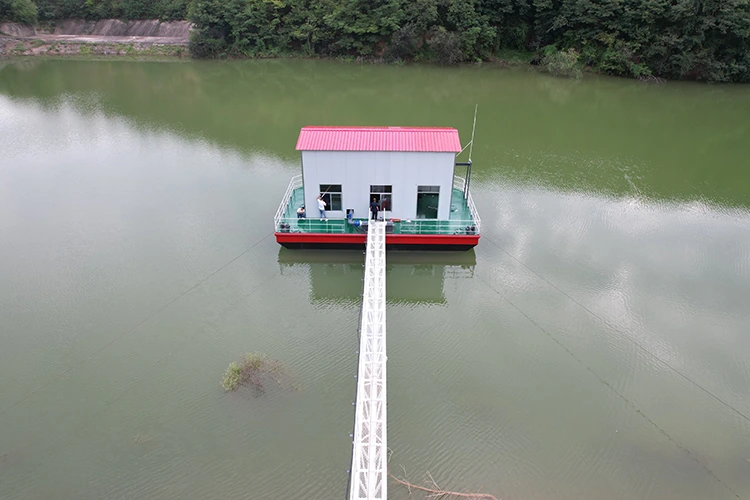
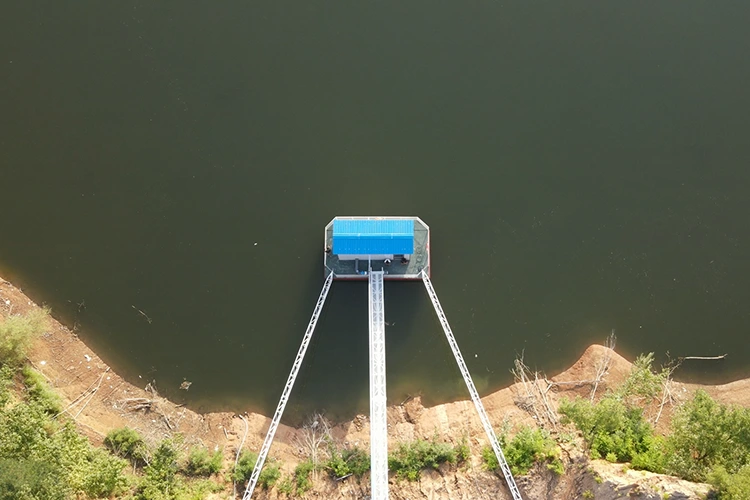
3. Shore connection gangway: A telescopic or articulated bridge links the floating platform to the shore-based discharge point, accommodating vertical movement while maintaining a stable pipeline and pedestrian access route.
4. Multi-stage filtration intake: The suction head incorporates filtration layers that block debris, aquatic vegetation, and sediment from entering the pump, reducing downstream clogging and maintenance frequency.
This adaptability ensures uninterrupted water delivery for drought relief operations and agricultural irrigation schedules during the most critical dry-season windows, when traditional infrastructure typically fails.
Modular Structure for Rapid Deployment
Emergency water supply scenarios—whether triggered by drought, flood damage to existing infrastructure, or temporary project requirements—demand equipment that can be transported and commissioned without delay. The Reservoir Water Intake Pumping Station employs a prefabricated modular floating structure derived from Haiding's sectional ship technology, which allows hundred-meter-long vessels to be broken into road-transportable components.
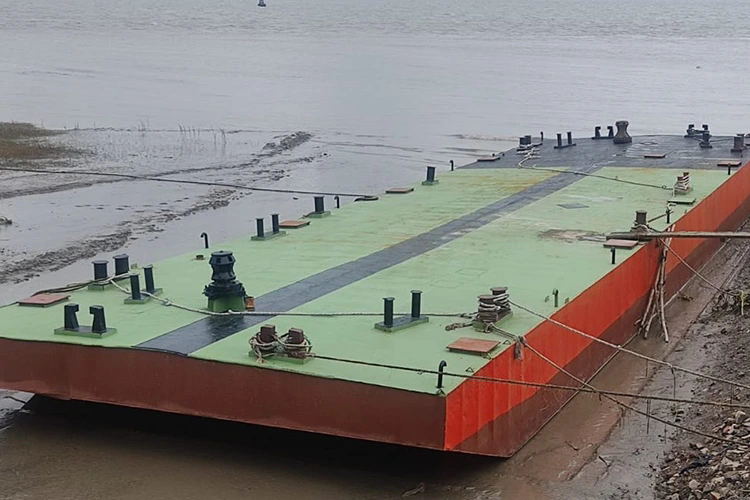
1. Road and rail transportable sections: Each modular pontoon segment is dimensioned for overland truck or rail shipment, enabling delivery to inland reservoirs without navigable waterway access.
2. On-site bolt-together assembly: Sections are joined on location using standardized connection systems, eliminating the need for welding or specialized heavy-lift equipment during installation.
3. No permanent civil works required: The floating platform operates without a fixed foundation, intake tower, or pump house, significantly reducing upfront construction cost and environmental impact.
4. Commissioning within days: From arrival on site to operational water delivery, the deployment timeline is measured in days rather than the months required for conventional concrete pumping stations.
This rapid-response capability makes the system well suited for reservoir emergency water supply, large-scale farmland water conservancy construction, and temporary water resource allocation projects where timing directly affects project outcomes.
Intelligent Monitoring and Efficiency
Beyond mechanical pumping capability, the Reservoir Water Intake Pumping Station integrates digital monitoring and control functions that support data-driven water resource management. The system feeds real-time operational data to operators and can interface with reservoir scheduling platforms for coordinated basin-wide water allocation.
1. Real-time flow and pressure telemetry: Integrated sensors continuously report discharge volume, pipeline pressure, and pump operating parameters to the on-site control panel and remote monitoring interface.
2. Remote operation capability: Authorized personnel can start, stop, and adjust pump settings via a remote control system, reducing the need for full-time on-site staffing at remote reservoir locations.
3. Reservoir scheduling platform integration: Operational data can be interconnected with reservoir management and dispatch systems, providing scientific decision support for seasonal water allocation and flood-drought cycling.
4. Low-energy pump configuration: Pump and motor combinations are selected for efficiency across the operating head range, balancing delivery performance with energy consumption over long running cycles.
The combination of automated monitoring, remote control, and efficient pumping delivers both operational economy and environmental compatibility for long-term reservoir water supply operations.
Manufacturing Standards and Quality
HAIDING SHIPYARD manufactures this floating pumping equipment under a structured quality management system backed by decades of marine and water conservancy engineering experience. The company's production infrastructure and certification profile provide verifiable assurance of build quality and compliance.
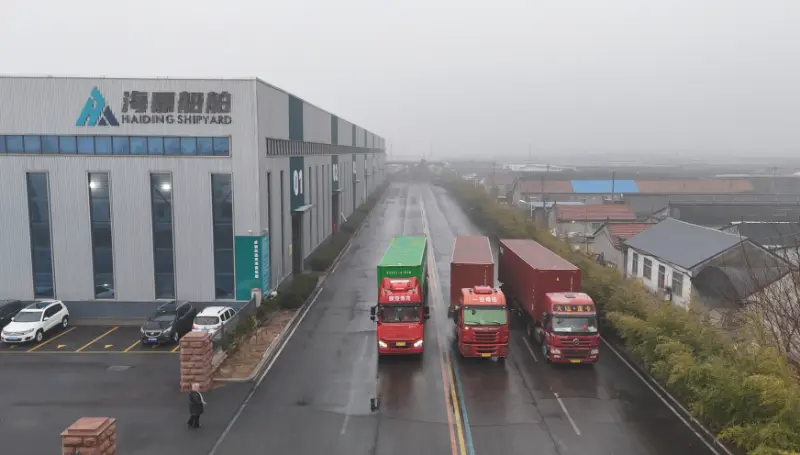
1. Factory scale: The 59,400-square-meter facility in Qingzhou runs 15 production lines and includes coastal and riverside assembly berths capable of handling hull assembly and launching up to 35,000 tons.
2. Engineering team: Over 80 employees, including senior marine engineers, dredging research experts, ship designers, construction engineers, quality engineers, and after-sales technicians, participate in design through delivery.
3. Patent portfolio: The company holds 28 core product patents covering hull structure, dredging and water intake technology, and modular connection systems applied across its product range.
4. Certification and classification: Production operates under ISO 9001 quality management system certification, and equipment can be supplied with China Classification Society (CCS) or Bureau Veritas (BV) certificates as project requirements dictate.
5. Traceable quality records: Key processes are executed by certified technicians with quality records maintained throughout production, and hull welding undergoes non-destructive testing with reports available for customer review.
Each Reservoir Water Intake Pumping Station is delivered with an as-built documentation package including drawings, equipment manuals, patent technology operation guides, and inspection reports to support regulatory registration and long-term maintenance.
Global Service and After-Sales
HAIDING SHIPYARD supports the system through a full-chain service system spanning pre-sales consultation, in-sales project management, and post-delivery operation and maintenance. The company has established installation and service capacity to respond to customers across its 132+ country export footprint.
1. Pre-sales engineering support: A consulting team of hull design, power system, and operation management specialists conducts demand diagnosis and produces customized solution designs with 3D model demonstrations; standard configurations can be quoted within 1 to 3 days, while custom designs typically require 7 to 30 working days.
2. Installation teams worldwide: Twelve installation teams are available globally, and the company generally dispatches 1 to 3 engineers to provide on-site installation guidance based on equipment size and site conditions.
3. 7x24 response platform: A global service hotline and online response channel complete preliminary diagnosis within 1 hour of receiving a fault report; remote technical problems are resolved via video guidance from senior engineers, and on-site support can reach key sea areas within 48 hours.
4. Spare parts center: An original spare parts center ships common parts within 48 hours and provides emergency deployment for special components; all spare parts carry quality assurance.
5. Warranty coverage: The company provides long-term quality assurance for hull structure and 3-year quality assurance for core components, supported by annual scheduled inspections and quarterly remote inspections.
Operator training covering equipment operation, routine maintenance, and emergency handling is included at delivery to ensure the pumping station can be operated in a standardized manner immediately after commissioning.
Comparison with Fixed Intake Systems
The following comparison outlines the principal differences between the floating modular pumping station and conventional fixed concrete intake pumping stations, based on deployment, adaptability, and operational characteristics.
|
Parameter |
Floating Modular Pumping Station |
Conventional Fixed Intake Station |
|
Water level adaptability |
Automatically rises and falls; operates below dead water level |
Fixed elevation; stops working below design intake level |
|
Civil engineering required |
None; floating platform with shore connection |
Requires intake tower, pump house, and foundation |
|
Deployment timeline |
Days from site arrival to operation |
Months of construction and commissioning |
|
Transport to inland sites |
Modular sections by truck or rail |
Materials transported separately; on-site construction |
|
Relocation capability |
Disassembled and moved to alternative sites |
Permanent structure; cannot be relocated |
|
Upfront cost profile |
Equipment-only investment; no construction budget |
Combined equipment and heavy civil works cost |
|
Monitoring and control |
Integrated real-time telemetry and remote operation |
Varies by project; often added as separate system |
Frequently Asked Questions
Q: How long does installation take for this type of floating pumping equipment?
A: Installation time is determined by the size, model, and installation location of the specified equipment; modular units are designed for rapid on-site assembly without permanent civil works.
Q: What is the minimum order quantity and delivery time?
A: The minimum order quantity is one Reservoir Water Intake Pumping Station, and the manufacturing cycle is determined based on the size and model of the ordered equipment.
Q: Does HAIDING SHIPYARD send engineers to install the equipment abroad?
A: Yes. The company has 12 installation teams worldwide and generally dispatches 1 to 3 engineers from the nearest location to provide on-site installation guidance.
Q: Can the pumping station operate in very cold or hot weather?
A: Installation and operation can be carried out as long as there is no strong wind, rain, or snow; specific cold-climate configurations can be discussed during the design phase.
Q: What certificates are available for the equipment?
A: The company provides Ex-factory Certificate of Conformity, Third-party Inspection Report, and classification society certificates including China Classification Society (CCS) and Bureau Veritas (BV) as required.
Q: Can the system be customized to our reservoir size and flow requirements?
A: Yes. Equipment is designed based on actual usage conditions including operational scenario, working requirements, and project-specific water intake needs.
Related Category
Send Inquiry
Contact Info
-
Address
No. 8888, Wanhong Avenue, Huanglou Sub-district, Qingzhou City, Weifang City, Shandong Province, China
-
Tel
-
Email
Looking to buy a dredger, tugboat or custom engineering vessel? Send your requirements to HAIDING SHIPYARD for product details, technical consultation and a competitive shipbuilding quotation.
News Recommendations